 中文
 English

Scenario Product Guide
Autonomous Construction-Site Food Delivery Vehicle Power MOSFET Selection: VBP11
 Back to previous page
The evolution of high-end autonomous food delivery vehicles for construction sites demands a power chain that transcends basic functionality. Operating in harsh, dynamic environments, these vehicles require systems that deliver uncompromising reliability, compact and efficient power conversion, and intelligent management of auxiliary loads to ensure uninterrupted service. The core electric drive and power management system is the linchpin for achieving all-weather operational capability, precise motion control, and extended service life. A meticulously designed power chain forms the physical foundation for these vehicles to navigate rough terrain, execute efficient energy recovery during deceleration, and maintain flawless operation amidst vibration and dust.
The challenge is multi-faceted: How to achieve high power density and efficiency within severe space constraints? How to ensure the long-term reliability of semiconductor devices against constant vibration and thermal shock? How to seamlessly integrate robust safety, thermal management, and intelligent power distribution for autonomous systems? The answers are embedded in the strategic selection and system-level integration of key power components.
Key Takeaways
• Three power nodes: main drive inverter (VBP112MC26-4L, 1200V SiC), high-density DC-DC converter (VBQA1606, 60V/80A), and intelligent load management / PDU (VBQA3102N, 100V dual N+N).
• Measured results: inverter system efficiency >98.5% at typical operating points on a 400VDC bus, and 96% peak efficiency for a 12V/2.5kW DC-DC converter.
• Design targets: ISO 26262 ASIL B principles, CISPR 25 Class 3 EMC, and 48-hour continuous vibration plus thermal cycling validation.
Recommended Power MOSFETs at a Glance
Device | Type | VDS | Continuous Current | Rds(on) | Package | Role in This Solution |
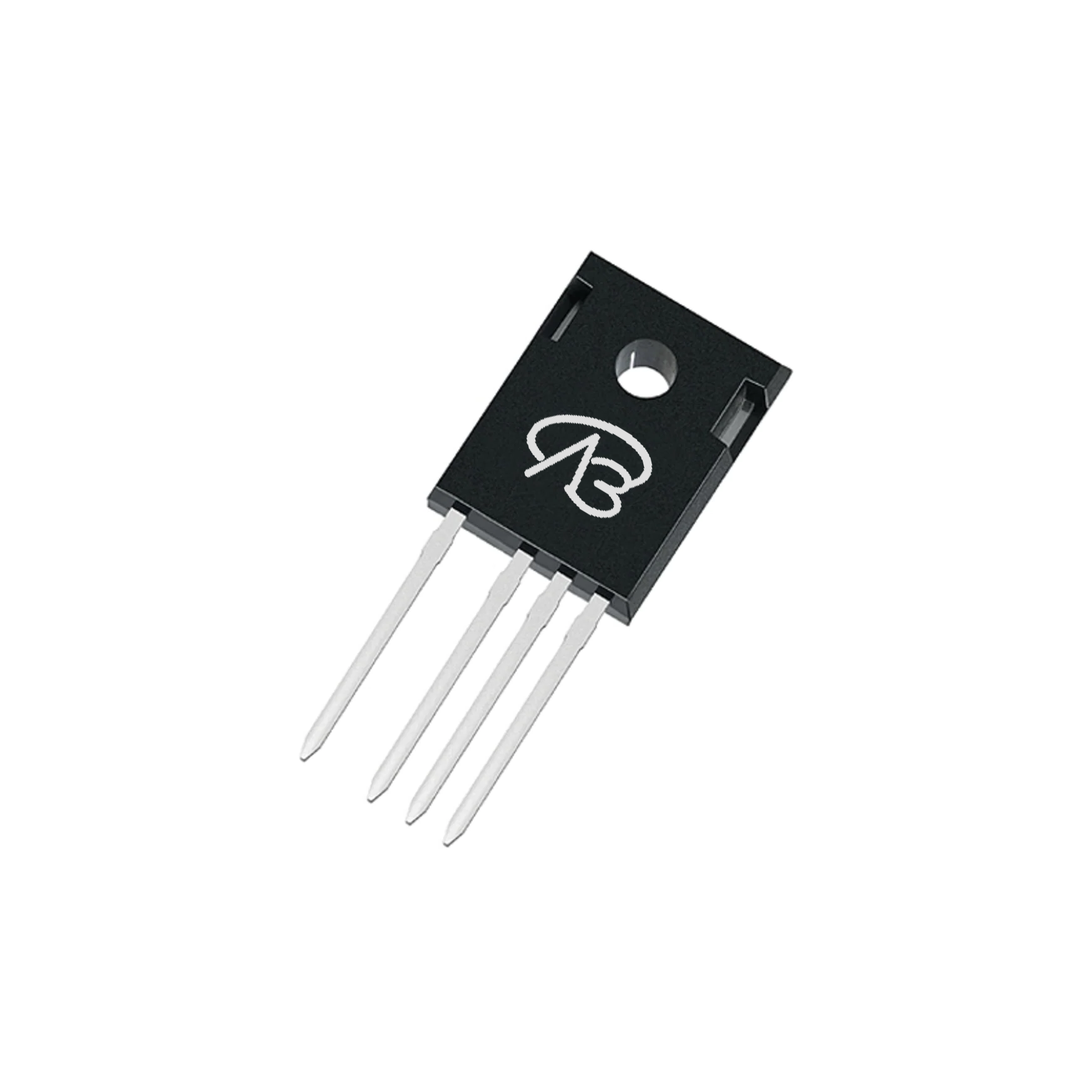
VBP112MC26-4L | SiC MOSFET | 1200V | 26A | 58mΩ | TO-247-4L | Main traction inverter switch |
VBQA1606 | Single-N | 60V | 80A | 6mΩ @10V | DFN8(5x6) | High-density DC-DC converter switch |
VBQA3102N | Dual N+N | 100V | 30A | 18mΩ @10V | DFN8(5x6)-B | Intelligent load management (PDU) switch |
I. Three Dimensions for Core Power Component Selection: A Strategic Fit for Autonomous Platforms
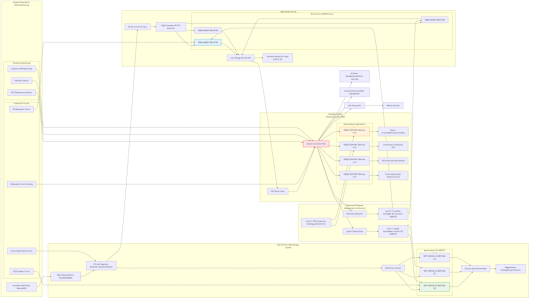
Figure 1: Overall power topology of the autonomous construction-site delivery vehicle — traction drive, DC-DC conversion and power distribution unit
1. Main Drive Inverter MOSFET: Enabling Efficient and Responsive Traction
Key Device: VBP112MC26-4L (1200V/26A/TO-247-4L, SiC MOSFET)
Voltage Platform & Efficiency Analysis: For high-performance autonomous platforms potentially utilizing 400-600V DC bus voltages to reduce current and wiring weight, a 1200V SiC MOSFET provides substantial margin for voltage spikes. Its 4-lead (Kelvin source) TO-247 package is critical for minimizing gate-loop inductance, enabling faster, cleaner switching crucial for high-frequency operation. This directly reduces switching losses, allowing for higher inverter switching frequencies (e.g., 50-100kHz), which in turn shrinks motor filter size and weight—a key advantage for compact vehicle design.
Loss & Thermal Advantage: The low specific on-resistance (RDS(on) of 58mΩ) minimizes conduction loss. The inherent material advantages of Silicon Carbide (SiC) offer superior high-temperature performance and reverse recovery characteristics, significantly boosting system efficiency, especially during partial load and regenerative braking cycles common in stop-and-go delivery routes. Thermal design must leverage a low-thermal-resistance interface to a dedicated cold plate, calculating junction temperature under peak hill-climb load: Tj = Tc + (P_cond + P_sw) × Rθjc.
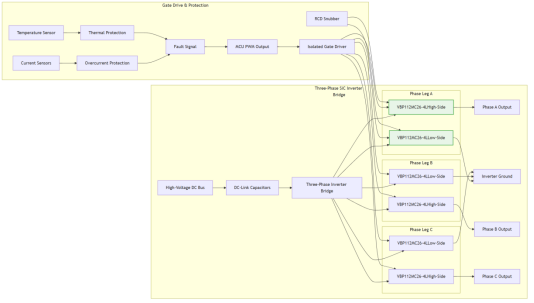
Figure 2: Main drive inverter — VBP112MC26-4L SiC MOSFET (1200V/26A, TO-247-4L) in the high-frequency traction inverter
2. High-Density DC-DC Converter MOSFET: The Compact Power Hub
Key Device: VBQA1606 (60V/80A/DFN8(5x6), Single-N)
Power Density & Efficiency Focus: For converting the main traction battery voltage (e.g., 48V or a sub-module voltage) to stable 12V/24V for low-voltage networks (ECUs, sensors, computing units), power density is paramount. This DFN8-packaged MOSFET offers an exceptionally low RDS(on) of 6mΩ (at 10V) and an 80A continuous current rating in a minuscule footprint. This enables the design of a multi-kW DC-DC converter (e.g., 2-3kW) that is extremely compact and lightweight, fitting into tightly packaged vehicle chassis. The low conduction loss is the primary contributor to achieving peak efficiency >95%.
Vehicle-Grade Robustness & Drive Considerations: The DFN package's low profile improves vibration resistance. However, its thermal performance relies heavily on an optimized PCB layout with a large thermal pad connected via multiple vias to internal ground planes or a heatsink. A dedicated gate driver IC with proper current sourcing/sinking capability is essential to fully exploit its fast switching speed, with careful attention to gate resistor selection and layout to manage EMI.
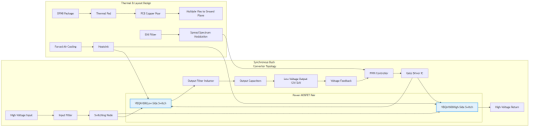
Figure 3: High-density DC-DC converter — VBQA1606 (60V/80A, DFN8) in the traction-battery to 12V/24V conversion stage
3. Intelligent Load Management MOSFET: Precision Control for Auxiliary Systems
Key Device: VBQA3102N (100V/30A/DFN8(5x6)-B, Dual N+N)
Integrated Load Management Logic: This dual common-drain MOSFET is the perfect execution unit for an intelligent Power Distribution Unit (PDU). It can independently control critical auxiliary loads such as perception sensor arrays (LiDAR, cameras), communication modules, and food compartment climate control (Peltier/heater) based on the vehicle's operational state (driving, waiting, charging). It enables advanced features like sequenced power-up of sensitive electronics and PWM-based control for fan speeds.
Space-Saving & Thermal Management on PCB: The integrated dual-die design in a tiny DFN8-B package saves crucial space on the domain controller. The ultra-low RDS(on) of 18mΩ (at 10V) per channel ensures minimal voltage drop and heat generation when switching substantial currents for sensor suites. Effective heat dissipation requires a dedicated copper pour under the package's thermal pad, connected through a via array to additional copper layers or the module housing.
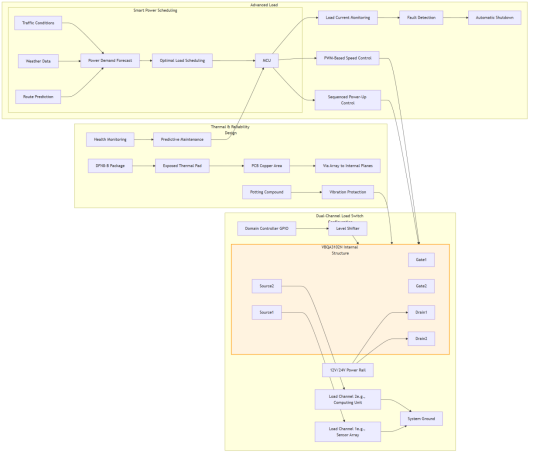
Figure 4: Intelligent power distribution unit (PDU) — VBQA3102N dual N+N load switches for sensors, communications and compartment climate control
II. System Integration Engineering Implementation
1. Hierarchical Thermal Management for Compact Layout
Level 1: Targeted Liquid Cooling: The main drive SiC MOSFET (VBP112MC26-4L) is mounted on a micro-channel liquid cold plate shared with the traction motor controller, ensuring junction temperatures are kept within optimal limits for performance and longevity.
Conclusion
The power chain design for high-end autonomous construction site delivery vehicles is a critical exercise in balancing extreme power density, relentless reliability, and intelligent control. The proposed hierarchical approach—leveraging high-frequency SiC technology at the core drive for efficiency, utilizing ultra-low-RDS(on) MOSFETs in miniaturized packages for power conversion, and adopting highly integrated dual switches for smart load management—provides a robust blueprint. This design ensures these autonomous platforms can operate with military-grade reliability in the most demanding environments, maximizing uptime and delivery efficiency. As autonomous stack complexity grows, this power foundation, built on automotive-grade rigor and forward-looking component selection, will seamlessly support the integration of more advanced sensing, computing, and connectivity, truly making the power system the invisible yet indispensable engine of autonomous logistics.
Frequently Asked Questions (FAQ)
Q: Which device is recommended for the main drive inverter?
A: VBP112MC26-4L (1200V/26A/TO-247-4L, SiC MOSFET) — the 1200V rating provides substantial margin for 400–600V DC buses, and the 4-lead Kelvin-source package minimises gate-loop inductance for 50–100kHz switching.
Q: Which device is recommended for the high-density DC-DC converter?
A: VBQA1606 (60V/80A/DFN8(5x6), Single-N) — a 6mΩ Rds(on) at 10V with an 80A rating in a minuscule footprint enables a compact, lightweight multi-kW converter with peak efficiency above 95%.
Q: Which device implements intelligent load management?
A: VBQA3102N (100V/30A/DFN8(5x6)-B, Dual N+N) — the dual common-drain MOSFET independently controls perception sensor arrays, communication modules and compartment climate control, with an 18mΩ per-channel Rds(on) at 10V.

Download PDF document
 Download now:VBP112MC26-4L


Request Free Samples
*To request free samples, please complete and submit the following information.
Our team will review your application within 24 hours and arrange shipment upon approval. Thank you!