 中文
中文 English
Scenario Product Guide
Last updated:
MOSFET Selection Strategy and Device Adaptation Handbook for High-End Industrial
 Back to previous page
.png)
With the advancement of industrial automation and the increasing demand for zero-defect production, high-end industrial visual inspection machines have become critical equipment for ensuring product quality. The power delivery and precise actuator drive systems, serving as the "power source and control nerve" of the entire machine, provide stable and efficient power conversion for key loads such as high-intensity lighting modules, precision motion stages, and various sensors/processors. The selection of power MOSFETs directly determines system stability, response speed, power integrity, and long-term reliability. Addressing the stringent requirements of inspection machines for high precision, 24/7 continuous operation, low electromagnetic interference, and compact integration, this article develops a practical and optimized MOSFET selection strategy based on scenario-specific adaptation.
Key Takeaways (At a Glance)
• VBGQF1806 — Performance Core device for High-Power Lighting & Actuator Drive (50W-300W+).
• VB3222A — Control Core device for Precision Peripheral & Sensor Power Management.
• VBQG4338 — Reliability Core device for System-Level Power Distribution & Protection.
Recommended Power MOSFETs at a Glance
Device | Type | VDS | Continuous Current | Rds(on) | Package | Role in This Solution |
VBGQF1806 | N-MOS | 80V | 56A | 7.5mΩ @10V | DFN8(3x3) | High-power lighting & actuator drive (Performance Core) |
VB3222A | Dual N-MOS | 20V | 6A per Ch | 22mΩ @10V | SOT23-6 | Precision peripheral & sensor power management (Control Core) |
VBQG4338 | Dual P+P MOS | -30V | -5.4A per Ch | 38mΩ @10V | DFN6(2x2)-B | System-level power distribution & protection (Reliability Core) |
VBQF1104N | N-MOS | 100V | 21A | — | — | Option for 48V bus and higher-power actuators |
VBTA7322 | N-MOS | 30V | 3A | — | SC75-6 | Ultra-compact peripheral switching |
VBK2101K | P-MOS | -100V | -0.52A | — | SC70-3 | Input-side protection / high-voltage isolation switching |
I. Core Selection Principles and Scenario Adaptation Logic
(A) Core Selection Principles: Four-Dimensional Collaborative Adaptation
MOSFET selection requires coordinated adaptation across four dimensions—voltage, loss, package, and reliability—ensuring precise matching with the harsh industrial environment and precision demands:
Sufficient Voltage Margin & Robustness: For industrial 24V/48V buses with potential transients, reserve a rated voltage withstand margin of ≥100%. Prioritize devices with high VGS rating (±20V) for enhanced gate robustness against noise.
Prioritize Low Loss & Fast Switching: Prioritize devices with low Rds(on) (minimizing conduction loss in continuous operation) and excellent FOM (low Qg, low Coss) to enable high-frequency PWM for precise control of lighting and motors, reducing thermal drift and improving energy efficiency.
Package Matching for Power Density & Cooling: Choose DFN packages with superior thermal performance (low RthJA) and low parasitic inductance for high-power/high-frequency paths. Select ultra-compact packages (SC75, SC70, DFN6) for peripheral control and power distribution, maximizing board space for other components.
Reliability & Precision Underpinning: Meet 24/7 durability with focus on stable threshold voltage (Vth), tight parameter distribution, and wide junction temperature range, adapting to factory floor conditions and ensuring long-term measurement consistency.
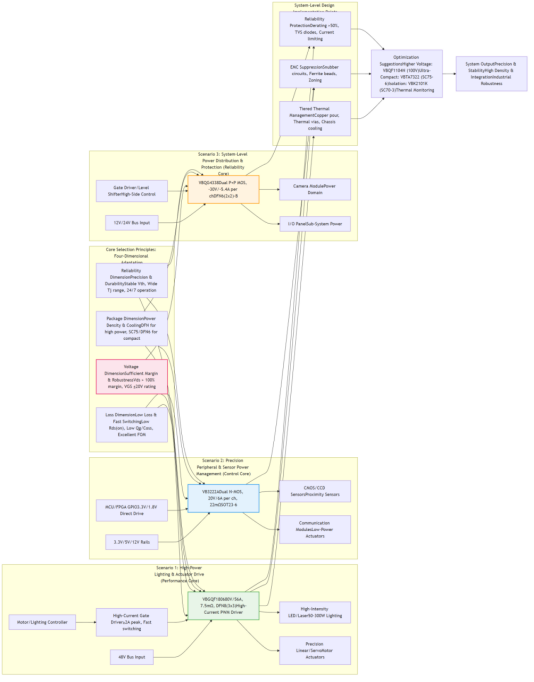
Figure 1: High-End Industrial Visual Inspection Machine Overall Topology
(B) Scenario Adaptation Logic: Categorization by Load Type
Divide loads into three core scenarios: First, High-Power Lighting & Actuator Drive (Performance Core), requiring high-current, high-efficiency, and high-speed switching. Second, Precision Peripheral & Sensor Power Management (Control Core), requiring compact size, low gate drive voltage, and multi-channel integration for distributed control. Third, System-Level Power Distribution & Protection (Reliability Core), requiring appropriate voltage rating, integrated solutions, and robust protection features for safe power routing.
II. Detailed MOSFET Selection Scheme by Scenario
(A) Scenario 1: High-Power Lighting & Actuator Drive (50W-300W+) – Performance Core Device
High-intensity LED/Laser lighting and precision linear/servo motors require stable high current and fast PWM for intensity/position control with minimal loss and heat generation.
Recommended Model: VBGQF1806 (N-MOS, 80V, 56A, DFN8(3x3))
Parameter Advantages: Advanced SGT technology achieves an ultra-low Rds(on) of 7.5mΩ at 10V. High current rating (56A continuous) suits 48V bus applications with ample margin. 80V VDS provides >65% margin for 48V systems, handling back-EMF from motors. DFN8 package offers excellent thermal dissipation.
Adaptation Value: Drastically reduces conduction loss in lighting drivers (e.g., constant current sources) and motor H-bridges. Enables high-frequency PWM (tens to hundreds of kHz) for flicker-free lighting and smooth motor control, crucial for image capture accuracy. High efficiency reduces heatsink size.
Selection Notes: Verify peak current requirements of motors/lighting. Ensure gate driver capability (≥2A peak) for fast switching. Implement generous PCB copper pour (≥250mm²) with thermal vias for heat dissipation.
(B) Scenario 2: Precision Peripheral & Sensor Power Management – Control Core Device
Multiple sensors (CMOS/CCD, proximity), communication modules, and low-power actuators require compact, low-loss switches for individual power on/off, sequencing, and load sharing.
Recommended Model: VB3222A (Dual N-MOS, 20V, 6A per Ch, SOT23-6)
Parameter Advantages: Integrated dual N-MOSFETs in a tiny SOT23-6 package save over 60% board area vs. two discrete devices. Low Vth (0.5-1.5V) enables direct drive from 3.3V/1.8V low-voltage MCUs/FPGAs without level shifters. Low Rds(on) of 22mΩ at 10V minimizes voltage drop.
Adaptation Value: Enables independent, high-speed power domain control for multiple sensors and peripherals, facilitating power cycling for reset or noise reduction. Ideal for low-side switching in point-of-load (POL) converters. Dual-channel integration simplifies layout for symmetrical loads.
Selection Notes: Ensure total load current per channel is derated for ambient temperature. Add small gate resistors (e.g., 22Ω) to dampen ringing in compact layouts. Use for loads under 20V.
(C) Scenario 3: System-Level Power Distribution & Protection – Reliability Core Device
Centralized power switching, protection circuits for sensitive modules, and isolation control require robust devices with appropriate voltage ratings and integrated solutions.
Recommended Model: VBQG4338 (Dual P+P MOS, -30V, -5.4A per Ch, DFN6(2x2)-B)
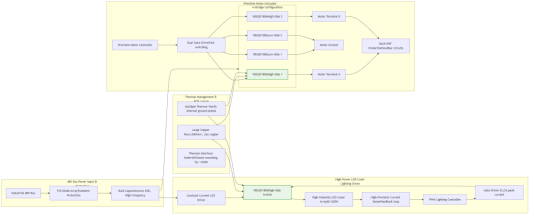
Figure 2: High-End Industrial Visual Inspection Machine
Parameter Advantages: Integrated dual P-MOSFETs in a space-efficient DFN6 package are perfect for high-side switch arrays. -30V VDS is suitable for 12V/24V bus distribution. Good Rds(on) (38mΩ at 10V) balances efficiency and cost. Enhanced VGS rating (±12V).
Adaptation Value: Provides safe, isolated high-side power control for sub-systems (e.g., camera module, IO panel). Allows implementation of redundant power paths or sequential power-up. P-MOS high-side switching simplifies driver circuit compared to N-MOS + bootstrap.
Selection Notes: Use with a dedicated gate driver or discrete NPN/PNP level-shift circuit. Pay attention to symmetrical layout and heat dissipation for both channels. Ideal for building active OR-ing circuits for power redundancy.
III. System-Level Design Implementation Points
(A) Drive Circuit Design: Matching Device Characteristics
VBGQF1806: Pair with high-current gate driver ICs (e.g., TPS28225) with peak output current >3A. Minimize power loop inductance. Use a small gate resistor (e.g., 2-10Ω) to control slew rate and mitigate ringing.
VB3222A: Can be driven directly by MCU GPIO for moderate speed switching. For faster switching, use a buffer. Implement separate gate resistors for each channel if switching independently.
VBQG4338: Use a common NPN transistor or a dedicated high-side driver for gate level-shifting. Include a strong pull-up resistor to ensure fast turn-off.
(B) Thermal Management Design: Tiered Strategy
VBGQF1806 (High Power): Mandatory use of large copper pour (≥300mm² recommended), 2oz copper, and multiple thermal vias connecting to internal ground planes. Consider a thermal interface to the chassis for >100W applications.
VB3222A (Low Power): Standard PCB copper for pins is sufficient. Ensure general board ventilation.
VBQG4338 (Medium Power): Provide a shared or symmetrical copper pad under the package (≥15mm² per channel) with thermal vias to an internal plane.
(C) EMC and Reliability Assurance
EMC Suppression:
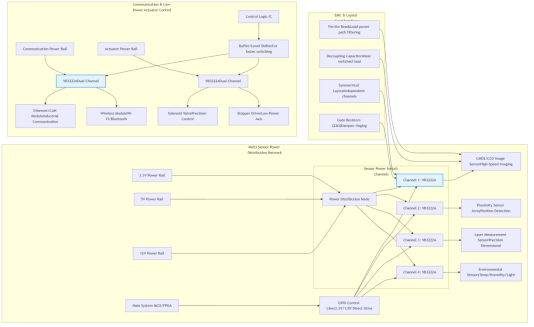
Figure 3: High-End Industrial Visual Inspection Machine
VBGQF1806: Place a low-ESR high-frequency capacitor (100nF) very close to drain-source. Use snubber circuits across motor terminals or lighting leads.
VB3222A/VBQG4338: Add ferrite beads in series with the load power path. Ensure proper decoupling near the load being switched.
Implement strict zoning: Separate high-power motor/lighting loops from sensitive analog/sensor power planes.
Reliability Protection:
Derating: Apply conservative derating: >50% voltage margin, current derated to 60-70% at max expected ambient temperature.
Overcurrent Protection: Implement hardware-based current limiting (e.g., comparator with shunt resistor) for the VBGQF1806 motor/lighting drive path.
Transient Protection: Use TVS diodes at power inputs and on gates of externally connected switches (VBQG4338). Ensure proper clamping for inductive kickback.
IV. Scheme Core Value and Optimization Suggestions
(A) Core Value
Precision & Stability Ensured: Low-loss, fast-switching MOSFETs enable stable power delivery, minimizing noise that could affect sensor accuracy and control loops.
High Density & Integration Achieved: Strategic use of dual MOSFETs (VB3222A, VBQG4338) and compact DFN packages maximizes space for vision processing and optics.
Industrial Robustness Designed In: Devices selected with high voltage margins, robust VGS ratings, and good thermal performance ensure reliable operation in demanding 24/7 environments.
(B) Optimization Suggestions
Higher Voltage Needs: For systems with a 48V bus and higher power actuators, consider VBQF1104N (100V, 21A) for an even greater safety margin.
Ultra-Compact Needs: For extremely space-constrained peripheral switching, VBTA7322 (30V, 3A, SC75-6) offers a smaller footprint than SOT23.
Isolation & Protection: For input-side protection or high-voltage isolation switching, VBK2101K (P-MOS, -100V, -0.52A, SC70-3) provides a basic building block in a minute package.
Thermal Monitoring: Integrate temperature sensors near the VBGQF1806 heatsink area to enable predictive thermal management.
Conclusion
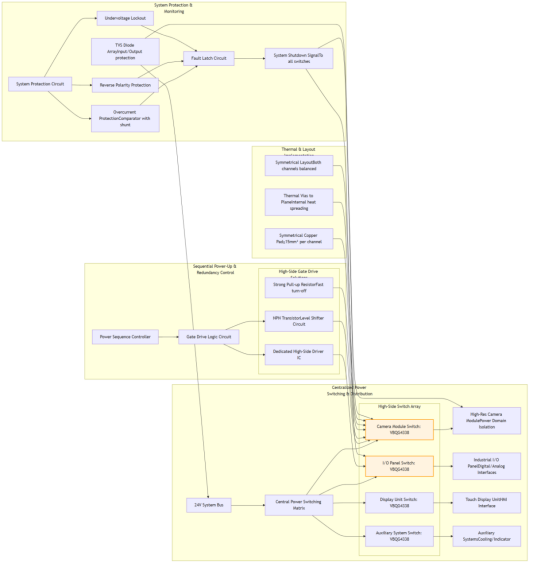
Figure 4: High-End Industrial Visual Inspection Machine
Power MOSFET selection is central to achieving the precision, reliability, and density required in advanced industrial visual inspection machines. This scenario-based scheme, through precise load matching and robust system-level design, provides comprehensive technical guidance. Future exploration can focus on integrating current-sensing MOSFETs and leveraging intelligent power stage modules to further enhance system monitoring, control, and power density, solidifying the foundation for next-generation, high-throughput, and high-accuracy inspection systems.
Frequently Asked Questions (FAQ)
Q: Which device is recommended for high-power lighting and actuator drive?
A: VBGQF1806 (N-MOS, 80V, 56A, DFN8(3x3)) — advanced SGT technology achieves an ultra-low Rds(on) of 7.5mΩ at 10V, with a high current rating (56A continuous) suited to 48V bus applications.
Q: Which device is recommended for precision peripheral and sensor power management?
A: VB3222A (Dual N-MOS, 20V, 6A per Ch, SOT23-6) — integrated dual N-MOSFETs in a tiny SOT23-6 package save over 60% board area versus two discrete devices.
Q: Which device is recommended for system-level power distribution and protection?
A: VBQG4338 (Dual P+P MOS, -30V, -5.4A per Ch, DFN6(2x2)-B) — integrated dual P-MOSFETs in a space-efficient DFN6 package are perfect for high-side switch arrays.

Download PDF document
 Download now:VBGQF1806


Request Free Samples
*To request free samples, please complete and submit the following information.
Our team will review your application within 24 hours and arrange shipment upon approval. Thank you!