 中文
中文 English
Scenario Product Guide
Last updated:
Optimization of Power Chain for High-End Factory Fire Alarm and Suppression Syst
 Back to previous page
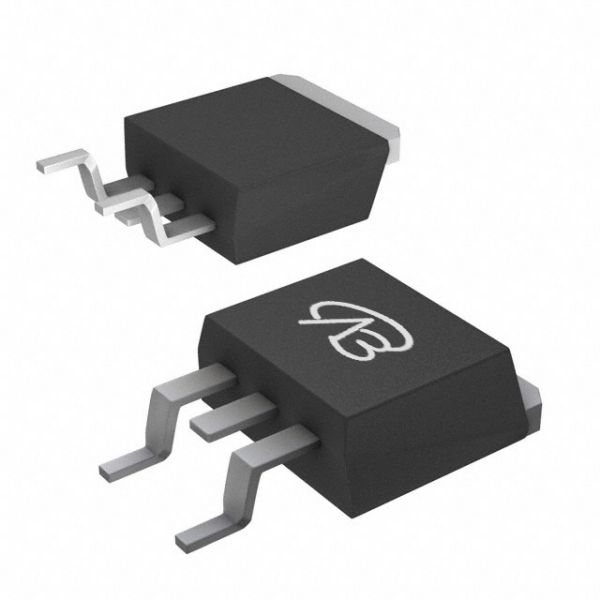
Preface: Building the "Lifesaving Power Chain" for Industrial Safety – Discussing the Systems Thinking Behind Power Device Selection
In the critical infrastructure of high-end manufacturing facilities, an outstanding fire alarm and suppression system is not merely an integration of sensors, controllers, and valves. It is, more importantly, a supremely reliable, instantly responsive, and fault-tolerant electrical energy "command and execution network." Its core performance metrics—uninterrupted monitoring, rapid actuator deployment, and the resilient operation of all auxiliary units—are all deeply rooted in a fundamental module that determines the system's ultimate reliability: the power conversion and management system.
This article employs a systematic and safety-first design mindset to deeply analyze the core challenges within the power path of industrial fire systems: how, under the multiple constraints of extreme reliability, 24/7 operation, harsh electrical environments (surges, EMC), and the need for fast transient response, can we select the optimal combination of power MOSFETs for the three key nodes: robust primary power management, high-current critical actuator drive, and multi-channel auxiliary circuit distribution?
Within the design of a high-end fire protection system, the power switching module is the core determining system availability, response time, operational lifespan, and fail-safe behavior. Based on comprehensive considerations of surge immunity, low-loss continuous operation, high inrush current handling, and seamless redundancy switching, this article selects three key devices from the component library to construct a hierarchical, ultra-reliable power solution.
Key Takeaways (At a Glance)
• VBL15R18S — High-Voltage Bus Distribution & Redundant Path Switch.
• VBL1606 — Solenoid Valve & Pump Motor Drive Switch.
• VBGQA3402 — Multi-Channel Sensor & Alarm Power Distribution Switch.
Recommended Power MOSFETs at a Glance
Device | Type | VDS | Continuous Current | Rds(on) | Package | Role in This Solution |
VBL15R18S | 500V SJ-MOSFET | 500V | 18A | 240mΩ | TO-263 (D2PAK) | High-voltage bus distribution & redundant path switch |
VBL1606 | 60V N-MOSFET | 60V | 150A | 4mΩ | TO-263 | Solenoid valve & pump motor drive switch |
VBGQA3402 | Dual 40V N-MOSFET | 40V | 90A | 2.2mΩ @10V | DFN8 | Multi-channel sensor & alarm power distribution switch |
I. In-Depth Analysis of the Selected Device Combination and Application Roles
1. The Backbone of Primary Power & Redundant Switching: VBL15R18S (500V, 18A, TO-263, SJ-MOSFET) – High-Voltage Bus Distribution & Redundant Path Switch
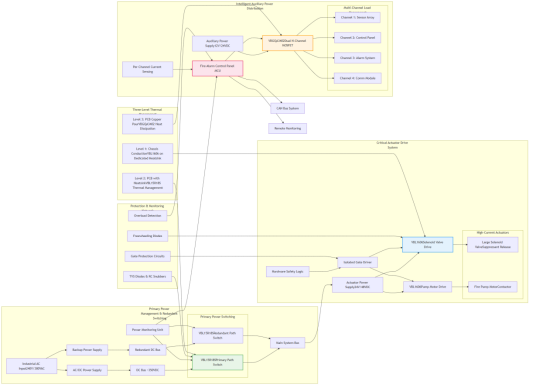
Figure 1: High-End Factory Fire Alarm and Suppression System Overall Topology
Core Positioning & Topology Deep Dive: Suitable for the primary AC/DC power supply output or the redundant switchover circuit in a 240VAC/380VAC derived DC bus system (e.g., ~350VDC). Its 500V drain-source voltage provides robust margin against line transients and surges. The Super Junction (SJ_Multi-EPI) technology offers an excellent balance between low Rds(on) (240mΩ) and low switching losses, crucial for efficiency in always-on circuits or fast, loss-minimized switching during redundancy transfer.
Key Technical Parameter Analysis:
Robustness & Efficiency Trade-off: The 500V rating ensures survival in industrial power environments. The SJ technology keeps conduction and switching losses manageable, reducing thermal stress in sealed electrical cabinets and enhancing long-term MTBF.
Package Advantage: The TO-263 (D2PAK) package offers superior thermal performance compared to TO-220, allowing for effective heat sinking to the chassis, which is vital for a device that may carry continuous or standby current.
Selection Trade-off: Compared to lower-voltage MOSFETs or planar high-voltage types, this SJ MOSFET represents the optimal choice for applications requiring high voltage blocking, good efficiency, and high reliability in the primary power path.
2. The Muscle of Critical Actuation: VBL1606 (60V, 150A, TO-263) – Solenoid Valve & Pump Motor Drive Switch
Core Positioning & System Benefit: As the core switch for high-current DC actuators such as large solenoid valves (releasing suppressant) or the control contactors for fire pump motors. Its exceptionally low Rds(on) of 4mΩ is paramount, as it:
Minimizes Voltage Drop & Power Loss: Ensures full voltage is delivered to the actuator coil or motor driver, guaranteeing swift and forceful actuation. Drastic reduction in conduction loss is critical as these loads may be energized for extended periods during an event.
Enables Compact Drive Design: The ability to handle 150A continuous current in a TO-263 package allows for a very high power density in the actuator driver module, saving crucial panel space.
Simplifies Thermal Management: The low loss translates directly into less heat generation, allowing for simpler cooling solutions (e.g., PCB copper area) even under high pulse currents (inrush of solenoid coils).
Drive Design Key Points: While Rds(on) is ultra-low, its high current rating necessitates a gate driver capable of sourcing/sinking several amps to achieve very fast switching, minimizing time in the linear region during turn-on/off of highly inductive loads.
3. The Intelligent Auxiliary Guardian: VBGQA3402 (Dual 40V, 90A, DFN8) – Multi-Channel Sensor & Alarm Power Distribution Switch
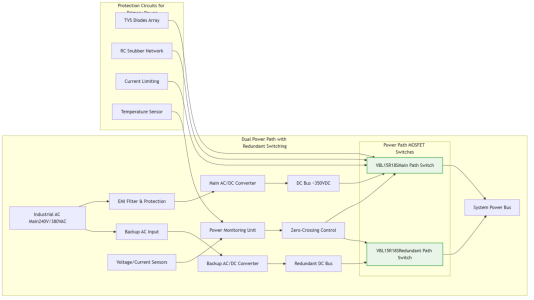
Figure 2: High-End Factory Fire Alarm and Suppression System Primary Power Topology
Core Positioning & System Integration Advantage: This dual N-channel MOSFET in a single compact DFN8 package is the key to achieving intelligent, protected, and isolated power distribution for critical 24V/12V auxiliary circuits. These circuits power smoke/heat detectors, control panel logic, audible/visual alarms, and communication modules.
Application Example: Allows the Fire Alarm Control Panel (FACP) to independently power-cycle a faulty sensor branch for recovery, or to sequentially enable high-current alarms to manage inrush on the backup battery.
PCB Design Value: The dual integration in a 5x6mm DFN package maximizes control board space efficiency, essential for modern compact FACPs or remote node controllers. It simplifies layout for low-side switching configurations.
Reason for Dual N-Channel & Low Rds(on): The extremely low Rds(on) (2.2mΩ @10V) per channel minimizes voltage loss in power distribution paths. Using them as low-side switches with a common source simplifies drive circuitry (referenced to ground) and provides a clear point for current sensing for each channel, enabling precise overcurrent monitoring and protection for each vital subsystem.
II. System Integration Design and Expanded Key Considerations
1. Topology, Drive, and Control Loop
Primary Power Management & Monitoring: The switching of VBL15R18S in redundant power paths must be coordinated by a dedicated Power Monitoring Unit (PMU) with zero-crossing or make-before-break logic to prevent bus disturbances. Its status should be reported to the main FACP.
High-Reliability Actuator Drive: The drive circuit for VBL1606 must be rugged, potentially using isolated drivers for noise immunity. Its control signal should have multiple layers of enablement (from both hardware safety logic and software) to prevent false triggering.
Digital Management of Intelligent Power Distribution: The gates of VBGQA3402 are controlled via the FACP's microcontroller, enabling soft-start for capacitive loads, individual channel current monitoring, and microsecond-level shutdown in case of a short circuit on any sensor/auxiliary loop.
2. Hierarchical Thermal Management Strategy
Primary Heat Source (Chassis Conduction): VBL1606, when driving sustained pump contactor coils, must be mounted on a dedicated heatsink or a thick, isolated thermal pad connected to the metal enclosure.
Secondary Heat Source (PCB Conduction with Heatsink): VBL15R18S in the primary power module should be placed on a PCB with large thermal pads and vias, coupled to a heatsink if the continuous load is significant.
Tertiary Heat Source (PCB Conduction): The VBGQA3402, thanks to its very low Rds(on), will generate minimal heat under normal sensor loads. Its thermal management is primarily achieved through the PCB's internal ground/power planes and surface copper.
3. Engineering Details for Reliability Reinforcement
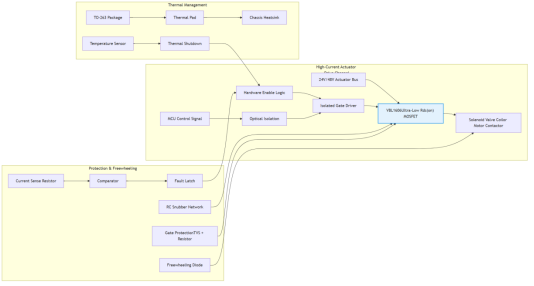
Figure 3: High-End Factory Fire Alarm and Suppression System Critical Actuator Drive Topology
Electrical Stress Protection:
VBL15R18S: Utilize TVS diodes and RC snubbers at the switch node to clamp voltage spikes from line inductance or during switching of inductive loads on the bus.
Inductive Load Shutdown (VBL1606): Mandatory use of freewheeling diodes or RC snubbers across solenoid valves and contactor coils to absorb the high flyback energy and protect the MOSFET.
Enhanced Gate Protection: All gate drives should be protected with series resistors, low-value TVS/Zener diodes (clamping to VGS max), and strong pull-downs. Opto-coupler or transformer isolation for signals in noisy environments is highly recommended.
Derating Practice:
Voltage Derating: For VBL15R18S, operating VDS should be below 400V (80% of 500V) considering surges. For VBL1606 and VBGQA3402, ensure VDS margin above the nominal 24V/12V bus, considering transients.
Current & Thermal Derating: Base continuous current ratings on the actual junction temperature in the end application (Tj < 110°C recommended for high reliability). Pay special attention to the SOA of VBL1606 when driving the high inrush current of solenoid coils.
III. Quantifiable Perspective on Scheme Advantages and Competitor Comparison
Quantifiable Reliability Improvement: Using VBGQA3402 with per-channel current sensing can localize faults to a specific branch with >95% accuracy, drastically reducing system-wide downtime and troubleshooting time compared to fused-only distribution.
Quantifiable Response Time Improvement: The combination of a robust primary path (VBL15R18S) and an ultra-low-resistance actuator driver (VBL1606) can reduce the voltage sag and thus the engagement time of a critical solenoid valve by up to 30% compared to standard MOSFET solutions, leading to faster suppressant release.
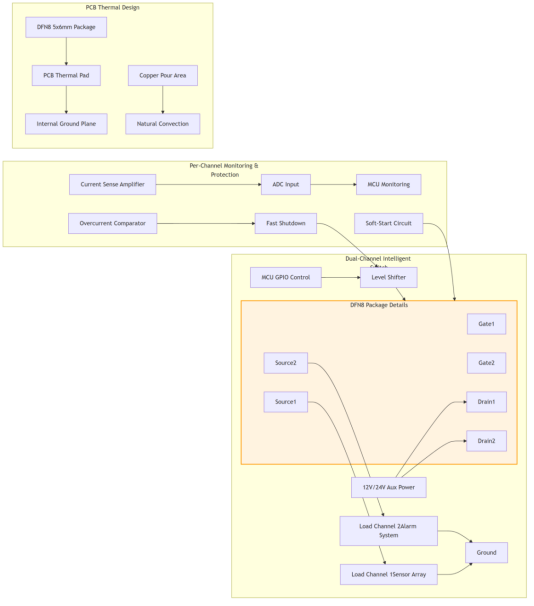
Figure 4: High-End Factory Fire Alarm and Suppression System Auxiliary Distribution Topology
Lifecycle Cost Optimization: The selected high-reliability, low-loss devices reduce energy consumption in 24/7 operation and minimize the risk of field failures. This leads to lower total cost of ownership (TCO), avoiding production losses from false shutdowns or system unavailability.
IV. Summary and Forward Look
This scheme provides a complete, optimized power chain for high-end factory fire protection systems, spanning from primary AC/DC power handling to high-force actuation and intelligent auxiliary circuit management. Its essence lies in "safety by design, reliability through performance":
Primary Power Level – Focus on "Robustness & Surge Immunity": Select high-voltage-rated, technologically advanced MOSFETs to ensure unwavering operation in harsh industrial power environments.
Critical Actuator Level – Focus on "Uncompromised Power Delivery": Invest in ultra-low Rds(on) switches to guarantee maximum energy is delivered to lifesaving actuators, ensuring speed and certainty.
Auxiliary Management Level – Focus on "Intelligence & Fault Isolation": Use highly integrated, low-Rds(on) multi-channel switches to enable granular control, monitoring, and protection of every subsystem.
Future Evolution Directions:
Integrated Smart High-Side Switches: For further simplification, consider high-side power switches with embedded diagnostics (e.g., overtemperature, overcurrent, open load detection) for auxiliary loads.
Wide Bandgap for Ultra-Fast Switching: In next-generation systems with distributed architecture and very fast communication buses, GaN FETs could be considered for ultra-high-frequency DC-DC converters powering advanced sensor nodes.
Engineers can refine and adjust this framework based on specific system parameters such as main voltage levels, actuator inventory and inrush currents, required SIL/PLe safety levels, and environmental conditions, thereby designing failsafe, reliable, and high-performance industrial fire alarm and suppression systems.
Frequently Asked Questions (FAQ)
Q: Which device is recommended for high-voltage bus distribution and redundant path switching?
A: VBL15R18S (500V, 18A, TO-263, SJ-MOSFET) — suitable for the primary AC/DC power supply output or the redundant switchover circuit in a 240VAC/380VAC derived DC bus system.
Q: Which device drives the solenoid valves and pump motors?
A: VBL1606 (60V, 150A, TO-263) — the core switch for high-current DC actuators such as large solenoid valves or the control contactors for fire pump motors.
Q: Which device manages multi-channel sensor and alarm power distribution?
A: VBGQA3402 (Dual 40V, 90A, DFN8) — the key to achieving intelligent, protected, and isolated power distribution for critical 24V/12V auxiliary circuits.

Download PDF document
 Download now:VBL1606


Request Free Samples
*To request free samples, please complete and submit the following information.
Our team will review your application within 24 hours and arrange shipment upon approval. Thank you!