 中文
中文 English
Breaking Through and Surpassing FDS6575: How Domestic P-Channel MOSFET VBA2216 Achieves High-Performance Substitution for onsemi’s Component
Number of views:9999
 Back to previous page
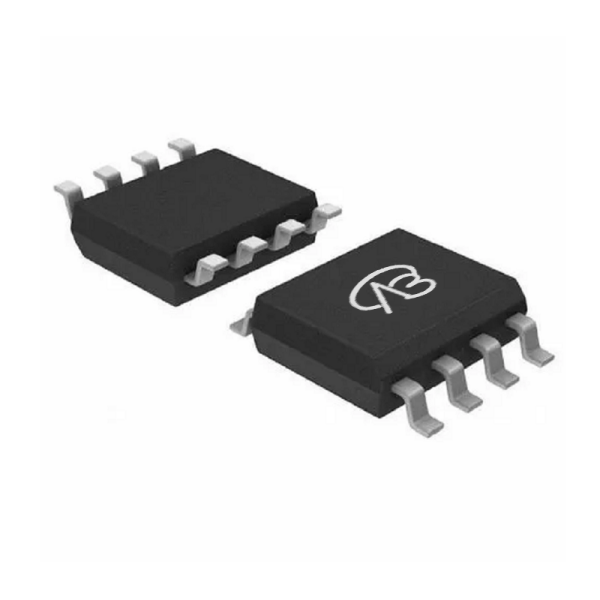
P-Channel MOSFETs play a vital role in power management circuits, especially in applications requiring simplified gate driving and space-efficient design. For years, international manufacturers like onsemi (formerly Fairchild) have set industry benchmarks with products such as the FDS6575. However, evolving supply dynamics and the pursuit of technological self-reliance have made finding dependable domestic alternatives a strategic priority. Represented by VBsemi’s VBA2216, local components are now capable of direct substitution and even outperforming established international references.
Part 1: Analysis of the Classic Component
onsemi’s FDS6575 is a P‑Channel MOSFET rated for –20 V and 10 A, built using advanced PowerTrench® technology. With a low on‑resistance of 17 mΩ (typical at VGS=–2.5 V), it is optimized for power‑management applications operating over a wide gate‑drive range, offering robust performance in space‑constrained designs such as DC‑DC converters, load switches, and battery‑protection circuits.
Part 2: Performance Match and Advantages of the Domestic Alternative
VBsemi’s VBA2216 provides a pin‑to‑pin compatible SOP8 solution that directly substitutes the FDS6575 while delivering meaningful enhancements:
- Higher Current Capability: Continuous drain current rating of –13 A (vs. 10 A), allowing for greater load capacity and design margin.
- Wide Gate‑Drive Range: Supports VGS from ±20 V, ensuring compatibility with various drive levels.
- Low Threshold Voltage: Vth of –0.6 V enables efficient operation in low‑voltage logic‑level applications.
- Stable On‑Resistance: RDS(on) of 21 mΩ at both 2.5 V and 4.5 V gate drive, offering consistent conduction loss across typical operating conditions.
- Advanced Trench Technology: Leverages mature trench‑gate processing for low loss and high reliability.
Part 3: Core Value Beyond Specifications
Selecting a domestic alternative like the VBA2216 brings deeper systemic benefits:
- Supply Chain Resilience: Reduces reliance on single‑source international supply, mitigating availability risks and ensuring production continuity.
- Cost‑Effectiveness: Often provides better price‑to‑performance ratio, potentially lowering overall system cost without sacrificing performance.
- Local Technical Support: Domestic suppliers offer faster response, application‑specific guidance, and collaborative development tailored to regional needs.
- Ecosystem Strengthening: Each successful adoption helps advance local semiconductor expertise, fostering innovation and a sustainable industrial cycle.
Part 4: A Practical Path for Substitution Implementation
To ensure a smooth transition, the following steps are recommended:
- Detailed Parameter Review: Compare all electrical characteristics, including dynamic parameters and temperature dependencies.
- Lab Validation: Perform static tests, switching evaluations, thermal measurements, and reliability stress tests under actual operating conditions.
- Pilot Batch Verification: Introduce the VBA2216 into real products and monitor performance over an extended period.
- Phased Rollout Plan: Gradually replace the incumbent component after full validation, while temporarily retaining the original design as a backup option.
Conclusion: From “Compatible” to “Competitive”
The progression from the FDS6575 to the VBA2216 illustrates that domestic power MOSFETs have reached a level where they can match—and in key aspects surpass—long‑established international counterparts. Adopting such high‑performance domestic solutions is not only a practical response to current supply‑chain pressures but also a strategic step toward building an independent, resilient, and innovative electronics industry. Now is the ideal time to actively evaluate and integrate qualified domestic alternatives like the VBA2216.

Download PDF document
 Download now


