 中文
中文 English
Breaking VBM16R06 Through and Surpassing: How Domestic Power MOSFETs Achieve High-Performance Substitution IRFBC40R
Number of views:9999
 Back to previous page
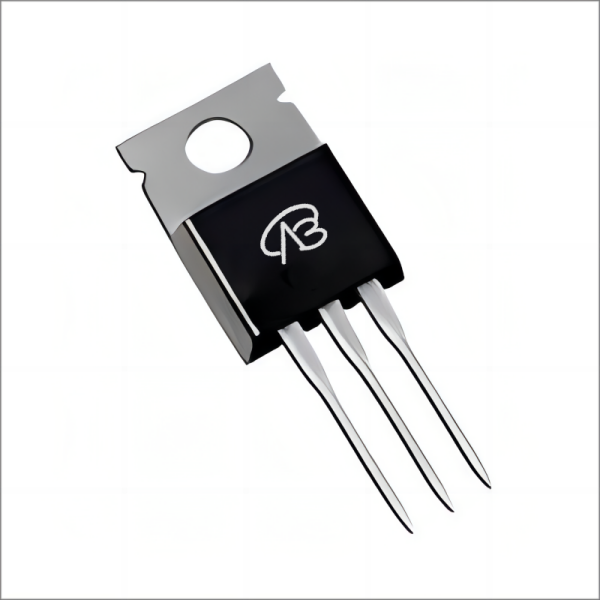
Power MOSFETs are the crucial "switches" controlling energy flow in modern electronic devices. For a long time, international brands like Texas Instruments (TI) have dominated the market with their classic products, such as the IRFBC40R. However, global supply chain volatility and the need for technological autonomy have made seeking reliable, high-performance domestic alternatives a strategic necessity. Represented by VBsemi's VBM16R06, domestic components are now achieving direct benchmarking and even surpassing international classics.
Part 1: Analysis of the Classic Component
TI's IRFBC40R is a high-voltage MOSFET (600V, 6.2A) with a typical on-resistance of 1.2Ω at 10V gate drive. It leverages robust technology to balance voltage withstand and current handling, making it widely used in medium-power applications like switch-mode power supplies, motor drives, and industrial controls, often serving as a standard design choice.
Part 2: Performance Surpassing by the Domestic Challenger
VBsemi's VBM16R06 directly benchmarks the IRFBC40R and offers improvements in key parameters:
Lower Conduction Loss: Typical on-resistance is 0.96Ω at 10V (a reduction from 1.2Ω), significantly reducing conduction losses and enhancing system efficiency.
Equivalent Voltage and Current: Maintains the same drain-source voltage (600V) and continuous drain current (6.2A), ensuring seamless compatibility in existing designs.
Full Compatibility: Uses the pin-compatible TO-220 package, enabling direct replacement without PCB modifications.
The device is based on a mature planar gate process, guaranteeing stable and reliable performance.
Part 3: Core Value Beyond Specifications
Choosing a domestic alternative brings deeper advantages:
Ensuring Supply Chain Security: Reduces dependence on a single international supply chain, ensuring supply stability and production continuity.
Optimizing Overall Cost: Typically offers better cost competitiveness with equivalent or superior performance, potentially enabling optimization of peripheral designs (e.g., thermal management).
Accessing Rapid Local Support: Domestic suppliers can provide more agile technical support and joint development tailored to actual application scenarios.
Boosting the Industrial Ecosystem: Every successful application helps the domestic semiconductor industry accumulate experience and iterate technology, forming a virtuous development cycle.
Part 4: A Robust Path for Substitution Implementation
For a smooth transition, the following steps are recommended:
Detailed Specification Comparison: Carefully compare all key electrical parameters and characteristic curves.
Rigorous Laboratory Testing: Conduct static parameter tests, dynamic switching tests, temperature rise/efficiency tests, and reliability stress tests.
Small-Batch Pilot Verification: Trial the component in real products and environments, tracking long-term performance.
Develop a Switchover and Backup Plan: Implement the substitution gradually after verification is complete, while retaining the original design as a short-term backup.
Conclusion: Moving from "Usable" to "Excellent"
The evolution from the IRFBC40R to the VBM16R06 demonstrates that domestic power semiconductors now possess the capability to compete with and even surpass international classics in critical aspects. Adopting such high-performance domestic components is not only a pragmatic choice to address current supply chain challenges but also a strategic move to build an autonomous, resilient, and innovative industrial ecosystem for the future. Now is the opportune time to actively evaluate and introduce high-quality domestic solutions.

Download PDF document
 Download now


