 中文
中文 English
Scenario Product Guide
Power MOSFET Selection Analysis for High-End Electric Surfboard Propulsion Syste
 Back to previous page
In the realm of high-performance personal watercraft, the electric surfboard represents the pinnacle of compact, high-thrust electric propulsion. Its performance, range, and safety are fundamentally dictated by the capabilities of its onboard power electronics system. The motor drive controller, battery management system (BMS), and auxiliary power distribution act as the board's "power core and nervous system," responsible for delivering efficient, responsive thrust and ensuring intelligent management of the sealed battery pack. The selection of power MOSFETs profoundly impacts the system's power-to-weight ratio, thermal performance in a confined space, waterproof reliability, and operational safety. This article, targeting the demanding application scenario of electric surfboards—characterized by stringent requirements for compactness, efficiency under high vibration/moisture, and robust safety—conducts an in-depth analysis of MOSFET selection for key power nodes, providing an optimized device recommendation scheme.
Key Takeaways (At a Glance)
• VBE1638A — Main switch in the motor H-bridge drive stage or high-current DC-DC converter for the propulsion system.
• VBQF1252M — Key protection switch in the Battery Management System (BMS) for charge/discharge control, or as a switch in an auxiliary isolated power supply.
• VBK2298 — Intelligent power domain switching for auxiliary loads (e.g., LED lighting, IoT/GPS module, safety cutoff solenoid).
Recommended Power MOSFETs at a Glance
Device | Type | VDS | Continuous Current | Rds(on) | Package | Role in This Solution |
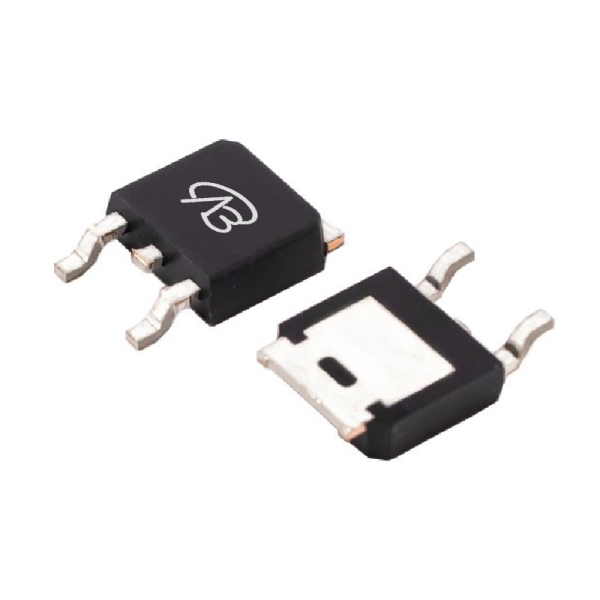
VBE1638A | Single-N | 60V | 45A | 21mΩ @10V | TO-252 (DPAK) | Main switch in the motor H-bridge drive stage or high-current DC-DC converter |
VBQF1252M | Single-N | 250V | 10.3A | 125mΩ @10V | DFN8(3x3) | Key protection switch in the Battery Management System (BMS) |
VBK2298 | Single-P | -20V | -3.1A | 80mΩ @4.5V | SC70-3 | Intelligent power domain switching for auxiliary loads |
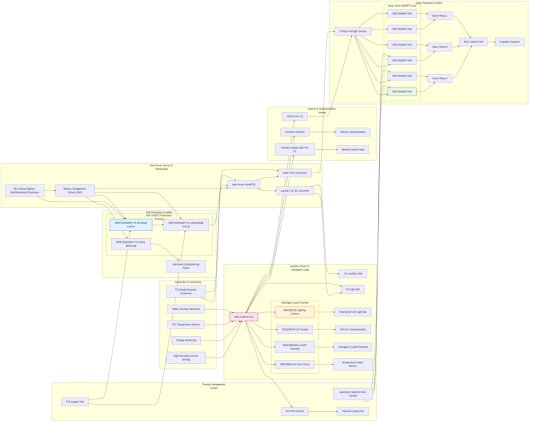
Figure 1: High-End Electric Surfboard Solution Overall Topology
Detailed MOSFET Selection Analysis
1. VBE1638A (Single-N, 60V, 45A, TO-252)
Role: Main switch in the motor H-bridge drive stage or high-current DC-DC converter for the propulsion system.
Technical Deep Dive:
Voltage Stress & Efficiency Core: For systems based on 48V Li-ion battery packs, the 60V rating of the VBE1638A provides a crucial safety margin against voltage spikes during regenerative braking or transient loads. Utilizing trench technology, its low Rds(on) (21mΩ @10V) minimizes conduction losses, which is paramount for maximizing runtime and thrust efficiency. The 45A continuous current rating is well-suited for driving high-torque, brushless DC motors in the 2-3kW range, ensuring robust power delivery.
Power Density & Thermal Management: The TO-252 (DPAK) package offers an excellent balance between current-handling capability and footprint. It can be mounted compactly on a dedicated heatsink or the board's metal hull for effective heat dissipation, a critical factor within the sealed enclosure of a surfboard where air cooling is limited. Its performance directly influences the continuous power rating and thermal stability of the drive system.
2. VBQF1252M (Single-N, 250V, 10.3A, DFN8(3x3))
Role: Key protection switch in the Battery Management System (BMS) for charge/discharge control, or as a switch in an auxiliary isolated power supply.
Extended Application Analysis:
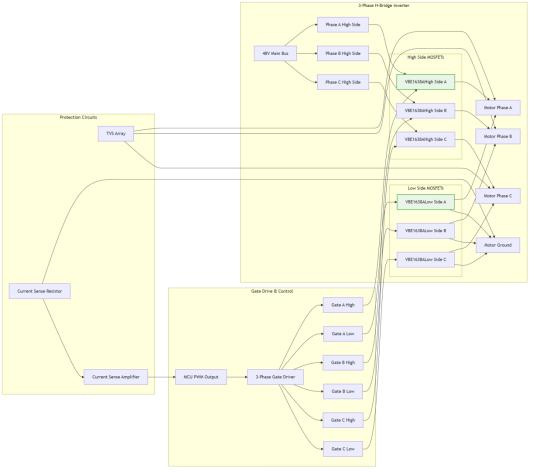
Figure 2: High-End Electric Surfboard Solution Motor Drive Topology
BMS Safety & Reliability Core: In a multi-cell series battery pack, the BMS must safely handle the total pack voltage. The 250V rating of the VBQF1252M provides ample headroom for packs up to ~60s, ensuring reliable blocking capability during fault conditions. Its low Rds(on) (125mΩ @10V) minimizes voltage drop and heat generation in the critical charge/discharge path, enhancing overall efficiency and safety. Compactness for Sealed Environments: The ultra-compact DFN8 package is ideal for the densely populated BMS PCB, which must fit within the waterproof battery compartment. This allows for a robust protection circuit without sacrificing valuable space. Its trench technology ensures stable operation despite the constant vibration and potential thermal cycling experienced on the water.
3. VBK2298 (Single-P, -20V, -3.1A, SC70-3)
Role: Intelligent power domain switching for auxiliary loads (e.g., LED lighting, IoT/GPS module, safety cutoff solenoid).
Precision Power & Safety Management:
Ultra-Compact Load Control: This P-MOSFET in a minuscule SC70-3 package is the ideal solution for managing low-power auxiliary systems where board space is at an extreme premium. Its -20V rating is perfect for 12V auxiliary rails derived from the main battery. It can be used as a high-side switch to enable/disable non-critical loads, allowing for intelligent power sequencing and sleep modes to conserve energy.
Low-Power Efficiency & Direct Drive: Featuring a very low gate threshold (Vth: -0.6V) and good Rds(on) (80mΩ @4.5V), it can be driven efficiently directly from a low-voltage microcontroller GPIO, simplifying the control circuitry. This enables reliable, software-controlled activation of safety features like a waterproof LED light bar or a wireless communication module.
System-Level Design and Application Recommendations
Drive Circuit Design Key Points:
Motor Drive Switch (VBE1638A): Requires a gate driver with adequate current capability to ensure fast switching, minimizing losses in the PWM stage. Careful layout to minimize power loop inductance is critical to contain voltage spikes and reduce EMI.
BMS Protection Switch (VBQF1252M): Driving this high-side switch may require a bootstrap or isolated driver circuit. Its gate must be protected against transients from the battery bus.
Auxiliary Switch (VBK2298): Can be driven directly by an MCU through a small series resistor. Implementing RC filtering at the gate is recommended to enhance noise immunity in the electrically noisy marine environment.
Thermal Management and Reliability Design:
Tiered Heat Sinking: The VBE1638A must be mounted on a dedicated thermal pad connected to the board's hull or an internal heatsink. The VBQF1252M relies on PCB copper pours for heat dissipation. The VBK2298 generates negligible heat.
Waterproofing & Corrosion Protection: Conformal coating is essential for all PCBs. Special attention must be paid to the creepage and clearance distances around the VBQF1252M due to its higher voltage rating.
Enhanced Protection: TVS diodes should be used on battery inputs and motor terminals. All MOSFET gates should have ESD protection. The system must include robust over-current, over-temperature, and water intrusion detection interlocks.
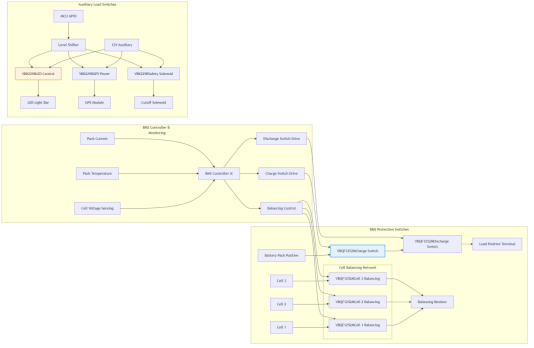
Figure 3: High-End Electric Surfboard Solution Battery Management System Topology
Conclusion
In the design of high-performance, waterproof propulsion systems for high-end electric surfboards, power MOSFET selection is key to achieving thrilling acceleration, extended range, and failsafe operation in aquatic environments. This three-tier MOSFET scheme embodies the design philosophy of ultimate power density, environmental resilience, and intelligent power control.
Core value is reflected in:
High-Thrust Efficiency & Compactness: From the high-efficiency motor drive (VBE1638A) and reliable BMS safety core (VBQF1252M), down to the minimalist auxiliary power management (VBK2298), a complete, efficient, and ultra-compact power chain from battery to propeller is constructed.
Intelligent Operation & Safety: The ability to independently control auxiliary systems via the VBK2298 provides the hardware basis for smart features like automatic lighting, low-power sleep modes, and remote system disable, enhancing both user experience and safety.
Extreme Environment Ruggedness: Device selection balances current capability, voltage rating, and minute package size. Coupled with rigorous thermal design and waterproofing, this ensures reliable operation despite constant exposure to vibration, humidity, and temperature swings.
Future-Oriented Scalability: The modular approach allows for power scaling (e.g., using multiple VBE1638A in parallel for higher power boards) and easy integration of additional smart features via more auxiliary switches.
Future Trends: As electric surfboards evolve towards longer range, faster charging, and connected smart features, power device selection will trend towards:
Adoption of GaN HEMTs in the motor drive stage for even higher frequency switching, reducing the size of passive components.
Integrated load switches with built-in diagnostics for smarter auxiliary power management.
Further miniaturization of BMS protection switches to enable even more compact and energy-dense battery packs.
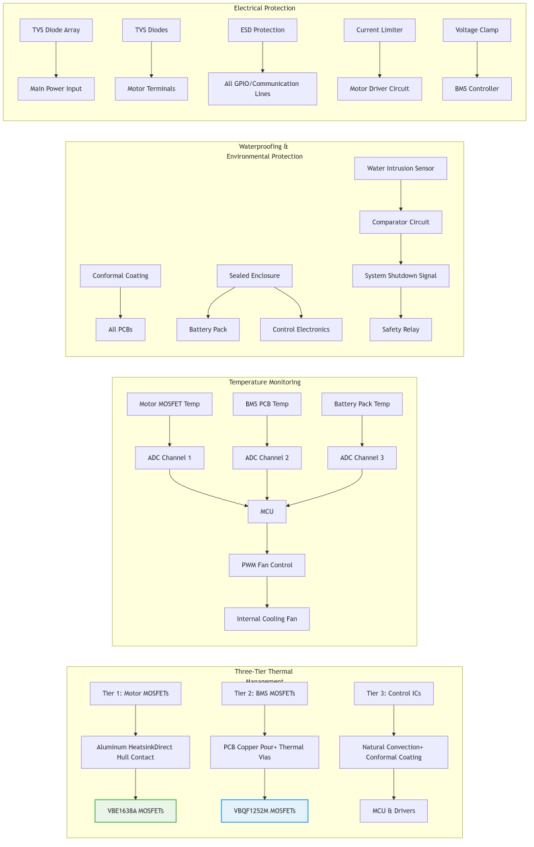
Figure 4: High-End Electric Surfboard Solution Thermal Management Topology
This recommended scheme provides a complete power device solution for high-end electric surfboards, spanning from battery management to motor drive and intelligent auxiliary control. Engineers can refine selections based on specific power levels (e.g., 2kW vs. 5kW), battery configurations, and feature sets to build robust, high-performance propulsion systems that define the future of personal watercraft.
Frequently Asked Questions (FAQ)
Q: What is the recommended role of the VBE1638A in an electric surfboard?
A: Main switch in the motor H-bridge drive stage or high-current DC-DC converter for the propulsion system.
Q: Which device is recommended for the Battery Management System (BMS) switch?
A: VBQF1252M — Key protection switch in the Battery Management System (BMS) for charge/discharge control, or as a switch in an auxiliary isolated power supply.
Q: What is the VBK2298 used for?
A: Intelligent power domain switching for auxiliary loads (e.g., LED lighting, IoT/GPS module, safety cutoff solenoid).

Download PDF document
 Download now:VBE1638A


Request Free Samples
*To request free samples, please complete and submit the following information.
Our team will review your application within 24 hours and arrange shipment upon approval. Thank you!