 中文
中文 English
Breaking VBRA1638 Through and Surpassing: How Domestic Power MOSFETs Achieve High-Performance Substitution 2SK2851TZ-E
Number of views:9999
 Back to previous page
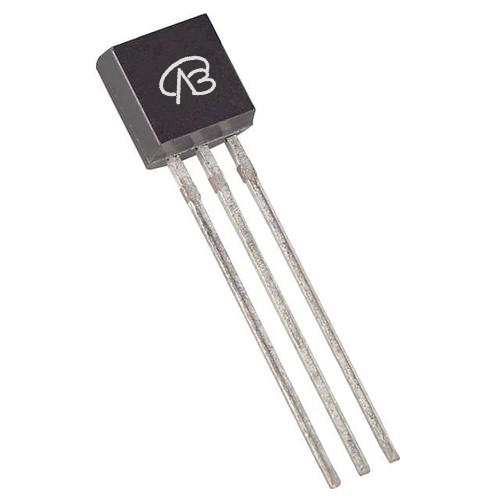
Power MOSFETs serve as essential switches for energy control in modern electronics. For years, international giants like RENESAS (IDT) have led the market with established components such as the 2SK2851TZ-E. However, global supply chain uncertainties and the pursuit of technological self-reliance have made finding reliable, high-performance domestic alternatives a strategic imperative. Represented by VBsemi's VBRA1638, domestic solutions are now achieving direct competition and even outperforming international benchmarks.
Part 1: Analysis of the Classic Component
RENESAS's 2SK2851TZ-E is a low-voltage MOSFET (60V, 5A) featuring a moderate on-resistance (70mΩ@10V) and a dissipation power of 900mW. It is commonly used in applications like power management, motor drives, and low-power switching circuits, serving as a go-to choice for many designs due to its balanced performance and reliability.
Part 2: Performance Surpassing by the Domestic Challenger
VBsemi's VBRA1638 directly targets the 2SK2851TZ-E and demonstrates enhancements in critical parameters:
Higher Current Capacity: Continuous drain current reaches 28A (a significant increase from 5A), enabling support for more demanding loads and higher power applications.
Lower Conduction Loss: Typical on-resistance is 38mΩ@10V (compared to 70mΩ), reducing conduction losses and improving overall system efficiency.
Robust Voltage Ratings: Drain-source voltage is 60V, matching the classic component, while gate-source voltage withstand is ±20V with a threshold voltage of 2V, ensuring stable operation.
Full Compatibility: Utilizes a pin-compatible TO-92 package, allowing for direct drop-in replacement without PCB redesign.
The device leverages advanced Trench technology, delivering optimized performance and reliability.
Part 3: Core Value Beyond Specifications
Opting for a domestic alternative offers deeper strategic benefits:
Securing Supply Chains: Reduces reliance on single-source international suppliers, ensuring stable availability and production continuity.
Cost Optimization: Provides competitive pricing with superior performance, potentially lowering overall system costs and simplifying peripheral designs.
Accessing Agile Local Support: Domestic suppliers offer faster technical assistance and tailored solutions for specific application needs.
Strengthening the Industrial Ecosystem: Each successful adoption fuels experience and innovation within the domestic semiconductor sector, creating a positive feedback loop for growth.
Part 4: A Robust Path for Substitution Implementation
To ensure a smooth transition, follow these steps:
Detailed Specification Review: Compare all key electrical parameters and characteristic curves between the two components.
Rigorous Laboratory Testing: Perform static parameter checks, dynamic switching tests, thermal/efficiency evaluations, and reliability stress tests.
Small-Batch Pilot Verification: Test the component in real-world products and environments, monitoring long-term performance.
Develop a Switchover and Backup Plan: Gradually implement the substitution post-verification, while keeping the original design as a short-term backup option.
Conclusion: Moving from "Usable" to "Excellent"
The progression from the 2SK2851TZ-E to the VBRA1638 illustrates that domestic power semiconductors have evolved to not only match but exceed international classics in key areas. Embracing such high-performance domestic alternatives is both a practical response to supply chain challenges and a strategic step toward building an autonomous, resilient, and innovative industrial future. Now is the ideal time to actively evaluate and integrate quality domestic solutions.

Download PDF document
 Download now


