 中文
中文 English
Breaking TK22A65X,S5X Through and Surpassing: How Domestic Power MOSFETs Achieve High-Performance Substitution
Number of views:9999
 Back to previous page
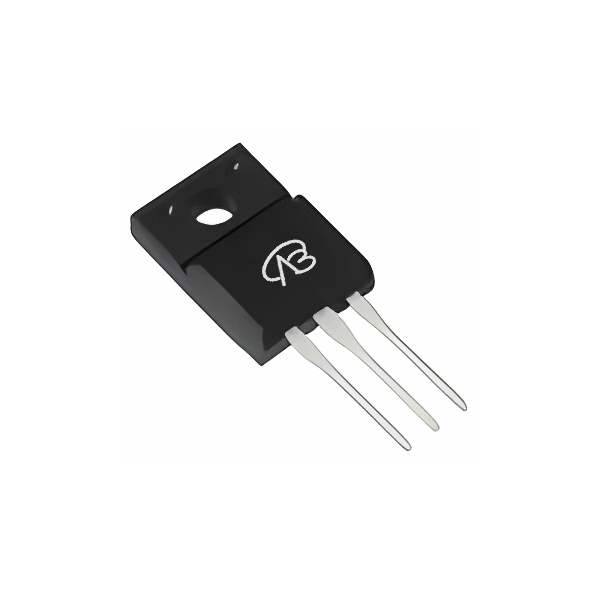
Power MOSFETs serve as the fundamental switches governing energy flow in power electronics. For years, international leaders like Toshiba have set benchmarks with established products such as the TK22A65X,S5X. However, evolving global dynamics and the pursuit of technological self-reliance have made identifying robust, high-performance domestic alternatives a critical strategic move. Represented by VBsemi's VBMB165R20S, domestic components are now achieving direct competition and surpassing such international benchmarks.
Part 1: Analysis of the Classic Component
Toshiba's TK22A65X,S5X is an N-channel MOSFET rated for 650V and 22A continuous drain current. Designed with a focus on reliability and efficiency, it finds widespread use in demanding medium-to-high power applications including switching power supplies, motor drives, and industrial controls. Its balance of voltage rating, current capability, and a power dissipation of 45W has made it a trusted choice for many engineers.
Part 2: Performance Surpassing by the Domestic Challenger
VBsemi's VBMB165R20S directly competes with the TK22A65X,S5X and demonstrates enhancements in several key areas:
Superior Voltage Rating: Drain-source voltage (VDS) is raised to 700V, providing a greater safety margin and enhanced robustness in high-voltage scenarios.
Reduced Conduction Loss: With a typical on-resistance (RDS(on)) of only 160mΩ at 10V VGS, it offers lower conduction losses compared to many counterparts in its class, leading to improved system efficiency.
High Current Capacity: It supports a continuous drain current (ID) of 20A, suitable for applications requiring substantial current handling.
Advanced Technology: Built using a SJ_Multi-EPI (Super Junction Multi-Epitaxial) process, this technology optimizes the trade-off between on-resistance and breakdown voltage.
Seamless Replacement: It employs a pin-to-pin compatible, fully insulated TO-220F package, allowing for direct substitution without redesigning the PCB layout.
Part 3: Core Value Beyond Specifications
Selecting this domestic alternative delivers deeper strategic advantages:
Supply Chain Resilience: Mitigates risks associated with single-source international supply chains, ensuring greater stability and production continuity.
Cost Structure Optimization: Often provides a more favorable cost-performance ratio, potentially allowing for savings or reallocation of resources in system design.
Responsive Local Support: Enables access to faster, more tailored technical support and collaborative problem-solving from the domestic supplier.
Strengthening the Industrial Base: Each successful adoption contributes to the domestic semiconductor ecosystem, fostering technological accumulation and a virtuous cycle of innovation.
Part 4: A Robust Path for Substitution Implementation
To ensure a smooth and reliable transition, the following steps are recommended:
Comprehensive Parameter Review: Meticulously compare all electrical specifications, thermal characteristics, and switching performance curves.
Thorough Laboratory Validation: Perform rigorous testing including static parameter verification, dynamic switching analysis, thermal performance/efficiency evaluation, and reliability stress tests.
Pilot Implementation: Conduct small-batch trials within actual end products and operating environments to monitor performance and long-term stability.
Develop a Phased Transition Plan: Implement the substitution gradually upon successful verification, while maintaining the original component as a short-term backup option to mitigate risk.
Conclusion: Moving from "Usable" to "Excellent"
The progression from the TK22A65X,S5X to the VBMB165R20S exemplifies that domestic power semiconductors have reached a level where they can not only match but exceed key performance metrics of established international classics. Embracing such high-performance domestic components is both a practical response to contemporary supply chain considerations and a strategic investment in building a more autonomous, resilient, and innovative industrial future. The time is ripe to actively evaluate and integrate these capable domestic solutions.

Download PDF document
 Download now


