 中文
中文 English
Breaking Through and Surpassing MCC MCQD08N03A-TP: How Domestic Dual N-Channel MOSFETs Achieve High-Performance Substitution with VBA3316
Number of views:9999
 Back to previous page
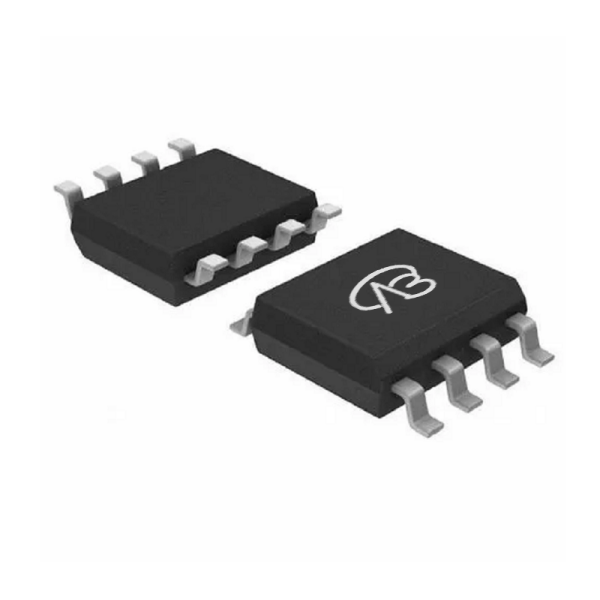
Dual N-channel MOSFETs in SOP8 packages are fundamental building blocks for power management and switching in compact, space-constrained modern electronics. For applications requiring efficient load switching, international brands like MCC (Micro Commercial Components) have established benchmarks with products like the MCQD08N03A-TP. However, the evolving global landscape and the pursuit of supply chain resilience make finding reliable, pin-to-pin domestic alternatives a critical design strategy. Represented by VBsemi's VBA3316, domestic components are now achieving direct replacement and performance enhancement over such established international parts.
Part 1: Analysis of the Classic Component
MCC's MCQD08N03A-TP is a dual N-channel MOSFET (30V, 8.5A per channel) housed in a space-saving SOP8 package. It offers a balanced performance for low-voltage applications, featuring a specified on-resistance (RDS(on)) of 32mΩ at VGS=4.5V. This combination of voltage rating, current capability, and low on-resistance in a dual configuration makes it a popular choice for power distribution, motor control, and load switching in consumer electronics, portable devices, and various module designs.
Part 2: Performance Surpassing by the Domestic Challenger
VBsemi's VBA3316 directly targets the MCQD08N03A-TP, providing equivalent or superior key specifications:
Low Conduction Loss: It features a low typical on-resistance, with a value of 16mΩ at VGS=10V, ensuring reduced conduction losses and higher efficiency in operation.
Full Electrical & Mechanical Compatibility: It matches the critical ratings: Drain-Source Voltage (VDS) of 30V, Continuous Drain Current (ID) of 8.5A per channel, and a gate threshold voltage (Vth) of 1.7V. It utilizes the identical SOP8 package with a Dual-N+N configuration, enabling a true drop-in replacement without any PCB layout modifications.
Robust Trench Technology: The device is built on a mature Trench MOSFET process, which is optimized for low on-resistance and stable switching characteristics, ensuring reliable performance.
Part 3: Core Value Beyond Specifications
Opting for this domestic alternative delivers strategic advantages extending beyond the datasheet:
Ensuring Supply Chain Security: Mitigates risks associated with single-source or international supply chain disruptions, enhancing project stability and production planning.
Optimizing Total Cost: Often presents a more favorable cost-performance ratio, potentially lowering the Bill of Materials (BOM) cost while maintaining or improving performance.
Accessing Agile Local Support: Proximity to domestic suppliers facilitates faster technical support, quicker sample acquisition, and more responsive collaboration for application-specific tuning.
Strengthening the Industrial Base: Successful adoption contributes to the growth and technological maturation of the domestic semiconductor ecosystem, fostering long-term innovation and self-reliance.
Part 4: A Robust Path for Substitution Implementation
To ensure a seamless transition, a structured verification approach is recommended:
Detailed Specification Comparison: Conduct a thorough review of all electrical parameters, including full characteristic curves for RDS(on), capacitances, and switching behavior.
Rigorous Laboratory Testing: Perform static parameter verification, dynamic switching tests under typical load conditions, and thermal performance evaluation.
Small-Batch Pilot Verification: Integrate the VBA3316 into actual end products or prototypes for real-world performance and long-term reliability assessment.
Develop a Switchover Plan: Implement the substitution in production phases after successful verification, while maintaining the original component as a short-term backup option if necessary.
Conclusion: Moving from "Compatible" to "Competitive"
The progression from the MCC MCQD08N03A-TP to the VBsemi VBA3316 exemplifies that domestic power semiconductors have reached a stage where they can not only match but also offer enhanced value compared to established international counterparts in specific categories. Adopting such high-performance, drop-in compatible domestic components is a practical solution to immediate supply chain concerns and a strategic investment in building a more autonomous, resilient, and innovative electronics manufacturing future. The time is ideal to actively evaluate and integrate these qualified domestic alternatives.

Download PDF document
 Download now


