 中文
中文 English
Breaking Through and Surpassing IXTQ60N20L2: How Domestic Power MOSFETs Achieve High-Performance Substitution
Number of views:9999
 Back to previous page
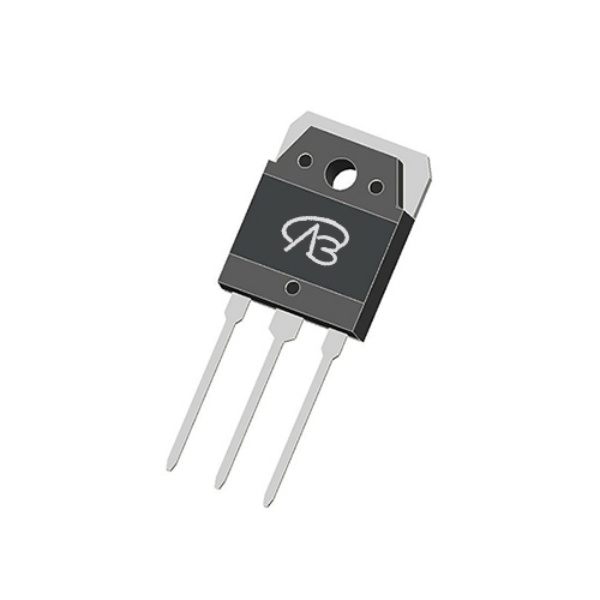
Power MOSFETs serve as the fundamental switches managing energy flow in power electronic systems. Internationally established components, such as Littelfuse IXYS's IXTQ60N20L2, have long been benchmark choices. However, evolving global dynamics and the pursuit of supply chain resilience have heightened the demand for reliable, high-performance domestic alternatives. Represented by VBsemi's VBPB1204N, domestic MOSFETs are now capable of direct substitution and even offer competitive advantages over such classic counterparts.
Part 1: Analysis of the Classic Component
Littelfuse IXYS's IXTQ60N20L2 is an N-channel MOSFET rated for 200V drain-source voltage (Vdss) and a continuous drain current (Id) of 60A. It features a low on-resistance (RDS(on)) of 45mΩ, making it suitable for high-current switching applications like motor drives, power supplies, and industrial controls. Its performance has made it a trusted solution in demanding medium-power circuits.
Part 2: Performance Matching by the Domestic Alternative
VBsemi's VBPB1204N is designed as a direct substitute for the IXTQ60N20L2, offering closely matched key parameters:
- Voltage & Current Rating: Equivalent 200V VDS and 60A continuous drain current, ensuring seamless compatibility in existing voltage and current design frameworks.
- Conduction Performance: A slightly higher but highly competitive RDS(on) of 48mΩ (at VGS=10V), maintaining low conduction losses and system efficiency.
- Robust Gate Characteristics: Gate-source voltage (VGS) rated at ±20V and a standard threshold voltage (Vth) of 3V, ensuring reliable drive compatibility.
- Package & Compatibility: Offered in a TO-3P package as a single N-channel device, enabling a drop-in replacement without board redesign.
- Advanced Technology: Built on a Trench technology platform, providing a robust balance between switching performance, low on-resistance, and reliability.
Part 3: Core Value Beyond Specifications
Selecting a domestic alternative like the VBPB1204N delivers strategic benefits beyond electrical specs:
- Enhanced Supply Security: Reduces reliance on cross-border supply chains, mitigating geopolitical and logistical risks to ensure production stability.
- Cost Structure Optimization: Often provides a more favorable total cost of ownership without sacrificing performance, potentially freeing budget for system-level enhancements.
- Responsive Local Support: Direct access to supplier engineering teams enables faster technical support, customization feedback, and collaborative problem-solving.
- Strengthening the Domestic Ecosystem: Each successful adoption contributes to the growth and technological maturation of the domestic semiconductor industry, fostering long-term innovation and self-reliance.
Part 4: A Robust Path for Substitution Implementation
To ensure a smooth and reliable transition, a structured verification approach is recommended:
1. Detailed Parameter Audit: Compare all relevant electrical characteristics, including switching parameters, capacitance, and safe operating area (SOA).
2. Comprehensive Laboratory Testing: Perform static parameter verification, dynamic switching tests under load, thermal performance analysis, and short-term reliability stress tests.
3. Pilot Batch Validation: Install the VBPB1204N in actual end-product prototypes or pilot lines, monitoring performance in real-world operating conditions over an extended period.
4. Phased Implementation Plan: After full validation, execute a phased production roll-out while maintaining the original component as a temporary backup option to minimize risk.
Conclusion: From Direct Replacement to Value Creation
The transition from the IXTQ60N20L2 to the VBPB1204N illustrates that domestic power semiconductors have reached a level of performance and reliability that meets or exceeds international standards in key application segments. Adopting such qualified domestic alternatives is not merely a tactical response to supply chain concerns; it is a strategic step towards building a more secure, efficient, and innovative technological foundation for the future. Now is the time to actively evaluate and integrate these high-performance domestic solutions.

Download PDF document
 Download now


