 中文
中文 English
Breaking Through and Surpassing: How Domestic Power MOSFET VBE1402 Achieves High-Performance Substitution for ROHM RD3G07BBGTL1
Number of views:9999
 Back to previous page
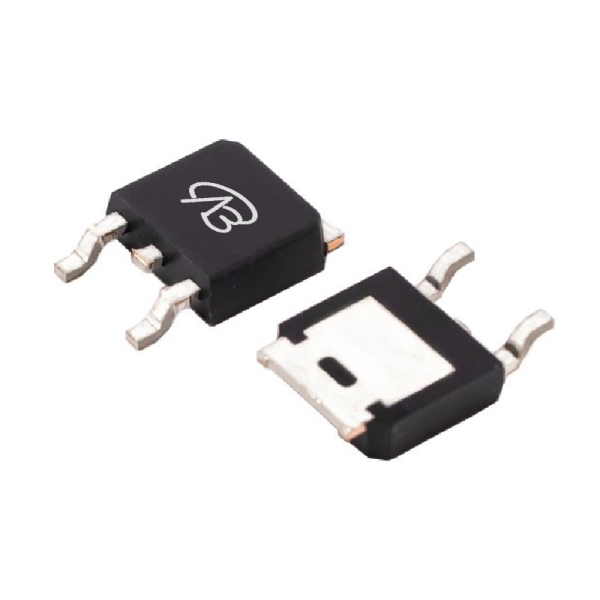
In the realm of power management, low-voltage, high-current MOSFETs serve as critical switches for efficiency and control. International brands like ROHM have set benchmarks with components such as the RD3G07BBGTL1. However, evolving supply chain dynamics and the pursuit of technological self-reliance drive the need for robust domestic alternatives. Represented by VBsemi's VBE1402, domestic power semiconductors are now capable of direct substitution and outperforming established international counterparts.
Part 1: Analysis of the Classic Component
ROHM's RD3G07BBGTL1 is a high-performance, low-voltage MOSFET rated for 40V and 150A continuous drain current. With a low on-resistance of 2.3mΩ (at Vgs=10V) and a power dissipation of 89W, it is engineered for applications demanding high current handling and minimal conduction loss, such as DC-DC converters, motor drives, and power tools. Its performance has made it a preferred choice in demanding automotive and industrial circuits.
Part 2: Performance Surpassing by the Domestic Challenger
VBsemi's VBE1402 directly targets and improves upon key parameters of the RD3G07BBGTL1:
Superior Conduction Efficiency: Features a remarkably low on-resistance of 1.6mΩ (at Vgs=10V), significantly reducing conduction losses and improving overall system efficiency compared to the 2.3mΩ of the classic part.
Robust Voltage Ratings: Maintains a drain-source voltage (VDS) of 40V with a gate-source voltage (VGS) rating of ±20V, ensuring compatibility and robustness in similar application environments.
Optimized Current Capacity: Offers a continuous drain current (ID) of 120A, which is suitable for a broad range of high-current applications, often meeting or exceeding design margins.
Advanced Trench Technology: Built on a mature Trench process platform, ensuring fast switching, high reliability, and stable performance.
Package Compatibility: Provided in a TO-252 (DPAK) package, facilitating a pin-to-pin replacement without board layout changes.
Part 3: Core Value Beyond Specifications
Selecting the domestic VBE1402 extends advantages beyond the datasheet:
Enhanced Supply Chain Resilience: Reduces dependency on single-source international suppliers, mitigating geopolitical and logistical risks to ensure production stability.
Cost-Effectiveness: Delivers a better performance-to-cost ratio, allowing for potential savings in system design, including simplified thermal management due to lower losses.
Agile Local Support: Enables faster technical response, customized solution collaboration, and streamlined logistics from a domestic supplier.
Strengthening the Industrial Base: Each successful adoption contributes to the domestic semiconductor ecosystem, fostering technological iteration and independent innovation.
Part 4: A Robust Path for Substitution Implementation
To ensure a seamless transition, the following steps are recommended:
Comprehensive Parameter Audit: Meticulously compare all electrical characteristics, including threshold voltage (Vth), switching parameters, and safe operating area (SOA).
Rigorous Laboratory Validation: Perform static parameter verification, dynamic switching tests, thermal performance analysis, and long-term reliability stress tests under actual operating conditions.
Pilot Integration and Field Testing: Implement the VBE1402 in small-scale production runs or prototype systems to monitor performance in real-world scenarios.
Develop a Phased Replacement Strategy: After successful validation, plan a gradual switchover while temporarily maintaining the original component as a backup option to minimize risk.
Conclusion: From Direct Replacement to Performance Leadership
The progression from the ROHM RD3G07BBGTL1 to the VBsemi VBE1402 illustrates that domestic power MOSFETs have reached a stage where they not only match but can exceed key performance metrics of international classics. Adopting such high-performance domestic alternatives is a practical strategy to overcome contemporary supply chain challenges and a forward-looking investment in building a self-reliant, competitive, and innovative industrial future. The time is ripe to actively evaluate and integrate these capable domestic solutions.

Download PDF document
 Download now


