Introduction
Dual P-Channel power MOSFETs are key components in power management and load switching circuits. For years, international brands like MCC (Micro Commercial Co.) have set benchmarks with established products such as the MCQ4953-TP. However, evolving global supply dynamics and the pursuit of technological self-reliance have made finding reliable, high-performance domestic alternatives a strategic imperative. Represented by VBsemi’s VBA4338, domestic components are now achieving direct对标and even surpassing international benchmarks.
Part 1: Analysis of the Classic Component
MCC’s MCQ4953-TP is a dual P-Channel MOSFET (30V, 5A per channel) featuring a low on-resistance (60mΩ @10V, 4.9A). It is designed with lead-free plating, is fully RoHS compliant, meets UL 94 V-0 flammability rating, and has a Moisture Sensitivity Level of 1. This device is widely used in space-constrained, medium-current applications such as power distribution, battery management, and portable devices, serving as a standard choice for many compact designs.
Part 2: Performance Surpassing by the Domestic Challenger
VBsemi’s VBA4338 directly对标s the MCQ4953-TP and offers enhancements in critical parameters:
Superior Conduction Performance: On-resistance at VGS=10V is as low as 35mΩ, significantly reducing conduction losses and improving system efficiency compared to the 60mΩ of the benchmark.
Higher Current Handling: Continuous drain current reaches -7.3A, providing greater power capacity and design margin over the 5A rating.
Robust Voltage Ratings: Drain-source voltage is -30V with a gate-source voltage rating of ±20V, ensuring reliable operation in similar voltage domains.
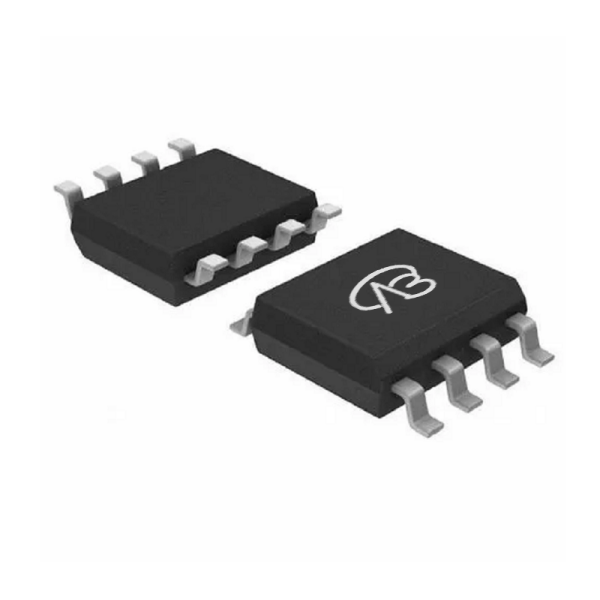
Full Compatibility: Features a pin-compatible SOP8 package housing a dual P+P configuration, enabling a drop-in replacement without PCB layout changes.
The device utilizes an advanced Trench technology platform, ensuring stable and reliable performance.
Part 3: Core Value Beyond Specifications
Opting for this domestic alternative delivers deeper strategic advantages:
Ensuring Supply Chain Security: Reduces reliance on a single international supply chain, mitigating disruption risks and ensuring production stability.
Optimizing Total Cost: Offers compelling cost-effectiveness with equal or superior performance, potentially allowing optimization of related circuitry and thermal design.
Accessing Agile Local Support: Domestic suppliers can provide faster, more responsive technical support and collaborative development tailored to specific application needs.
Strengthening the Industrial Ecosystem: Each successful substitution contributes to the domestic semiconductor industry’s experience accumulation and technological iteration, fostering a virtuous cycle of innovation.
Part 4: A Robust Path for Substitution Implementation
To ensure a smooth transition, the following steps are recommended:
Detailed Specification Comparison: Meticulously compare all key parameters including electrical characteristics, SOA, and switching performance.
Rigorous Laboratory Validation: Perform static parameter tests, dynamic switching tests, thermal/efficiency evaluations, and reliability stress tests under application conditions.
Small-Batch Pilot Verification: Trial the component in real products and operational environments, monitoring long-term stability and performance.
Develop a Switchover and Contingency Plan: Implement the substitution phase after successful verification, while temporarily retaining the original design as a short-term backup option.
Conclusion: Moving from "Usable" to "Excellent"
The progression from the MCC MCQ4953-TP to the VBA4338 demonstrates that domestic power semiconductors now possess the capability not only to match but to surpass international classics in key performance metrics. Adopting such high-performance domestic components is both a practical response to current supply chain challenges and a strategic investment in building an autonomous, resilient, and innovative industrial ecosystem for the future. Now is the opportune moment to actively evaluate and integrate high-quality domestic solutions.


 Download now
 中文
中文 English
 Back to previous page


