 中文
中文 English
MOSFET Selection for High-Power and High-Density Applications: RFG40N10, CSD19532Q5BT vs. China Alternatives VBP1104N, VBGQA1103
Number of views:9999
 Back to previous page
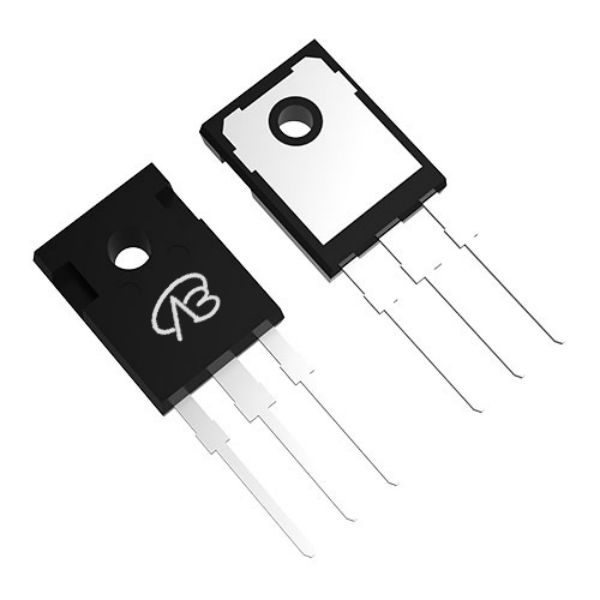
In high-power design and space-constrained power modules, selecting a MOSFET that delivers robust performance, efficient thermal management, and reliable switching is a critical engineering decision. It involves a careful balance among current handling, conduction losses, package size, and supply chain stability. This article uses two prominent MOSFETs, RFG40N10 (in TO-247) and CSD19532Q5BT (in VSON-8-EP), as benchmarks. We will delve into their design cores and application contexts, followed by a comparative evaluation of their domestic alternative solutions, VBP1104N and VBGQA1103. By clarifying their parameter differences and performance orientations, we aim to provide a clear selection guide to help you identify the optimal power switching solution for your next demanding project.
Comparative Analysis: RFG40N10 (N-channel, TO-247) vs. VBP1104N
Analysis of the Original Model (RFG40N10) Core:
This is a 100V N-channel MOSFET from Texas Instruments, housed in the standard TO-247-3 package. Its design core is to provide a reliable, high-current switching solution with good thermal dissipation in a classic through-hole format. Key advantages include: a drain-source voltage (Vdss) of 100V, a continuous drain current (Id) of 40A, and an on-resistance (RDS(on)) of 40mΩ at a 10V gate drive. The TO-247 package offers excellent power handling and ease of mounting for heatsinks, making it suitable for applications where space is less constrained but thermal performance is paramount.
Compatibility and Differences of the Domestic Alternative (VBP1104N):
VBsemi's VBP1104N is a direct pin-to-pin compatible alternative in the same TO-247 package. It shows a performance enhancement in key electrical parameters: while maintaining the same 100V voltage rating, it offers a significantly higher continuous drain current of 85A and a lower on-resistance of 35mΩ at 10V. This indicates the potential for lower conduction losses and higher current capacity in similar applications.
Key Application Areas:
Original Model RFG40N10: Well-suited for classic high-power applications requiring proven reliability and straightforward thermal management, such as:
Power supplies and inverters in industrial equipment.
Motor drives and controllers for appliances and tools.
Audio amplifiers and power stages.
Alternative Model VBP1104N: An excellent upgrade choice for applications demanding higher efficiency and current headroom within the same footprint. It's ideal for enhancing the performance of existing TO-247 based designs or new projects where lower RDS(on) and higher Id are critical.
Comparative Analysis: CSD19532Q5BT (N-channel, VSON-8-EP) vs. VBGQA1103
This comparison shifts focus to high-density, high-performance power conversion, where the design pursuit is maximizing current capability and minimizing losses in a minimal PCB footprint.
Analysis of the Original Model (CSD19532Q5BT) Core:
This TI MOSFET utilizes an advanced VSON-8-EP (5x6mm) package with an exposed pad. Its core advantages are exceptional power density:
Ultra-Low Conduction Loss: Features an extremely low on-resistance of 4mΩ (typical) at 10V gate drive.
High Current Handling: Supports a continuous drain current of 100A.
High Power Dissipation: Rated for 195W, enabled by the efficient thermal path of the exposed-pad package.
This combination makes it a top-tier choice for space-constrained, high-efficiency power stages.
Compatibility and Differences of the Domestic Alternative (VBGQA1103):
VBsemi's VBGQA1103, in a compatible DFN8(5x6) package, presents itself as a formidable "performance-competitive" alternative. It matches the 100V voltage rating and pushes key parameters further: an even lower on-resistance of 3.45mΩ at 10V and a higher continuous current rating of 135A. This represents a potential for superior efficiency and power density in similar form-factor applications.
Key Application Areas:
Original Model CSD19532Q5BT: Ideal for state-of-the-art, high-density power conversion where every milliohm and square millimeter counts. Typical applications include:
Synchronous rectification in high-current DC-DC converters (e.g., for servers, telecom).
High-frequency switching power supplies.
Motor drives in compact robotics or drones.
Alternative Model VBGQA1103: Suited for the same cutting-edge applications but offers an alternative with potentially lower conduction loss and higher current margin. It is an excellent choice for designers seeking to maximize performance or gain supply chain flexibility in next-generation high-density power designs.
Conclusion
In summary, this analysis outlines two distinct replacement strategies based on package and performance needs:
For standard through-hole, high-power applications using the TO-247 package, the original RFG40N10 provides a reliable 100V/40A solution. Its domestic alternative VBP1104N offers a compelling performance-enhanced option with higher current (85A) and lower RDS(on) (35mΩ), making it suitable for direct upgrades or new designs requiring more headroom.
For advanced surface-mount, ultra-high-density applications, the original CSD19532Q5BT in a 5x6mm package sets a high bar with its 4mΩ RDS(on) and 100A current. Its domestic alternative VBGQA1103 emerges as a highly competitive counterpart, matching the form factor while offering potentially superior specifications (3.45mΩ, 135A), providing a viable and performant alternative for the most demanding power-conversion circuits.
The core takeaway is that selection hinges on precise requirement matching. In the context of supply chain diversification, domestic alternatives like VBP1104N and VBGQA1103 not only provide reliable backup options but also demonstrate significant performance parity or even advantages in key parameters. This offers engineers greater flexibility, resilience, and potential for optimization in their power design trade-offs.

Download PDF document
 Download now


