 中文
中文 English
VBJ2328: A Domestic Excellence for High-Performance Power Management, the Superior MCT15P02-TP Alternative
Number of views:9999
 Back to previous page
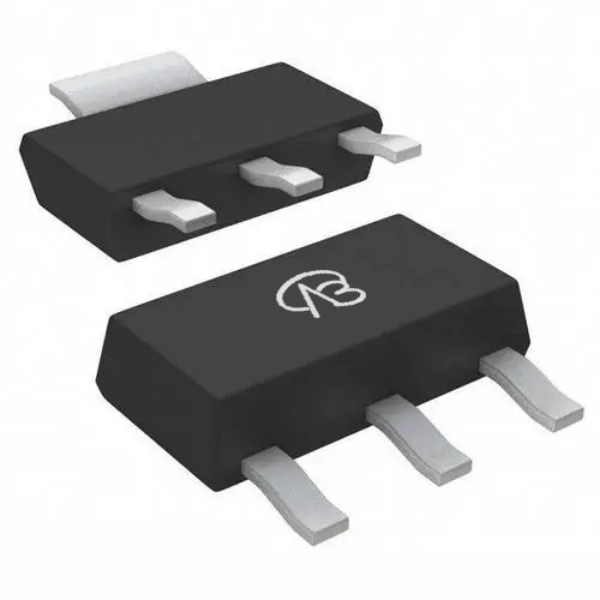
I. Parameter Comparison and Performance Leap: Fundamental Advantages Brought by Trench Technology
The MCT15P02-TP has earned recognition in applications like load switches and DC-DC converters due to its 20V drain-source voltage, 15A continuous drain current, and 50mΩ on-state resistance at VGS=1.8V. However, as system efficiency and power density demands increase, the device's conduction losses and thermal performance become bottlenecks.
1. Building on hardware compatibility with a similar SOT223 package, the VBJ2328 achieves significant breakthroughs in key electrical characteristics through advanced Trench technology:
Enhanced Voltage Rating: With a VDS of -30V (absolute value), it offers higher voltage robustness compared to the 20V rating of the reference model, ensuring better reliability in transient or overvoltage scenarios.
Optimized On-Resistance: At VGS=10V, the RDS(on) is as low as 43mΩ, outperforming the reference model's 50mΩ at 1.8V. According to the conduction loss formula Pcond = I_D^2⋅RDS(on), this reduction lowers losses in high-current applications, improving efficiency and easing thermal design.
Improved Gate Drive Flexibility: With a VGS range of ±20V and a threshold voltage Vth of -1.7V, it supports wider drive voltage options, enhancing design adaptability in low-voltage systems.
2. Robust Power Handling: Despite a continuous drain current of -8A (absolute value), the Trench technology ensures stable performance under high-temperature conditions, with better thermal dissipation due to optimized package design.
II. Deepening Application Scenarios: From Functional Replacement to System Upgrade
The VBJ2328 not only enables direct replacement in existing applications of the MCT15P02-TP but can also drive overall system improvements with its advantages:
1. Power Management and Load Switching
Lower conduction losses enhance efficiency in battery-powered devices, extending battery life. The higher voltage rating adds safety margins in portable electronics.
2. DC-DC Converters and Voltage Regulation
The reduced RDS(on) minimizes losses in synchronous rectification or switching stages, supporting higher frequency designs for smaller inductors and capacitors, aligning with compact and lightweight trends.
3. Battery Protection and Charging Circuits
Suitable for reverse polarity protection or discharge control in consumer electronics, the robust -30V VDS ensures durability against voltage spikes, improving system longevity.
4. Industrial and Automotive Auxiliary Systems
In low-voltage automotive modules or industrial controls, the device's high-temperature stability and Trench technology enhance reliability in harsh environments.
III. Beyond Parameters: Reliability, Supply Chain Security, and Full-Lifecycle Value
Choosing the VBJ2328 is not only a technical decision but also a consideration of supply chain and commercial strategy:
1. Domestic Supply Chain Security
VBsemi possesses controllable capabilities from chip design to packaging and testing, ensuring stable supply, predictable lead times, and resilience against global trade risks, safeguarding production continuity for customers.
2. Comprehensive Cost Advantage
With superior performance metrics, domestic components offer competitive pricing and customization support, reducing BOM costs and boosting end-product market competitiveness.
3. Localized Technical Support
Provides rapid, end-to-end support from selection, simulation, testing, to failure analysis, helping customers optimize systems and accelerate R&D cycles.
IV. Adaptation Recommendations and Replacement Path
For design projects currently using or planning to use the MCT15P02-TP, the following steps are recommended for evaluation and switching:
1. Electrical Performance Verification
Compare key waveforms (switching speed, loss distribution, efficiency curves) under identical circuit conditions. Utilize the low RDS(on) and flexible VGS range of the VBJ2328 to adjust drive parameters for optimal performance.
2. Thermal Design and Mechanical Validation
Due to reduced conduction losses, thermal stress may be lower, allowing for potential optimization of heat sinks or PCB layout for cost and space savings.
3. Reliability Testing and System Validation
Conduct electrical/thermal stress, environmental, and lifespan tests in the lab, followed by field or end-product validation to ensure long-term operational stability.
Advancing Towards an Autonomous, High-Performance Power Management Era
The VBsemi VBJ2328 is not merely a domestic MOSFET对标ing international brands; it is a high-performance, high-reliability solution for next-generation low-voltage power systems. Its advantages in voltage rating, conduction loss, and drive flexibility can help customers achieve comprehensive improvements in system efficiency, robustness, and overall competitiveness.
In an era where efficiency and domestic substitution advance hand-in-hand, choosing the VBJ2328 is both a rational decision for technological upgrade and a strategic move for supply chain autonomy. We sincerely recommend this product and look forward to collaborating with you to drive innovation and transformation in power electronics.

Download PDF document
 Download now


