 中文
中文 English
VBK5213N: The Domestic Premium Alternative for Automotive Low-Power Switching, Excellently Replacing NVJD4158CT1G
Number of views:9999
 Back to previous page
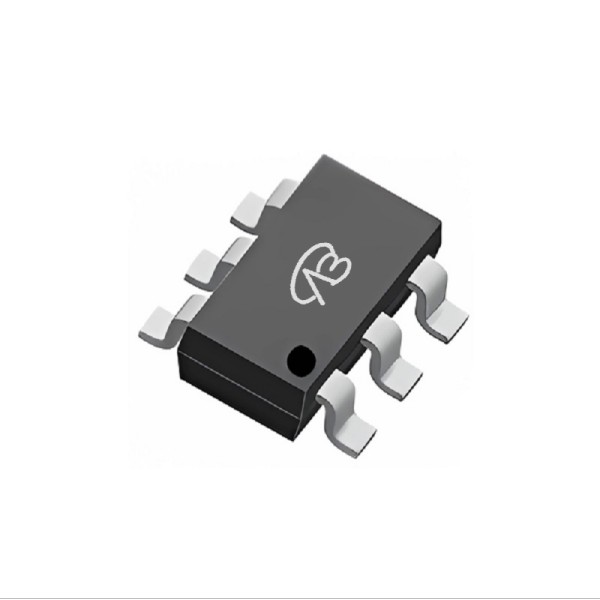
I. Parameter Comparison and Performance Advantages: Higher Current, Lower Loss
The NVJD4158CT1G has been widely adopted in automotive low‑power circuits thanks to its 30V drain‑source voltage, 250mA continuous drain current, and 1Ω on‑resistance (at VGS=4.5V, ID=0.25A), along with AEC‑Q101 qualification and PPAP support. Nevertheless, as system integration levels increase and space constraints tighten, devices with higher current density and lower conduction loss are in growing demand.
1. While maintaining hardware compatibility with the same SC‑88 (SC70‑6) package, the VBK5213N achieves remarkable improvements in core electrical parameters through advanced Trench technology:
- Higher Current Capacity: The continuous drain current reaches 3.28A (N‑channel) / 2.8A (P‑channel), over ten times that of the reference model. This greatly enhances design margin and load‑handling capability in low‑power circuits.
- Dramatically Reduced On‑Resistance: At VGS=4.5V, RDS(on) is as low as 110‑190mΩ, only about 1/5 to 1/9 of the reference device’s 1Ω. According to the conduction loss formula Pcond = I_D^2·RDS(on), this significantly cuts conduction loss, improves power efficiency, and reduces temperature rise.
- Complementary Dual‑Channel Design: The integrated N+P channel structure saves board space, simplifies circuit design, and is ideal for push‑pull, level shifting, and power path management applications.
II. Expanding Application Scenarios: From Direct Replacement to Performance Enhancement
The VBK5213N can directly replace the NVJD4158CT1G in existing applications while bringing clear system benefits:
1. Automotive Module Power Supply & Load Switching
Suitable for ECU auxiliary power switches, sensor power supply management, and low‑power relay drivers. The lower RDS(on) reduces voltage drop and power dissipation, enhancing system efficiency and thermal performance.
2. Battery Management Systems (BMS) & Low‑Current Protection Circuits
Used for cell balancing control, charge/discharge path switching, and protection circuitry. The higher current rating offers stronger transient handling capability and improves system reliability.
3. Vehicle Lighting & Interior Control
Applicable to LED driver switching, interior lighting control, and small motor drives. The complementary dual‑channel design simplifies driving circuits and saves external components.
4. Industrial & Consumer Low‑Power Switching
Can be used in portable devices, IoT power management, and low‑power DC‑DC conversion, offering a cost‑effective, high‑performance solution.
III. Beyond Specifications: Reliability, Supply Chain Stability, and Full‑Lifecycle Value
Choosing the VBK5213N is not only a technical upgrade but also a strategic move for supply chain resilience:
1. Domestic Supply Chain Security
VBsemi controls the entire process from chip design to packaging and testing, ensuring stable supply and shorter lead times, effectively mitigating risks from external supply fluctuations and trade uncertainties.
2. Cost‑Performance Advantage
With superior current and on‑resistance parameters, the VBK5213N provides higher performance at a competitive cost, helping customers reduce BOM expenses and enhance end‑product market competitiveness.
3. Localized Technical Support
Offers rapid, full‑process support from selection, simulation, testing, to failure analysis, accelerating customer design cycles and problem‑solving.
IV. Replacement Guidelines and Implementation Path
For designs currently using or planning to use the NVJD4158CT1G, the following steps are recommended for a smooth transition:
1. Electrical Performance Validation
Compare key parameters such as switching characteristics, conduction loss, and drive voltage requirements under actual circuit conditions. Leverage the VBK5213N’s low RDS(on) to optimize drive circuitry for even better efficiency.
2. Thermal and Layout Assessment
Due to significantly reduced conduction loss, thermal stress is lower, allowing for potential optimization of heatsinking or layout space.
3. Reliability and System Validation
Perform necessary electrical, thermal, and environmental tests according to automotive standards, followed by vehicle‑level validation to ensure long‑term reliability under automotive operating conditions.
Moving Toward a Autonomous, High‑Performance Automotive Electronics Era
The VBsemi VBK5213N is not merely a pin‑to‑pin alternative to the NVJD4158CT1G; it is a high‑performance, high‑reliability dual‑channel MOSFET solution tailored for automotive low‑power applications. Its advantages in current capability, conduction loss, and integration level can help customers achieve higher power density, improved efficiency, and enhanced system reliability.
In an era where automotive electrification and supply chain localization progress together, choosing the VBK5213N represents both a rational decision for performance upgrade and a strategic step toward supply chain autonomy. We highly recommend this product and look forward to collaborating with you to promote innovation and development in automotive power electronics.

Download PDF document
 Download now


