 中文
中文 English
Breaking Through and Surpassing: How Domestic SiC MOSFETs Achieve High-Performance Substitution for Infineon IMZA65R020M2HXKSA1
Number of views:9999
 Back to previous page
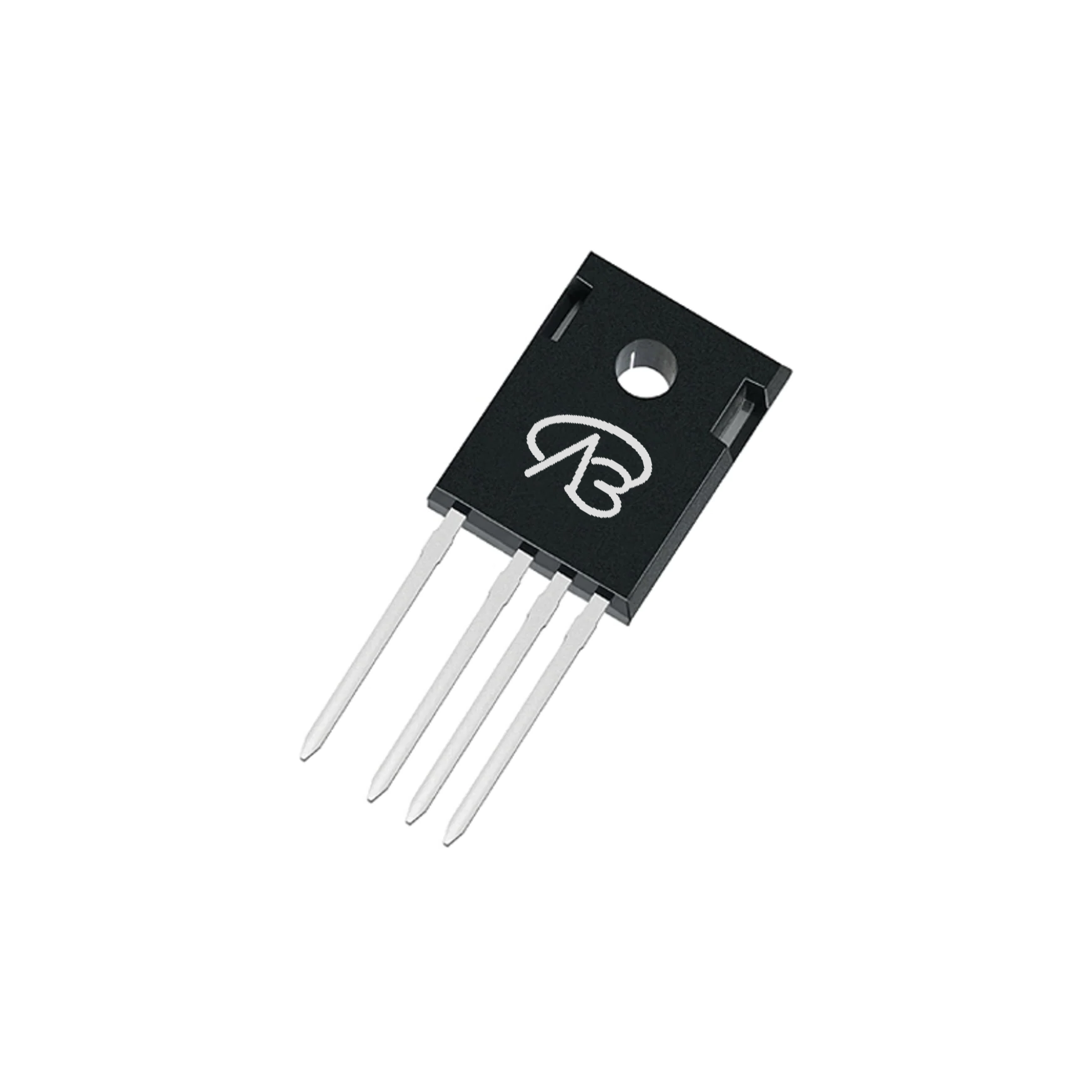
Silicon Carbide (SiC) MOSFETs are revolutionizing power electronics with superior efficiency, higher switching speeds, and better thermal performance. International leaders like Infineon have set benchmarks with advanced products such as the IMZA65R020M2HXKSA1. In the context of global supply uncertainties and the push for technological sovereignty, securing reliable, high-performance domestic alternatives has become a strategic imperative. Represented by VBsemi's VBP165C93-4L, domestic components are now capable of direct competition and surpassing established international classics.
Part 1: Analysis of the Classic Component
Infineon's IMZA65R020M2HXKSA1 is a 650 V MOSFET based on second-generation SiC trench technology. It offers a high continuous drain current (83A), low on-resistance, and a robust 273W power dissipation capability. With a threshold voltage (Vgs(th)) of 5.6V, it is engineered for high reliability, ease of use, and enables cost-effective, efficient, and simplified designs to meet growing system and market demands. It is a preferred choice in high-power applications such as server PSUs, industrial motor drives, and新能源 systems.
Part 2: Performance Surpassing by the Domestic Challenger
VBsemi's VBP165C93-4L directly competes with the IMZA65R020M2HXKSA1 and presents key advancements:
Optimized Threshold Voltage: Features a threshold voltage range of 2V to 5V, offering greater design flexibility and potentially enhanced gate drive compatibility compared to the fixed 5.6V of the Infineon part.
Wider Gate-Source Voltage Range: Supports VGS from -4V to +22V, providing a broader safe operating area for gate driving.
Low On-Resistance: Maintains a competitive RDS(on) of 22 mΩ (at VGS=18V), ensuring low conduction losses for high efficiency.
Robust Voltage Rating: Matches the 650V drain-source voltage, ensuring equivalent ruggedness in high-voltage applications.
Advanced SiC Technology: Utilizes mature domestic SiC MOSFET technology, delivering high switching performance and thermal stability.
Package Compatibility: Comes in a TO247-4L package, facilitating straightforward pin-to-pin replacement without board redesign.
Part 3: Core Value Beyond Specifications
Adopting this domestic alternative delivers deeper strategic benefits:
Enhanced Supply Chain Resilience: Reduces dependency on single-source international suppliers, mitigating geopolitical and logistical risks.
Cost Structure Optimization: Offers competitive pricing with comparable or superior performance, potentially lowering the total system cost.
Proximity Support and Collaboration: Enables faster technical support, custom tuning, and joint development with the local supplier, accelerating time-to-market.
Strengthening the Domestic Ecosystem: Each successful deployment contributes to the maturation and innovation cycle of the domestic wide-bandgap semiconductor industry.
Part 4: A Robust Path for Substitution Implementation
For a seamless and reliable transition, we recommend:
Comprehensive Parameter Audit: Meticulously compare all electrical specifications, including switching characteristics, body diode behavior, and thermal impedance.
Rigorous Bench Testing: Perform static parameter validation, dynamic switching loss analysis, thermal performance assessment under load, and long-term reliability stress tests.
Pilot Integration: Implement the VBP165C93-4L in a small batch of actual products for real-world performance validation.
Phased Rollout with Contingency: Plan a staged replacement strategy post-verification, while temporarily maintaining the original design as a fallback option.
Conclusion: From Qualified Alternative to Preferred Solution
The progression from the Infineon IMZA65R020M2HXKSA1 to VBsemi's VBP165C93-4L illustrates that domestic SiC power semiconductors have reached a stage where they can not only match but also offer distinct advantages over international counterparts in specific parameters. Embracing such high-performance domestic components is a pragmatic response to today's supply chain dynamics and a strategic investment in building a self-reliant, agile, and innovative industrial foundation for the future. The time is right to actively evaluate and integrate these capable domestic solutions.

Download PDF document
 Download now


