 中文
中文 English
Breaking Through and Surpassing: How Domestic MOSFET VBK1270 Achieves High-Performance Substitution for MCC SI2102A-TP
Number of views:9999
 Back to previous page
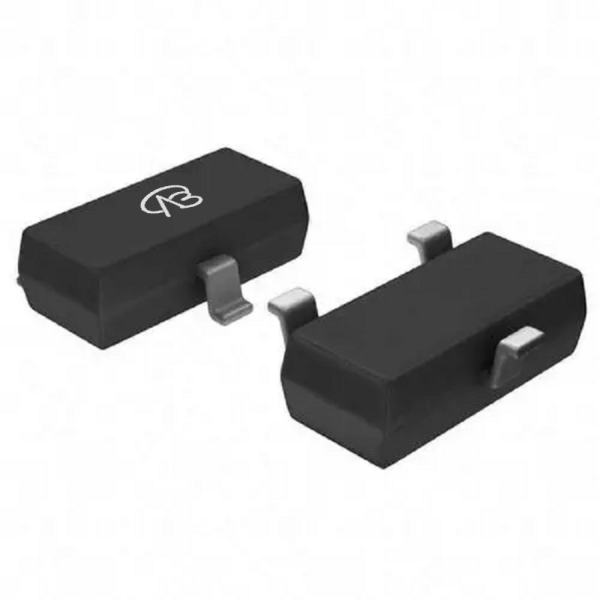
Low-voltage MOSFETs serve as fundamental building blocks for power management and signal switching in modern portable and compact electronic devices. For many designs, international components like MCC's SI2102A-TP have been common choices. However, evolving supply dynamics and the pursuit of design optimization are driving the need for higher-performing, reliable alternatives. Represented by VBsemi's VBK1270, domestic MOSFETs now offer direct pin-to-pin substitution with significantly enhanced performance.
Part 1: Analysis of the Classic Component
MCC's SI2102A-TP is a single N-channel MOSFET rated for 20V drain-source voltage and 3A continuous drain current. With a gate threshold optimized for low-voltage drive and an on-resistance (RDS(on)) of 98mΩ at VGS=2.5V, it is commonly used in load switching, power management modules, and battery protection circuits in space-constrained applications, leveraging its SC70-3 package footprint.
Part 2: Performance Surpassing by the Domestic Challenger
VBsemi's VBK1270 directly substitutes the SI2102A-TP while delivering marked improvements in key metrics:
Higher Current Capacity: Continuous drain current is raised to 4A (a 33% increase), enabling support for more demanding loads.
Drastically Lower Conduction Losses: RDS(on) is dramatically reduced to 48mΩ at VGS=2.5V—less than half that of the SI2102A-TP—and further drops to 36mΩ at VGS=10V. This translates into significantly lower power dissipation and higher efficiency.
Robust Gate Characteristics: Maintains a low gate threshold voltage (0.5~1.5V) suitable for low-voltage logic while offering a VGS rating of ±12V for wider noise margin.
Full Compatibility: Utilizes the same SC70-3 package, ensuring direct drop-in replacement without board redesign.
The device is built on an advanced Trench technology platform, ensuring optimal performance and reliability.
Part 3: Core Value Beyond Specifications
Selecting this domestic alternative provides deeper strategic benefits:
Enhanced Supply Chain Resilience: Reduces dependency on single-source international suppliers and mitigates procurement risks.
System-Level Cost Optimization: Offers superior performance often at a competitive cost, potentially allowing for simpler thermal design or improved system efficiency.
Access to Responsive Local Support: Enables faster technical collaboration, customization feedback, and shorter lead times.
Strengthening the Domestic Ecosystem: Each successful adoption fuels further innovation and maturity in the domestic semiconductor industry.
Part 4: A Robust Path for Substitution Implementation
To ensure a smooth transition, the following steps are recommended:
Comprehensive Parameter Review: Compare all electrical specifications, including characteristic curves under relevant conditions.
Thorough Laboratory Validation: Perform static parameter verification, dynamic switching tests, thermal performance assessment, and application-specific reliability testing.
Pilot Implementation: Test the component in real-world applications and monitor long-term stability.
Develop a Phased Switchover Plan: Implement the substitution in stages after full validation, maintaining the original part as an interim backup option.
Conclusion: From "Compatible" to "Superior"
The transition from the SI2102A-TP to the VBK1270 illustrates that domestic power semiconductors can not only match but exceed the performance of established international counterparts in key low-voltage applications. Adopting such high-performance domestic components is a practical step toward supply chain diversification and a strategic investment in a more autonomous, efficient, and innovative electronics industry. Now is the ideal time to evaluate and integrate these capable domestic solutions.

Download PDF document
 Download now


