 中文
中文 English
VBL1103: A High-Performance Domestic Alternative for Automotive and Industrial Power Switching, Surpassing the STH15810-2
Number of views:9999
 Back to previous page
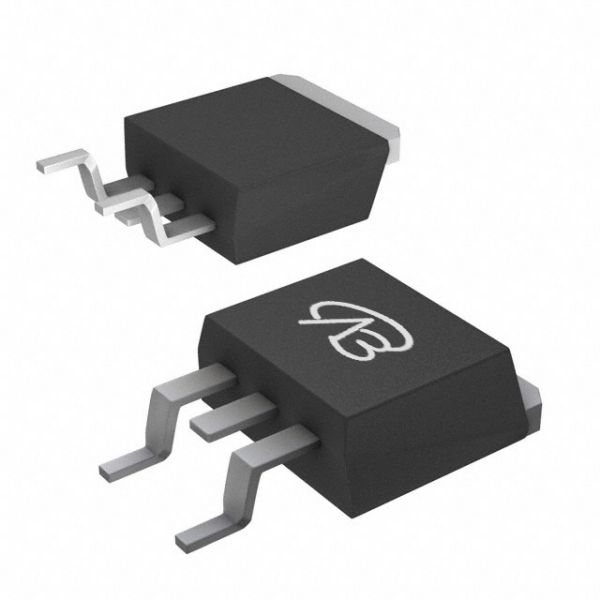
I. Parameter Comparison and Performance Advantages: Engineered for Lower Loss and Higher Current
The STH15810-2 is known for its 100V Vdss, 110A continuous current, and 3.9mΩ typical on-resistance (at 10V, 55A). While reliable, its conduction losses can limit system efficiency and thermal performance in demanding high-current scenarios.
1. The VBL1103, built with advanced Trench technology, maintains the same 100V drain-source voltage and TO-263 package compatibility while delivering decisive improvements:
- Lower On-Resistance: With RDS(on) as low as 3mΩ at VGS=10V, the VBL1103 reduces conduction resistance by approximately 23% compared to the STH15810-2. This directly lowers conduction losses (Pcond = I²·RDS(on)), improving efficiency and easing thermal management.
- Higher Current Handling: With a continuous drain current rating of 180A, the VBL1103 offers over 60% higher current capability than the 110A of the STH15810-2, enabling more compact designs or higher power margins.
- Robust Gate Characteristics: Featuring a ±20V gate-source voltage range and a standard 3V threshold, it ensures compatibility with common drive circuits while offering sufficient noise immunity.
II. Application Scenarios: Enabling Higher Efficiency and Power Density
The VBL1103 is designed to seamlessly upgrade systems currently using the STH15810-2, bringing tangible benefits across multiple applications:
1. Automotive DC-DC Converters (48V/12V):
Lower RDS(on) reduces power loss in synchronous rectification or high-side switching stages, improving conversion efficiency and thermal performance, crucial for 48V mild-hybrid and auxiliary power systems.
2. Motor Drive and Control (EPS, Cooling Fans):
The high current capability and low loss support efficient driving of brushless DC or PMSM motors in electric power steering, HVAC blowers, and cooling pumps, enhancing system responsiveness and reliability.
3. Battery Management & Protection Circuits:
Suitable for high-current discharge control and load switching in BMS, where low on-resistance minimizes voltage drop and power dissipation, extending battery runtime and system safety.
4. Industrial Power Supplies & UPS:
In low-voltage high-current DC-DC modules or inverter stages, the device’s high efficiency supports higher power density and improved thermal behavior, reducing cooling requirements.
III. Beyond Specifications: Reliability, Supply Chain, and Total Cost Advantage
Selecting the VBL1103 represents a strategic decision that balances performance, security, and cost:
1. Domestic Supply Chain Assurance:
VBsemi ensures full in-house control from chip design to packaging and testing, providing stable supply, shorter lead times, and reduced exposure to geopolitical or logistical disruptions.
2. Total Cost Optimization:
With superior performance at a competitive price, the VBL1103 helps reduce overall BOM cost while offering potential savings in heatsinking and layout simplification, enhancing end-product value.
3. Localized Engineering Support:
Access to rapid technical assistance for simulation, validation, and troubleshooting accelerates design cycles and system optimization, ensuring a smooth transition and reliable operation.
IV. Replacement Guidance and Implementation Path
For designs currently using the STH15810-2, the following steps are recommended for a successful transition:
1. Electrical Validation:
Compare switching waveforms, losses, and efficiency under actual operating conditions. The lower RDS(on) of the VBL1103 may allow for adjusted gate drive or layout optimization to further exploit its performance.
2. Thermal Re-assessment:
Due to reduced conduction losses, thermal stress may be lower. Evaluate opportunities to optimize heatsink design or reduce cooling requirements for cost or space savings.
3. System Reliability Testing:
Perform standard electrical, thermal, and environmental stress tests, followed by application-specific validation to ensure long-term reliability in the target operating environment.
Conclusion: Advancing Performance with Domestic Innovation
The VBsemi VBL1103 is not merely a drop-in alternative to the STH15810-2; it is a technologically superior MOSFET that delivers lower losses, higher current capability, and enhanced system efficiency. By adopting the VBL1103, designers can achieve higher power density, improved thermal performance, and greater supply chain security.
In an era focused on electrification and supply chain autonomy, choosing the VBL1103 represents both a performance upgrade and a strategic step toward sustainable, resilient power electronics. We highly recommend the VBL1103 and look forward to supporting your journey toward more efficient and reliable power systems.

Download PDF document
 Download now


