 中文
中文 English
Breaking VB2212N Through and Surpassing: How Domestic MOSFETs Achieve High-Performance Substitution TOSHIBA SSM3J375F,LF
Number of views:9999
 Back to previous page
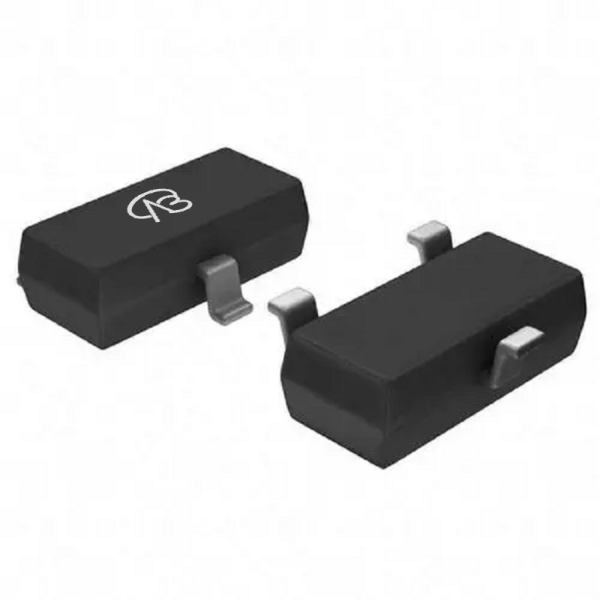
MOSFETs serve as fundamental switches in power management, enabling efficient energy control in modern electronics. For years, international giants like TOSHIBA have set industry standards with components such as the SSM3J375F,LF. However, global supply chain uncertainties and the push for technological self-reliance have made finding dependable, high-performance domestic alternatives a strategic priority. Represented by VBsemi's VB2212N, domestic solutions are now achieving direct对标and even outperforming established international classics.
Part 1: Analysis of the Classic Component
TOSHIBA's SSM3J375F,LF is a P-channel MOSFET featuring a 20V drain-source voltage and 2A continuous drain current. It leverages advanced design to offer low on-resistance (e.g., 311mΩ max at VGS = -1.5V) and is AEC-Q101 qualified, ensuring reliability for automotive and industrial applications. Its 1.5V drive capability and optimized resistance characteristics make it a popular choice for power management switching in compact devices like portable electronics, load switches, and battery-powered systems.
Part 2: Performance Surpassing by the Domestic Challenger
VBsemi's VB2212N directly对标s the SSM3J375F,LF and delivers enhancements in critical areas:
Higher Current Handling: Continuous drain current reaches -3.5A (an increase of 1.5A in magnitude), allowing for greater power throughput and design headroom.
Lower Conduction Losses: On-resistance is as low as 71mΩ at VGS = -10V, significantly reducing power dissipation and improving system efficiency compared to the classic's higher resistance.
Robust Voltage Ratings: Drain-source voltage is -20V (matching the classic), with a VGS of ±12V ensuring wide drive compatibility and reliability.
Advanced Technology: Built on a Trench process, it offers stable performance and fast switching, while the SOT23-3 package ensures pin-to-pin compatibility for drop-in replacement.
Part 3: Core Value Beyond Specifications
Opting for a domestic alternative like VB2212N brings deeper strategic benefits:
Supply Chain Resilience: Reduces reliance on single-source international suppliers, mitigating risks and ensuring production continuity.
Cost Optimization: Provides competitive pricing with superior performance, potentially lowering overall system costs and enabling simpler thermal designs.
Localized Support: Domestic suppliers offer faster technical assistance, customization, and collaborative development tailored to regional needs.
Industrial Ecosystem Growth: Each successful adoption strengthens the domestic semiconductor sector, fostering innovation and a virtuous cycle of improvement.
Part 4: A Robust Path for Substitution Implementation
To ensure a smooth transition, follow these steps:
Detailed Parameter Comparison: Review all electrical specs, including threshold voltage, on-resistance curves, and dynamic characteristics.
Comprehensive Lab Testing: Perform static tests, switching speed analysis, thermal assessments, and reliability validations under real-world conditions.
Pilot Batch Verification: Integrate VB2212N into actual products for field testing, monitoring long-term stability and performance.
Develop a Switchover Plan: Gradually implement the substitution after validation, while keeping the original design as a short-term backup option.
Conclusion: Moving from "Usable" to "Excellent"
The shift from TOSHIBA's SSM3J375F,LF to VBsemi's VB2212N illustrates that domestic MOSFETs have evolved to not only match but exceed international benchmarks in key metrics. Embracing such high-performance domestic components is a practical response to supply chain challenges and a strategic step toward building an autonomous, resilient, and innovative industrial future. Now is the ideal time to actively evaluate and integrate quality domestic solutions like VB2212N.

Download PDF document
 Download now


