 中文
中文 English
Redefining Power Density: How Domestic Dual MOSFETs Achieve High-Performance Substitution for SH8KE7TB1
Number of views:9999
 Back to previous page
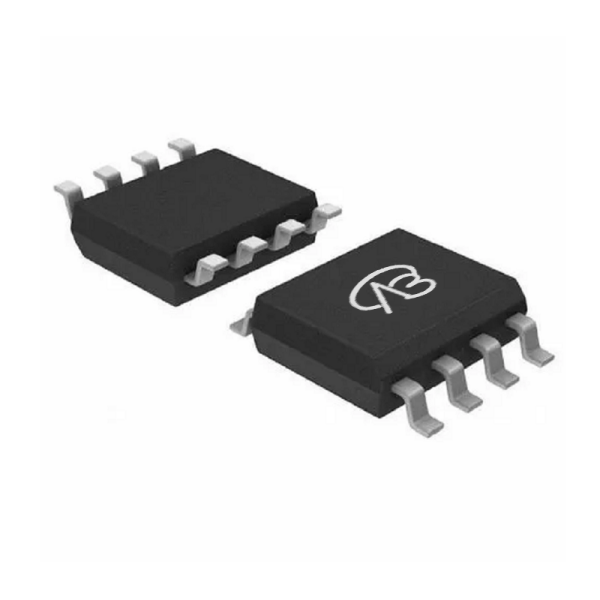
In compact, high-efficiency power designs such as fast chargers, DC-DC converters, and motor drives, the demand for power components with high power density and low loss is ever-increasing. International brands like ROHM have set benchmarks with products like the SH8KE7TB1 dual N-channel MOSFET. Amidst the global pursuit of supply chain resilience and technological independence, domestic semiconductors are rising to the challenge. Represented by VBsemi’s VBA3102N, domestic solutions are now capable of not only matching but surpassing these international benchmarks in critical performance metrics.
Part 1: Analysis of the Classic Component
ROHM’s SH8KE7TB1 is a dual N-channel MOSFET in an SOP8 package, featuring a drain-source voltage (Vdss) of 100V and a continuous drain current (Id) of 8A per channel. With a gate threshold optimized for low-voltage drive and an on-resistance (RDS(on)) of 29.6mΩ at VGS=4.5V, it has been a reliable choice for space-constrained applications requiring efficient power switching and moderate current handling.
Part 2: Performance Surpassing by the Domestic Challenger
VBsemi’s VBA3102N directly targets and excels beyond the SH8KE7TB1 in several key aspects:
Superior Current Handling and Lower Loss: With a continuous drain current (ID) of 12A and a remarkably low RDS(on) of 12mΩ at VGS=10V, the VBA3102N significantly reduces conduction losses and enables higher power throughput in the same footprint.
Enhanced Gate Driving Flexibility: A standard Vth of 1.8V and a VGS rating of ±20V ensure robust compatibility with common logic levels and offer ample gate drive margin.
Full Form-Fit Compatibility: The dual N+N configuration in a standard SOP8 package allows for a direct pin-to-pin replacement, eliminating the need for PCB redesign.
Advanced Technology Foundation: Built on an optimized Trench technology platform, it delivers stable, high-efficiency performance with improved thermal characteristics.
Part 3: Core Value Beyond Specifications
Adopting a high-performance domestic alternative like the VBA3102N delivers strategic advantages:
Strengthened Supply Chain Security: Reduces reliance on single-source international suppliers, mitigating geopolitical and logistical risks to ensure project continuity.
System-Level Cost Optimization: Offers compelling performance-to-cost ratio, potentially allowing for simplified thermal management or more compact design due to higher efficiency.
Agile Local Support and Collaboration: Direct access to domestic supplier engineering teams facilitates faster problem-solving, customization, and adaptation to specific application needs.
Empowering the Domestic Ecosystem: Successful adoption contributes to the growth and technological iteration of the domestic semiconductor industry, fostering a sustainable innovation cycle.
Part 4: A Robust Path for Substitution Implementation
To ensure a seamless transition, a structured verification approach is recommended:
Comprehensive Parameter Audit: Meticulously compare all DC parameters, switching characteristics, and safe operating area (SOA) curves against the original design requirements.
Rigorous Laboratory Validation: Perform bench tests focusing on static parameters, dynamic switching behavior, efficiency measurements across load, and thermal performance under real-world conditions.
Pilot Batch Integration: Test the component in actual end-product prototypes, monitoring for long-term reliability and system-level compatibility.
Develop a Phased Replacement Plan: Implement the substitution in new designs or production batches after successful verification, while maintaining a managed inventory of the original part for contingency during the transition phase.
Conclusion: The New Benchmark for Compact Power Design
The progression from the SH8KE7TB1 to the VBA3102N illustrates that domestic power semiconductors have reached a stage where they can deliver superior performance in direct comparison to established international classics. Choosing such an advanced domestic component is a pragmatic decision to enhance product performance and supply chain robustness today, and a strategic investment in building a more autonomous and innovative technological foundation for the future. The moment to evaluate and integrate these capable domestic solutions is now.

Download PDF document
 Download now


