 中文
中文 English
Breaking Through and Surpassing: How Domestic Power MOSFET VBE2102M Achieves High-Performance Substitution for ROHM RD3P130SPTL1
Number of views:9999
 Back to previous page
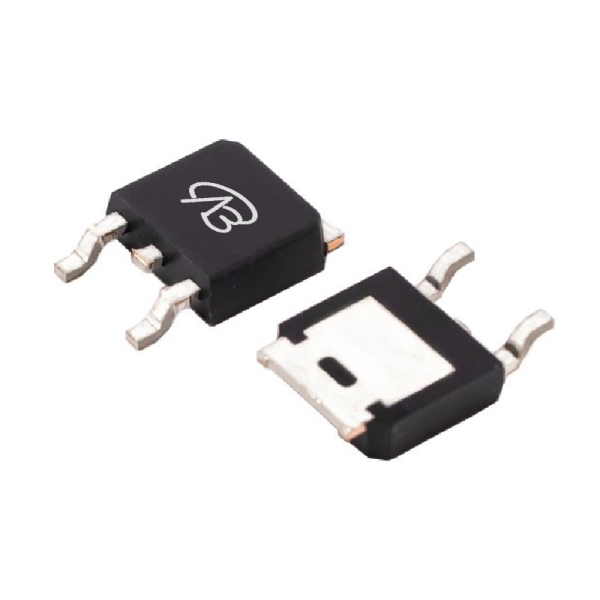
Power MOSFETs serve as critical control switches in modern circuits. For medium-voltage P-channel applications, international brands like ROHM have set benchmarks with components such as the RD3P130SPTL1. In the context of evolving supply chains and technological self-reliance, identifying reliable, high-performance domestic alternatives has become a strategic imperative. Represented by VBsemi's VBE2102M, domestic components are now capable of direct competition and even surpassing such international classics.
Part 1: Analysis of the Classic Component
ROHM's RD3P130SPTL1 is a 100V, 13A P-channel MOSFET. It is characterized by a low on-resistance (200mΩ @4.5V, 6.5A), fast switching speed, simple drive requirements, and ease of parallel use. These features, combined with its lead-free/RoHS-compliant construction, have made it a popular choice for switching applications, balancing performance and design convenience.
Part 2: Performance Positioning of the Domestic Alternative
VBsemi's VBE2102M provides a robust, pin-compatible alternative to the RD3P130SPTL1, offering a reliable solution with key specifications tailored for replacement scenarios:
Voltage & Current Rating: It features a -100V drain-source voltage (VDS), matching the voltage withstand capability, and a continuous drain current (ID) of -8.8A, suitable for a range of medium-power applications.
Low Conduction Loss: With an on-resistance (RDS(on)) of 250mΩ @ VGS=10V, it ensures low conduction losses for efficient operation.
Enhanced Compatibility: The device offers a VGS rating of ±20V and a threshold voltage (Vth) of -2V, supporting flexible gate driving. It utilizes a TO-252 (Single-P) package, facilitating direct PCB replacement without layout changes.
Advanced Technology: Built on a Trench technology platform, it delivers stable and reliable switching performance.
Part 3: Core Value Beyond Specifications
Selecting a domestic alternative like the VBE2102M delivers strategic advantages:
Securing the Supply Chain: Mitigates reliance on single-source international suppliers, enhancing supply stability and production continuity.
Optimizing Total Cost: Often presents favorable cost-effectiveness with comparable performance, potentially allowing for system-level cost savings.
Accessing Agile Local Support: Domestic suppliers can provide faster technical response and tailored application support, accelerating development cycles.
Strengthening the Industrial Ecosystem: Successful adoption contributes to the experience and technological iteration of the domestic semiconductor industry, fostering a virtuous cycle of innovation.
Part 4: A Robust Path for Substitution Implementation
For a smooth and successful transition, a methodical approach is recommended:
1. Detailed Parameter Comparison: Conduct a thorough review of all electrical characteristics and switching parameters between the VBE2102M and the original part.
2. Rigorous Laboratory Validation: Perform comprehensive testing, including static parameter verification, dynamic switching characterization, efficiency/thermal assessments, and reliability stress tests under actual operating conditions.
3. Small-Batch Pilot Verification: Implement the component in real-world products or prototypes to validate long-term performance and compatibility in the target application.
4. Develop a Phased Switchover Plan: After successful verification, plan a gradual implementation while maintaining the original component as a short-term backup option to mitigate risk.
Conclusion: A Strategic Step Towards Resilience
The availability of the VBE2102M as a substitute for the RD3P130SPTL1 exemplifies the growing capability of domestic power semiconductors to meet and fulfill the requirements of established international designs. Adopting such high-performance domestic alternatives is a pragmatic response to current supply chain dynamics and a strategic investment in building a more autonomous, resilient, and innovative technological foundation for the future. The time is opportune to actively evaluate and integrate these qualified domestic solutions.

Download PDF document
 Download now


