Introduction
In the realm of automotive and precision electronics, small-signal MOSFETs serve as critical control elements. International manufacturers like Toshiba have set industry benchmarks with components such as the AEC-Q101 qualified SSM3K72KFS, known for its reliability in high-speed switching. The pursuit of supply chain resilience and technological independence has accelerated the demand for trustworthy domestic alternatives. Represented by VBsemi's VBTA161K, domestic semiconductors are now achieving direct compatibility and performance parity with these established international references.
Part 1: Analysis of the Classic Component
Toshiba's SSM3K72KFS is an N-channel MOSFET rated for 60V and 300mA. Its key strength lies in its AEC-Q101 qualification, ensuring reliability for automotive applications. It offers a low typical on-resistance (RDS(ON)) of 1.05Ω at VGS=10V, making it suitable for high-speed switching circuits where efficiency and size are constrained. Its compact SC75-3 package and stable performance under various gate drives have made it a common choice in automotive modules, portable devices, and load switching circuits.
Part 2: Performance Surpassing by the Domestic Challenger
VBsemi's VBTA161K directly targets the SSM3K72KFS, offering equivalent or improved key specifications:
Enhanced Current Handling: The continuous drain current (ID) is rated at 0.33A, providing a 10% margin over the classic part's 300mA, enabling robust performance in similar circuits.
Low and Competitive Conduction Loss: It features a low on-resistance of 1200mΩ (1.2Ω) at VGS=10V, matching the typical performance of the classic component and ensuring minimal power loss during conduction.
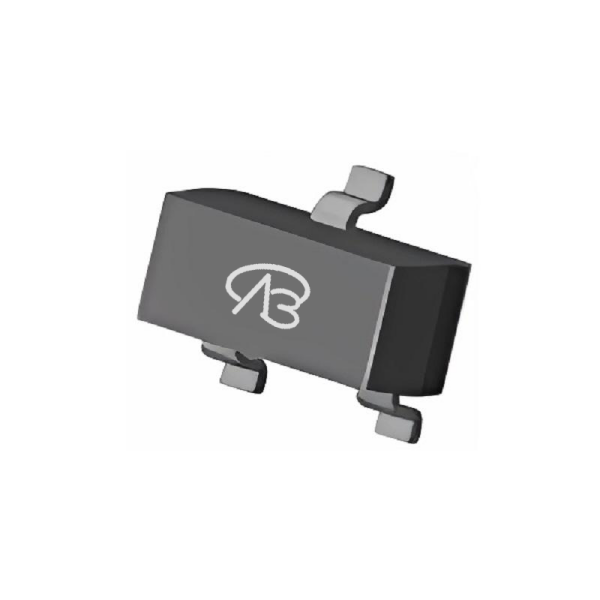
Full Pin-to-Pin Compatibility: It utilizes the same SC75-3 package, allowing for a direct drop-in replacement without any PCB layout modifications.
Robust Design: Built with a mature Trench technology, it guarantees stable operation with a standard gate threshold voltage (Vth) of 1.7V and a VGS rating of ±20V.
Part 3: Core Value Beyond Specifications
Adopting this domestic alternative delivers strategic advantages:
Securing Automotive Supply Chains: Provides a qualified, reliable source for automotive electronics, reducing dependency on single-source international suppliers and mitigating supply chain risks.
Optimizing Cost-Effectiveness: Offers a competitive total cost solution without compromising the required AEC-Q101 grade performance or electrical characteristics.
Enabling Agile Local Support: Facilitates faster technical collaboration, custom tuning for specific application needs, and more responsive supply chain management.
Strengthening Domestic Automotive Electronics: Each successful implementation contributes to the maturity and capability of the domestic semiconductor ecosystem in the critical automotive sector.
Part 4: A Robust Path for Substitution Implementation
For a seamless and reliable transition, a structured approach is recommended:
Detailed Specification Audit: Conduct a thorough comparison of all DC parameters, capacitance, and switching characteristics across the intended operating range.
Rigorous Application Testing: Perform bench tests focused on high-speed switching behavior, efficiency measurement under load, and thermal performance in the target application environment.
Qualification and Reliability Verification: For automotive applications, verify that the replacement component meets the necessary AEC-Q101 reliability standards through appropriate stress testing.
Phased Implementation Plan: Begin with a small-batch pilot run in end products, monitor long-term performance, and then plan a full-scale rollout while maintaining a temporary fallback option.
Conclusion: Moving from "Qualified" to "Competitive"
The transition from Toshiba's SSM3K72KFS to VBsemi's VBTA161K illustrates that domestic power semiconductors have reached a level where they can reliably meet and match the stringent requirements of automotive-grade applications. Choosing such a high-performance, pin-compatible domestic alternative is a pragmatic step towards building a more secure, responsive, and innovative supply chain for the future of electronics. The time is right to actively evaluate and integrate these capable domestic solutions.


 Download now
 中文
中文 English
 Back to previous page


