Breaking HAT2218R-EL-E Through and Surpassing: How Domestic Dual N-Channel MOSFETs Achieve High-Performance Substitution
Introduction
Dual N-Channel MOSFETs in compact packages are vital for modern power management, enabling efficient half-bridge and synchronous rectification circuits. For years, international leaders like Renesas have set benchmarks with components such as the HAT2218R-EL-E. Yet, evolving supply dynamics and the pursuit of technological independence have made sourcing reliable, high-performance domestic alternatives a strategic imperative. Represented by VBsemi's VBA3316SD, domestic solutions are now achieving direct competition and meaningful advancement over established international counterparts.
Part 1: Analysis of the Classic Component
Renesas's HAT2218R-EL-E is a dual N-Channel MOSFET housed in an SOP8 package, featuring a 30V drain-source voltage (Vdss) and a continuous drain current (Id) of 8A per channel. With a low on-resistance (RDS(on)) of 24mΩ at VGS=10V, it offers balanced performance for space-constrained applications requiring efficient switching, such as DC-DC converters, motor drives, and load switches. Its half-bridge-ready configuration has made it a common choice in various medium-current designs.
Part 2: Performance Surpassing by the Domestic Challenger
VBsemi's VBA3316SD directly targets and improves upon the HAT2218R-EL-E in several key aspects:
Enhanced Efficiency: It features a significantly lower typical on-resistance of 18mΩ at VGS=10V, reducing conduction losses and improving overall system efficiency.
Robust Electrical Ratings: While maintaining the same 30V drain-source voltage, it offers a high pulse drain current (ID_pulse) of 10A, supporting robust dynamic load handling.
Optimized Threshold & Gate Drive: A standard gate threshold voltage (Vth) of 1.7V and a gate-source voltage (VGS) rating of ±20V ensure compatibility and ease of drive in common logic-level circuits.
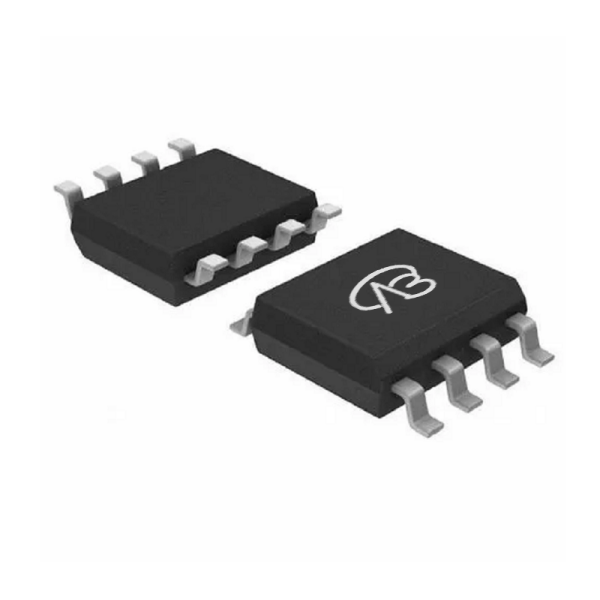
Full Form-Fit Compatibility: The device uses the industry-standard SOP8 package with an identical half-bridge (N+N) pin configuration, allowing for direct drop-in replacement without PCB layout changes.
It leverages advanced Trench technology for stable and reliable switching performance.
Part 3: Core Value Beyond Specifications
Selecting this domestic alternative delivers broader strategic benefits:
Supply Chain Resilience: Mitigates risks associated with single-source or international supply chains, ensuring greater security and continuity of supply.
Cost Structure Optimization: Often provides a more favorable total cost of ownership alongside performance parity or gains, potentially allowing for system-level optimizations.
Responsive Local Support: Domestic suppliers can offer faster, more application-focused technical support and collaborative problem-solving.
Strengthening the Domestic Ecosystem: Successful adoption contributes to the technical maturation and positive feedback loop within the domestic semiconductor industry.
Part 4: A Robust Path for Substitution Implementation
To ensure a seamless transition, the following approach is recommended:
Comprehensive Parameter Review: Conduct a detailed comparison of all DC parameters, switching characteristics, and safe operating area (SOA) curves.
Rigorous Bench Verification: Perform laboratory tests including static parameter verification, dynamic switching analysis, thermal performance assessment, and application-specific efficiency measurements.
Pilot Integration: Implement the component in a small batch of actual products or prototypes for real-world validation and long-term reliability monitoring.
Phased Rollout with Contingency: Plan a gradual production switchover after successful verification, maintaining the previous design as a short-term backup option.
Conclusion: Moving from "Compatible" to "Competitive"
The progression from the HAT2218R-EL-E to the VBA3316SD illustrates that domestic power semiconductor offerings have reached a level where they can effectively compete on performance while adding strategic value. Adopting such high-quality domestic components is a practical step to navigate current supply landscapes and a strategic investment in building a more autonomous, resilient, and innovative technological foundation for the future. The time is right to actively evaluate and integrate these capable domestic solutions.


 Download now
 中文
中文 English
 Back to previous page


