Breaking VBJ1638 Through and Surpassing: How Domestic Power MOSFETs Achieve High-Performance Substitution NCV8403ASTT1G
Introduction
Power MOSFETs serve as essential switches in automotive and industrial electronics, where reliability and protection are paramount. For years, international brands like onsemi have set benchmarks with components such as the NCV8403ASTT1G. However, global supply chain disruptions and the push for technological self-reliance have accelerated the demand for high-performance domestic alternatives. Represented by VBsemi’s VBJ1638, local solutions are now poised to directly compete with and surpass established international classics.
Part 1: Analysis of the Classic Component
onsemi’s NCV8403ASTT1G is a protected low-side smart discrete device featuring an N-channel MOSFET with a drain-source voltage of 42V and a continuous drain current of 15A. It integrates advanced protection functions—including overcurrent, overtemperature, ESD, and an integrated drain-gate clamp for overvoltage protection—making it ideal for harsh automotive environments. Its typical on-resistance of 68mΩ@10V ensures efficient operation, and it has become a trusted choice for applications requiring robust circuit protection.
Part 2: Performance Surpassing by the Domestic Challenger
VBsemi’s VBJ1638 directly targets the NCV8403ASTT1G and demonstrates notable advancements in key specifications:
Higher Voltage Rating: Drain-source voltage is elevated to 60V (an increase of 18V), offering a wider safety margin for voltage spikes and enhanced system durability.
Lower Conduction Loss: Typical on-resistance at 10V is reduced to 28mΩ (significantly lower than 68mΩ), minimizing power dissipation and improving overall efficiency.
Improved Gate-Source Range: VGS of ±20V provides greater flexibility in gate driving.
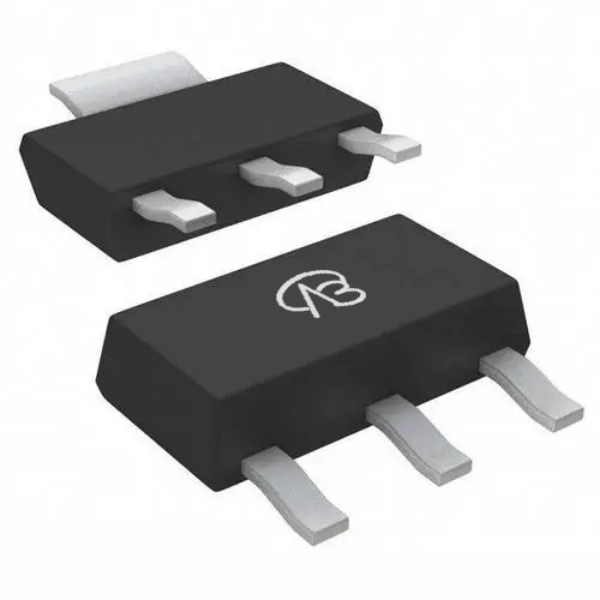
Compact and Compatible Package: The SOT223 package ensures space-saving design and facilitates easy substitution in existing layouts.
While the continuous drain current is rated at 7A (suitable for many medium-power applications), the device leverages advanced Trench technology for stable and reliable performance.
Part 3: Core Value Beyond Specifications
Opting for a domestic alternative like VBJ1638 delivers deeper strategic benefits:
Securing Supply Chain Resilience: Reduces dependency on international suppliers, mitigating risks and ensuring uninterrupted production.
Cost-Effectiveness: Often provides better pricing with superior parametric performance, enabling potential savings in system design and thermal management.
Agile Local Support: Domestic suppliers offer faster technical assistance, customization, and collaborative development tailored to specific application needs.
Strengthening the Industrial Ecosystem: Each successful adoption fuels innovation and experience accumulation within the domestic semiconductor sector, fostering a virtuous cycle of growth.
Part 4: A Robust Path for Substitution Implementation
To ensure a smooth transition, follow these steps:
Detailed Specification Review: Compare all electrical parameters, including VDS, ID, RDS(on), and protection features (noting that VBJ1638 is a standard MOSFET, while NCV8403ASTT1G includes integrated protection; external circuits may be required for full functional equivalence).
Comprehensive Laboratory Testing: Perform static and dynamic tests, efficiency evaluations, temperature rise analyses, and reliability assessments under real-world conditions.
Pilot Validation: Implement small batches in actual products to monitor long-term performance and compatibility.
Develop a Phased Switchover Plan: Gradually integrate the alternative after successful verification, while maintaining the original design as a temporary backup.
Conclusion: Moving from "Usable" to "Excellent"
The progression from the NCV8403ASTT1G to the VBJ1638 underscores the capability of domestic power semiconductors to match and exceed international counterparts in critical aspects like voltage withstand and conduction efficiency. Embracing such high-performance local components is not only a practical response to supply chain challenges but also a strategic step toward building an autonomous, resilient, and innovative industrial future. Now is the time to actively evaluate and adopt superior domestic solutions like VBJ1638.


 Download now
 中文
中文 English
 Back to previous page


