Breaking VBR9N602K Through and Surpassing: How Domestic Power MOSFETs Achieve High-Performance Substitution for VN10KN3-G
Introduction
Power MOSFETs serve as critical switching components in numerous low-voltage control and power management circuits. Internationally, established brands like Microchip have set benchmarks with parts such as the VN10KN3‑G. However, evolving supply dynamics and the pursuit of technical self-reliance have accelerated the demand for high‑performance domestic alternatives. Represented by VBsemi’s VBR9N602K, locally sourced MOSFETs are now capable of direct pin‑to‑pin substitution while delivering enhanced performance.
Part 1: Analysis of the Classic Component
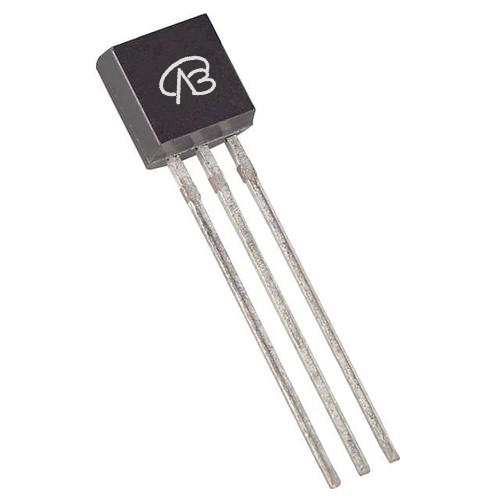
Microchip’s VN10KN3‑G is a 60 V, 750 mA N‑channel MOSFET in a TO‑92 package, featuring a typical on‑resistance of 5 Ω (at 10 V, 500 mA). It is widely adopted in low‑power switching applications, battery‑management circuits, and auxiliary power controls, valued for its reliability and ease of use in cost‑sensitive designs.
Part 2: Performance Surpassing by the Domestic Challenger
VBsemi’s VBR9N602K directly targets the VN10KN3‑G and improves upon key parameters:
Lower Conduction Loss: With a typical RDS(on) of 2 Ω (at 10 V), it significantly reduces conduction losses compared to the 5 Ω of the VN10KN3‑G.
Balanced Electrical Ratings: Maintains the same 60 V drain‑source voltage while offering a threshold voltage of 0.8 V for easier drive compatibility.
Full Package Compatibility: Offered in the same TO‑92 package, enabling drop‑in replacement without board re‑layout.
The device employs an advanced Trench technology, providing stable switching and robust performance in low‑voltage applications.
Part 3: Core Value Beyond Specifications
Selecting a domestic alternative like the VBR9N602K delivers additional strategic benefits:
Supply Chain Resilience: Reduces dependency on single‑source international suppliers and mitigates geopolitical or logistical risks.
Cost‑Effective Solution: Often provides better price‑to‑performance ratio, allowing overall system cost optimization.
Local Technical Support: Faster response and application‑specific assistance from domestic suppliers shorten development cycles.
Industry Ecosystem Growth: Each successful substitution strengthens the domestic semiconductor ecosystem, fostering innovation and long‑term capability building.
Part 4: A Robust Path for Substitution Implementation
To ensure a smooth transition, the following steps are recommended:
Detailed Parameter Review: Compare all electrical characteristics, including gate charge, switching times, and temperature coefficients.
Laboratory Verification: Perform static and dynamic tests, efficiency measurements, and thermal validation under real operating conditions.
Pilot Batch Testing: Introduce the component into actual products for field reliability assessment.
Transition Planning: After full verification, phase in the substitute gradually while keeping the original part as an interim backup.
Conclusion: Moving from "Compatible" to "Superior"
The progression from the VN10KN3‑G to the VBR9N602K illustrates that domestic power MOSFETs have reached a level where they can match and exceed established international counterparts in key low‑voltage segments. Adopting such high‑performance domestic components is not only a practical response to current supply‑chain challenges but also a strategic step toward building a self‑reliant, innovative, and resilient electronics industry. Now is the time to actively evaluate and integrate qualified domestic solutions like the VBR9N602K.


 Download now
 中文
中文 English
 Back to previous page


