Breaking Through and Surpassing IXFH34N50P3: How Domestic Power MOSFETs Achieve High-Performance Substitution
Introduction
Power MOSFETs serve as the critical switches managing energy flow in power electronic systems. For years, international benchmarks like Littelfuse IXYS's IXFH34N50P3 have set the standard in high-power applications. However, evolving global dynamics and the pursuit of technological independence have made finding reliable, high-performance domestic alternatives a strategic imperative. Represented by VBsemi's VBP15R50S, domestic components are now achieving direct competition and even surpassing such established international classics.
Part 1: Analysis of the Classic Component
Littelfuse IXYS's IXFH34N50P3 is a high-current N-channel MOSFET (500V, 34A) featuring fast intrinsic rectification and avalanche ruggedness. Its design emphasizes low on-resistance (180mΩ) combined with low gate charge (Qg), low package inductance, and high power density, facilitating easier installation. This device is widely adopted in demanding applications such as switch-mode and resonant-mode power supplies, as well as DC-DC converters, making it a go-to choice for high-efficiency, high-power-density designs.
Part 2: Performance Surpassing by the Domestic Challenger
VBsemi's VBP15R50S directly competes with the IXFH34N50P3 and demonstrates significant enhancements in key specifications:
Higher Current Handling: Continuous drain current reaches 50A, a substantial increase from 34A, enabling greater power throughput and design headroom.
Dramatically Lower Conduction Losses: On-resistance (RDS(on)) is reduced to a typical 80mΩ (at VGS=10V), significantly cutting conduction losses and boosting system efficiency.
Robust Voltage Ratings: Maintains a 500V drain-source voltage (Vdss) with a ±30V gate-source rating, ensuring reliability in high-voltage switching environments.
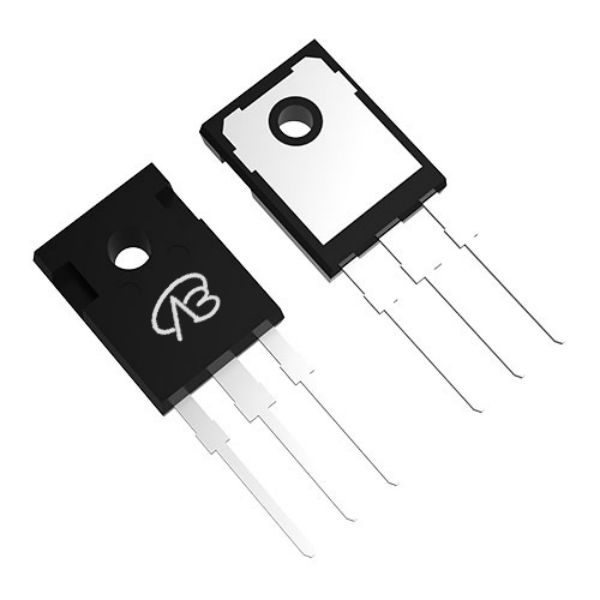
Full Form-Fit Compatibility: Utilizes the industry-standard TO-247 package, allowing for a direct pin-to-pin replacement without board layout changes.
This performance is achieved through an advanced SJ_Multi-EPI (Super Junction Multi-Epitaxial) technology platform, ensuring high efficiency and robustness.
Part 3: Core Value Beyond Specifications
Selecting this domestic alternative delivers deeper strategic advantages:
Ensuring Supply Chain Security: Mitigates risks associated with single-source international supply chains, guaranteeing greater stability and production continuity.
Optimizing System Cost and Performance: Offers compelling cost-performance ratio. The lower RDS(on) can lead to reduced thermal management requirements, potentially simplifying peripheral design and lowering total system cost.
Accessing Agile Local Support: Domestic suppliers provide responsive technical support and collaborative development, tailored to specific application needs and faster problem resolution.
Strengthening the Industrial Ecosystem: Each successful adoption contributes to the domestic semiconductor industry's technical accumulation and iterative innovation, fostering a virtuous cycle of development.
Part 4: A Robust Path for Substitution Implementation
For a seamless transition, the following steps are recommended:
Detailed Specification Comparison: Meticulously review all electrical parameters, characteristic curves, and application notes.
Rigorous Laboratory Testing: Conduct comprehensive tests including static parameters, dynamic switching performance, thermal behavior/efficiency measurements, and reliability stress tests under simulated operating conditions.
Small-Batch Pilot Verification: Implement the component in real-world products and environments, monitoring its performance and reliability over an extended period.
Develop a Phased Switchover Plan: After successful verification, plan a gradual rollout while maintaining the original design as a short-term backup option.
Conclusion: Moving from "Usable" to "Excellent"
The progression from the IXFH34N50P3 to the VBP15R50S exemplifies that domestic power semiconductors now possess the capability not just to match but to outperform international benchmarks in key high-power segments. Adopting such high-performance domestic components is both a practical solution to current supply chain challenges and a strategic investment in building an autonomous, resilient, and innovative industrial ecosystem for the future. The time is opportune to actively evaluate and integrate these superior domestic solutions.


 Download now
 中文
中文 English
 Back to previous page


