Breaking Through IPW60R145CFD7 and Surpassing: How Domestic Power MOSFETs Achieve High-Performance Substitution
Introduction
Power MOSFETs serve as the essential switches managing energy flow in contemporary electronics. For years, international giants like Infineon have set industry benchmarks with products such as the IPW60R145CFD7. However, supply chain uncertainties and the push for technological self-reliance have made finding dependable, high-performance domestic alternatives a strategic priority. Exemplified by VBsemi’s VBP16R20S, domestic components are now capable of direct对标and outperforming established international classics.
Part 1: Analysis of the Classic Component
Infineon’s IPW60R145CFD7 is a robust N-channel superjunction MOSFET rated at 650V and 10A. It features a low on-resistance of 145mΩ (measured at VGS=10V, ID=6.8A), enabled by advanced superjunction (CoolMOS™) technology. This device is commonly deployed in high-efficiency power conversion stages like switch-mode power supplies (SMPS), PFC circuits, and motor drives, where low conduction loss and high switching performance are critical.
Part 2: Performance Surpassing by the Domestic Challenger
VBsemi’s VBP16R20S directly对标s the IPW60R145CFD7 and demonstrates notable enhancements in key aspects:
Higher Current Handling: Continuous drain current reaches 20A (a significant 10A increase over the classic 10A rating), enabling greater power throughput and design headroom.
Balanced Voltage and Conduction Performance: With a drain-source voltage of 600V and an on-resistance of 160mΩ (at VGS=10V), it delivers a competitive low-loss characteristic, closely matching the conduction efficiency of the international part.
Advanced Technology Foundation: Utilizes a mature SJ_Multi-EPI (Superjunction Multi-Epitaxial) process, ensuring low switching loss, high robustness, and reliable operation.
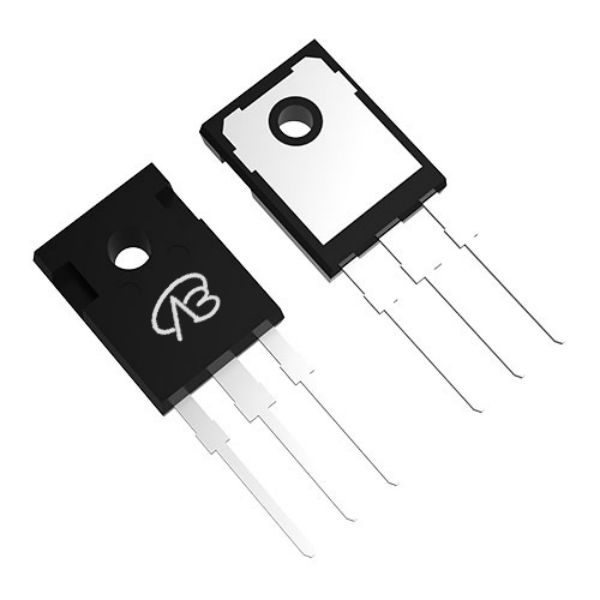
Full Form-Fit Compatibility: Provided in a standard TO-247 package, it allows drop-in replacement without board layout changes, simplifying the substitution process.
Part 3: Core Value Beyond Specifications
Opting for a domestic alternative like the VBP16R20S extends advantages beyond the datasheet:
Supply Chain Resilience: Reduces reliance on single-source international suppliers, mitigating geopolitical and logistical risks while ensuring production stability.
Cost-Effectiveness: Often provides a more favorable total cost of ownership without sacrificing performance, potentially allowing optimization of system cooling or component count.
Responsive Local Support: Domestic suppliers can offer faster technical response, customized validation, and collaborative problem-solving tailored to specific application needs.
Strengthening the Domestic Ecosystem: Each successful adoption accelerates the domestic semiconductor industry’s technological iteration and market confidence, fostering a sustainable innovation cycle.
Part 4: A Robust Path for Substitution Implementation
To ensure a seamless transition, the following steps are recommended:
Comprehensive Parameter Review: Compare all electrical specifications, thermal characteristics, and switching performance curves.
Rigorous Lab Validation: Perform static parameter verification, dynamic switching tests (turn-on/turn-off, gate charge), thermal performance assessment, and reliability stress testing.
Pilot Implementation: Introduce the component in small batches within actual end products, monitoring performance under real operating conditions over an extended period.
Phased Replacement with Backup Strategy: After full validation, execute a phased production switchover while temporarily retaining the original design as a fallback option to minimize risk.
Conclusion: Moving from "Usable" to "Excellent"
The progression from the IPW60R145CFD7 to the VBP16R20S illustrates that domestic power semiconductors have reached a level where they can not only match but exceed key performance metrics of leading international counterparts. Embracing such high-performance domestic alternatives is both a practical response to current supply-chain challenges and a strategic investment in building an autonomous, resilient, and innovative industrial foundation for the future. Now is the ideal moment to actively evaluate and integrate these capable domestic solutions.


 Download now
 中文
中文 English
 Back to previous page


