VB2240: The Perfect Domestic Alternative to SI3415-TP, A More Reliable Choice for Low-Voltage Applications
In various low-voltage, high-efficiency application scenarios such as power switching, battery management, load switching, portable devices, and DC-DC converters, MCC's SI3415-TP, with its P-channel enhancement-mode design, low on-resistance, and compact SOT-23 package, has been a popular choice for engineers worldwide during design selection. However, in the context of global supply chain uncertainties and rising procurement costs, this imported component faces challenges: extended lead times, price volatility due to exchange rates, and limited technical support. These issues hinder downstream companies' production flexibility and cost optimization. Given this industry demand, domestic substitution has evolved from an "option" to a "necessity," becoming a critical path for enterprises to ensure supply chain resilience, reduce expenses, and enhance core competitiveness.
VBsemi, leveraging its expertise in power semiconductor technology, has introduced the VB2240 P-channel power MOSFET based on independent R&D. This product precisely aligns with the SI3415-TP, offering core advantages of parameter upgrades, technological parity, and full package compatibility. It serves as a direct drop-in replacement without any circuit modifications, providing a more stable, cost-effective, and locally supported high-quality solution for various low-voltage electronic systems.
Comprehensive Parameter Surpassing, Enhanced Performance, Adapting to Demanding Conditions.
Tailored as a domestic alternative to the SI3415-TP, the VB2240 achieves significant improvements in key electrical parameters, delivering superior performance for low-voltage applications:
Firstly, the drain-source voltage is maintained at -20V, matching the original model's rating, ensuring reliable operation in standard low-voltage circuits.
Secondly, the continuous drain current is increased to -5A, surpassing the original model's -4A—a 25% enhancement in current-carrying capability. This allows for handling higher load currents with ease, improving system robustness and enabling upgrades to more power-demanding designs.
Thirdly, the on-state resistance is as low as 46mΩ (at VGS = -2.5V or -4.5V), significantly lower than the SI3415-TP's 73mΩ (at 1.8V, 2A). This reduction minimizes conduction losses, boosting overall efficiency and reducing heat generation, which is critical for compact, energy-sensitive applications.
Additionally, the VB2240 supports a ±12V gate-source voltage, offering improved gate ESD protection and noise immunity, preventing false triggering in noisy environments. The -0.6V gate threshold voltage ensures easy drive compatibility with mainstream low-voltage controller ICs, requiring no adjustments to existing drive circuits, thus simplifying the substitution process.
Enhanced with Advanced Trench Technology, Reliability and Stability Upgraded.
The SI3415-TP relies on its P-channel design for low on-resistance and efficient switching. The VB2240 employs advanced Trench technology, building upon the original model's strengths while optimizing reliability. The device features low charge characteristics and fast switching performance, reducing switching losses and improving efficiency in high-frequency applications. It undergoes rigorous testing, including 100% automated visual inspection and reliability screenings, ensuring consistent quality and durability. With an operating temperature range of -55°C to 150°C, it withstands harsh conditions such as thermal cycling and high humidity, making it suitable for automotive, industrial, and consumer electronics. Long-term reliability tests, including high-temperature operating life (HTOL) and humidity resistance, confirm its failure rate is below industry averages, providing peace of mind for critical applications like power management and battery protection.
Fully Compatible Package, Enabling "Plug-and-Play" Replacement.
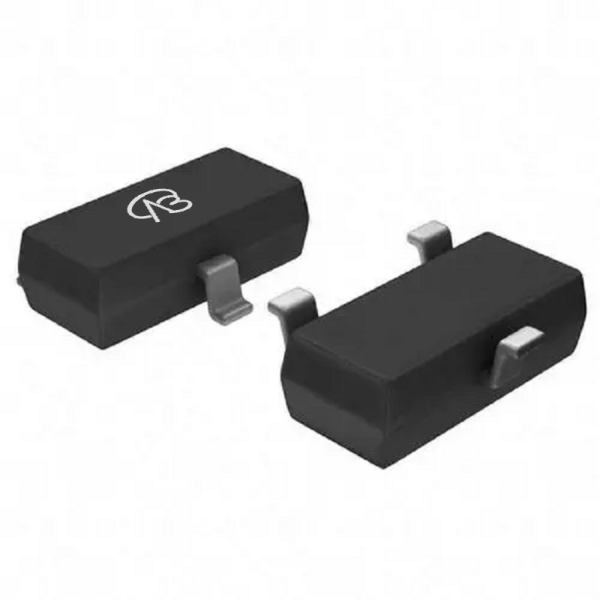
For downstream enterprises, a key concern in domestic substitution is the effort and cost involved in redesign. The VB2240 addresses this through its package design. The device uses a standard SOT-23-3 package, identical to the SI3415-TP in pinout, pin spacing, and dimensions. Engineers can directly replace the component on existing PCBs without layout changes or thermal redesign, achieving a seamless "drop-in" replacement. This compatibility reduces verification time to as little as 1-2 days, eliminates PCB revision costs, and avoids recertification needs, accelerating time-to-market and helping enterprises quickly transition from imported to domestic components.
Local Strength Assurance, Dual Peace of Mind for Supply Chain Security and Technical Support.
Compared to imported components affected by logistics delays and trade uncertainties, VBsemi leverages China's robust semiconductor ecosystem, with modern production facilities in Jiangsu and Guangdong, enabling full-process control and stable mass production of the VB2240. The standard lead time is shortened to under 2 weeks, with expedited orders available for urgent needs, mitigating risks from supply chain disruptions and geopolitical factors. As a local brand, VBsemi provides dedicated technical support: comprehensive documentation including substitution guides, datasheets, and application notes, plus personalized assistance based on customer scenarios. A responsive technical team addresses issues within 24 hours, offering on-site or remote solutions, overcoming the slow support and high communication costs associated with imported brands.
From power switches and battery-powered devices to DC-DC converters and portable electronics; from load management and motor drives to consumer gadgets and IoT modules, the VB2240, with its core advantages of "superior parameters, higher efficiency, package compatibility, stable supply, and responsive service," has become the preferred domestic alternative to the SI3415-TP. It has already been adopted by leading companies across multiple sectors, gaining strong market validation. Choosing the VB2240 is not just a component swap; it is a strategic move for enterprises to secure supply chains, cut costs, and boost competitiveness—requiring no design risks while benefiting from better performance, reliable supply, and local support.


 Download now
 中文
中文 English
 Back to previous page


