Introduction
In the realm of automotive and industrial power management, robust and reliable high-voltage MOSFETs are indispensable. For years, international giants like STMicroelectronics have set benchmarks with components such as the STB9NK80Z. However, the evolving landscape of global supply chains and the push for technological sovereignty necessitate high-quality, drop-in replacements. VBsemi's VBL18R07S emerges as a formidable domestic challenger, not merely matching but surpassing this established classic.
Part 1: Analysis of the Classic Component
ST's STB9NK80Z is an automotive-grade N-channel power MOSFET rated for 800V and 5.2A continuous drain current. Leveraging ST's SuperMESH™ technology, it achieves a typical on-resistance of 1.5Ω (1.8Ω max @10V), offering a balance of high voltage withstand and conduction performance. Housed in a D2PAK (TO-263) package, it is a trusted choice for demanding applications in automotive systems, industrial power supplies, and motor controls.
Part 2: Performance Surpassing by the Domestic Challenger
VBsemi's VBL18R07S directly targets and elevates the key parameters of the STB9NK80Z:
Superior Conduction Efficiency: It features a significantly lower typical on-resistance (RDS(on)) of just 850mΩ @10V, drastically reducing conduction losses and improving overall system efficiency compared to the classic's 1.8Ω.
Higher Current Handling: With a continuous drain current (ID) rating of 7A, it provides a substantial 1.8A margin over the STB9NK80Z, enabling support for higher power levels or offering increased design headroom.
Maintained High-Voltage Robustness: It retains the crucial 800V drain-source voltage (VDS) rating, ensuring equivalent protection against voltage spikes in harsh environments.
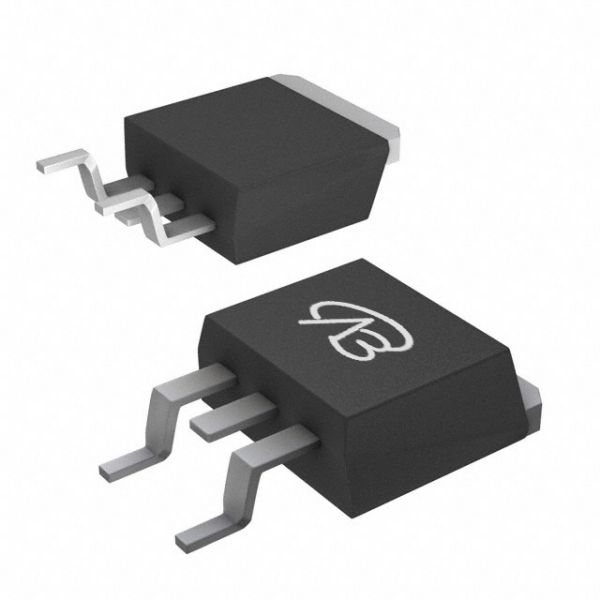
Advanced Technology & Full Compatibility: Built on a sophisticated SJ_Multi-EPI (Super Junction Multi-Epitaxial) process, the VBL18R07S ensures high performance and reliability. It comes in the pin-to-pin compatible TO-263 (D2PAK) package, facilitating a seamless, no-PCB-change replacement.
Part 3: Core Value Beyond Specifications
Selecting the VBL18R07S extends benefits far beyond its impressive datasheet:
Strengthened Supply Chain Resilience: It mitigates risks associated with single-source international components, ensuring greater supply stability and production security for critical applications.
System-Level Cost Optimization: The combination of high performance and competitive pricing can lead to overall cost savings, potentially simplifying thermal design due to lower losses.
Proximity to Agile Support: Direct access to domestic engineering support allows for faster response times, collaborative problem-solving, and customization aligned with specific application needs.
Empowering the Domestic Ecosystem: Successful adoption fuels the advancement of the local semiconductor industry, fostering innovation and creating a sustainable, self-reliant technological foundation.
Part 4: A Robust Path for Substitution Implementation
To ensure a smooth and successful transition, a methodical approach is recommended:
1. Comprehensive Parameter Review: Conduct a detailed side-by-side analysis of all electrical characteristics and switching curves.
2. Rigorous Laboratory Validation: Perform tests on static parameters, dynamic switching behavior, thermal performance under load, and long-term reliability stresses.
3. Controlled Pilot Integration: Implement the VBL18R07S in small batches within actual end products to validate performance in real-world operating conditions.
4. Phased Rollout with Contingency: After successful verification, plan a staged production switchover while maintaining the previous design as a short-term backup option.
Conclusion: Advancing from "Qualified" to "Superior"
The progression from the STB9NK80Z to the VBL18R07S clearly demonstrates that domestic power semiconductor solutions have reached a stage where they can compete on parity and excel in performance against entrenched international counterparts. Adopting such high-performance, automotive-grade alternatives is a strategic decision that addresses immediate supply chain concerns while actively contributing to building a more autonomous, robust, and innovative industrial future for the automotive and power electronics sectors. The time for proactive evaluation and integration is now.


 Download now
 中文
中文 English
 Back to previous page


