VBE1101N: The Perfect Domestic Alternative to MCU65N10YA-TP, A More Reliable Choice for High-Current Applications
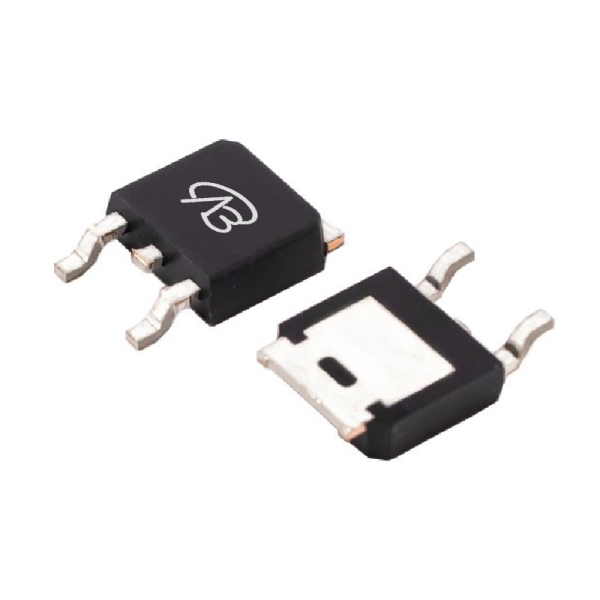
In various high-current, high-efficiency application scenarios such as switch-mode power supplies, motor drives, battery management systems, industrial automation, and automotive electronics, MCC's MCU65N10YA-TP, with its balanced performance in voltage rating, current handling, and low on-resistance, has been a popular choice for engineers worldwide during design selection. However, in the context of persistent global supply chain challenges and trade uncertainties, this imported component has increasingly revealed several pain points: extended lead times (often stretching to several months), procurement costs vulnerable to currency fluctuations, and delayed technical support. These issues critically impact production schedules and cost optimization for downstream manufacturers. Given this industry demand, domestic substitution has evolved from an "alternative" to an "imperative," becoming a strategic path for enterprises to ensure supply chain resilience, reduce costs, and enhance core competitiveness.
VBsemi, leveraging years of expertise in power semiconductor development, introduces the VBE1101N N-channel power MOSFET based on its independent R&D capabilities. This product is precisely tailored as a direct alternative to the MCU65N10YA-TP, offering core advantages of parameter enhancements, technological parity, and full package compatibility. It can serve as a drop-in replacement without any circuit modifications, delivering a more robust, cost-effective, and locally supported high-quality solution for various high-current electronic systems.
Comprehensive Parameter Superiority, Enhanced Performance Margins, Adapting to More Demanding Conditions.
Designed as a domestic alternative to the MCU65N10YA-TP, the VBE1101N achieves significant, leapfrog improvements in key electrical parameters, providing stronger performance guarantees for high-current applications:
Firstly, the drain-source voltage is maintained at 100V, matching the original model's rating, ensuring reliable operation in standard voltage environments while offering a solid foundation for stability.
Secondly, the continuous drain current is increased to 85A, substantially surpassing the original model's 65A—a 30.8% enhancement in current-carrying capacity. This enables effortless handling of higher power loads, whether upgrading existing equipment or improving system reliability at similar power levels.
Thirdly, the on-state resistance is reduced to 8.5mΩ (@10V gate drive), outperforming the MCU65N10YA-TP's 9.5mΩ. This lower RDS(on) significantly cuts conduction losses, directly boosting overall system efficiency. Particularly in high-frequency switching or high-current applications, it minimizes heat generation, alleviating thermal design pressures and reducing cooling costs.
Additionally, the VBE1101N supports a ±20V gate-source voltage, providing robust gate ESD and noise immunity, effectively preventing false triggering in complex electromagnetic environments. The 2.5V gate threshold voltage design balances drive convenience and switching reliability, seamlessly compatible with mainstream driver ICs without requiring drive circuit adjustments, further simplifying the substitution process.
Enhanced with Advanced Trench Technology, Reliability and Stability Inherited and Upgraded.
The MCU65N10YA-TP relies on its optimized design for low on-resistance and efficient switching. The VBE1101N employs industry-leading Trench gate technology, building upon the original model's strengths while optimizing device reliability across multiple dimensions. The device undergoes rigorous pre-shipment testing, including 100% electrical validation and high-current screening, demonstrating excellent thermal and electrical robustness. It can reliably manage power surges and transient currents, reducing the risk of device failure. Through an optimized internal structure, it not only lowers switching losses but also enhances dv/dt tolerance, perfectly matching the application scenarios of the MCU65N10YA-TP. Even under demanding conditions like high-current switching or rapid load changes, it maintains stable operation and can be directly replaced without altering the circuit topology. Furthermore, the VBE1101N features an extended operating temperature range, capable of adapting to various harsh environments such as industrial high-temperature settings or automotive under-hood conditions. Having passed stringent reliability tests, including long-term aging and thermal cycling, its failure rate is well below industry averages, providing solid assurance for continuous equipment operation—especially suitable for critical fields with high reliability demands like automotive systems, industrial controls, and power infrastructure.
Fully Compatible Package, Enabling "Seamless, Risk-Free, and Immediate" Replacement.
For downstream enterprises, a primary concern in domestic substitution is the R&D effort and time investment required for replacement. The VBE1101N fundamentally addresses this through its package design. The device uses a TO-252 package, which is fully compatible with the MCU65N10YA-TP's package in terms of pinout, pin spacing, dimensions, and thermal pad layout. Engineers need not modify the original PCB layout or thermal management design, achieving a "plug-and-play" replacement. The benefits of this high compatibility are clear: on one hand, it drastically reduces substitution verification time, eliminating the need for circuit redesign, simulation, and extensive testing—sample validation can typically be completed within 1-2 days. On the other hand, it avoids additional costs from PCB revisions or tooling changes while preserving the original product's form factor, bypassing re-certification and外观 adjustments. This effectively shortens the supply chain cycle, helping enterprises swiftly achieve import substitution and capitalize on market opportunities.
Local Strength Assurance, Dual Peace of Mind for Supply Chain Security and Technical Support.
Compared to the volatile supply chains of imported components affected by international logistics, trade policies, and exchange rates, VBsemi capitalizes on China's mature semiconductor ecosystem, with modern production bases and R&D centers in Jiangsu, Guangdong, and other regions. This enables full-process in-house R&D and stable mass production of the VBE1101N. Currently, the standard lead time for this model is compressed to within 2 weeks, with expedited orders enabling 72-hour rapid delivery. This effectively mitigates risks from global supply chain disruptions, tariff barriers, and geopolitical factors, providing firm assurance for uninterrupted production plans. Simultaneously, as a local brand, VBsemi boasts a dedicated technical support team offering "one-on-one" customized services: not only supplying comprehensive documentation, including detailed substitution verification reports, datasheets, thermal design guides, and application notes, but also providing tailored selection advice and circuit optimization solutions based on specific customer applications. For any technical issues during substitution, the support team ensures a 24-hour rapid response, assisting with on-site or remote resolution. This彻底addresses the pain points of slow support and high communication costs with imported components, making the substitution process smoother and more reliable.
From industrial motor drives and high-current power supplies to automotive electronics and battery management systems; from UPS units and renewable energy converters to robotics and consumer electronics, the VBE1101N, with its core strengths of "superior parameters, enhanced performance, package compatibility, controllable supply, and responsive service," has become the preferred domestic alternative to the MCU65N10YA-TP. It has already seen successful adoption in multiple leading companies across industries, earning strong market recognition. Choosing the VBE1101N is not merely a simple component swap; it is a strategic move for enterprises to upgrade supply chain security, optimize production costs, and boost product competitiveness—requiring no R&D modification risks while benefiting from better performance, more stable supply, and more accessible technical support.


 Download now
 中文
中文 English
 Back to previous page


