Breaking Through and Surpassing TK2R4E08QM,S1X: How Domestic Power MOSFETs Achieve High-Performance Substitution
Introduction
Power MOSFETs serve as the critical switches governing energy flow in modern power electronics. For years, international manufacturers like Toshiba have set benchmarks with established products such as the TK2R4E08QM,S1X. However, shifting global supply dynamics and the pursuit of technological self-reliance have made sourcing reliable, high-performance domestic alternatives a strategic imperative. Represented by VBsemi's VBM1803, domestic components are now achieving direct competition and surpassing international classics.
Part 1: Analysis of the Classic Component
Toshiba's TK2R4E08QM,S1X is an N-channel MOSFET rated for 80V and 120A continuous drain current. Featuring a low on-resistance of 2.44mΩ (measured at 10V, 50A), it offers efficient power handling and is commonly deployed in high-current switching applications such as motor drives, power tools, and DC-DC converters, earning its place as a trusted solution in numerous designs.
Part 2: Performance Surpassing by the Domestic Challenger
VBsemi's VBM1803 directly competes with the TK2R4E08QM,S1X and demonstrates enhanced key parameters:
Superior Current Handling: Continuous drain current reaches 195A, significantly exceeding the classic’s 120A, enabling higher power throughput and robust performance in demanding circuits.
Optimized Conduction Characteristics: With a typical on-resistance of 3mΩ at 10V gate drive, it maintains low conduction losses, supporting high system efficiency.
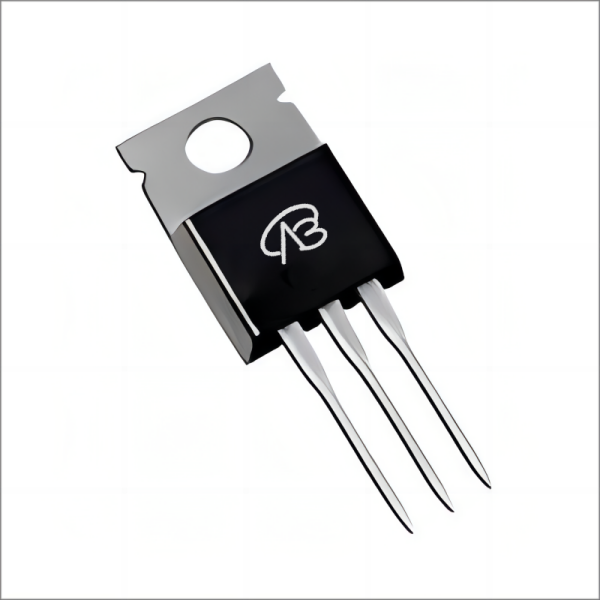
Full Practical Compatibility: Housed in a TO-220 package with a single N-channel configuration, it facilitates pin-to-pin replacement without board redesign.
The device leverages advanced Trench technology, ensuring reliable switching and thermal performance.
Part 3: Core Value Beyond Specifications
Selecting a domestic alternative delivers deeper strategic benefits:
Securing Supply Chain Resilience: Reduces reliance on overseas suppliers, mitigates procurement risks, and ensures production stability.
Cost Structure Optimization: Often provides better cost efficiency for equivalent or superior performance, allowing potential savings in system design (e.g., cooling solutions).
Accessing Responsive Local Support: Domestic suppliers offer faster technical assistance, customization guidance, and collaborative problem-solving tailored to regional needs.
Strengthening the Industrial Ecosystem: Each successful adoption accelerates experience accumulation and technological iteration within the domestic semiconductor sector, fostering a virtuous cycle of innovation.
Part 4: A Robust Path for Substitution Implementation
To ensure a smooth transition, the following steps are recommended:
Comprehensive Parameter Review: Compare all electrical specifications, including gate charge, capacitance, and safe operating area.
Rigorous Laboratory Validation: Perform static and dynamic parameter tests, switching loss analysis, thermal performance evaluation, and reliability stress testing.
Pilot Batch Verification: Test the component in actual end-product environments and monitor long-term stability under real operating conditions.
Develop a Phased Switchover Plan: Implement substitution gradually after full validation, while temporarily retaining the original design as a short-term backup option.
Conclusion: Moving from "Usable" to "Excellent"
The progression from Toshiba's TK2R4E08QM,S1X to VBsemi's VBM1803 illustrates that domestic power semiconductors have reached a level where they can not only match but exceed established international benchmarks in key aspects. Adopting such high-performance domestic components is both a practical response to current supply chain pressures and a strategic step toward building an autonomous, resilient, and innovative industrial foundation for the future. Now is the ideal time to actively evaluate and integrate high-quality domestic solutions.


 Download now
 中文
中文 English
 Back to previous page


