Breaking IPT017N10NM5LF2ATMA1 Through and Surpassing: How Domestic Power MOSFETs Achieve High-Performance Substitution
Introduction
Power MOSFETs serve as the critical "switches" managing energy flow in modern high-current applications. For years, international giants like Infineon have set the benchmark with proven products such as the IPT017N10NM5LF2ATMA1. However, global supply chain uncertainties and the pursuit of technological self-reliance have made finding reliable, high-performance domestic alternatives a strategic imperative. Represented by VBsemi's VBGQT1101, domestic components are now achieving direct competition and surpassing established international classics.
Part 1: Analysis of the Classic Component
Infineon's IPT017N10NM5LF2ATMA1 is a high-current, low-voltage MOSFET (100V, 321A) featuring an extremely low on-resistance (1.3mΩ @15V). Designed with a focus on robustness, it offers a wide Safe Operating Area (SOA), is 100% avalanche tested, and is specifically suited for demanding applications like hot-swap and eFuse circuits. Its lead-free, RoHS-compliant, and halogen-free construction according to JECL1249-2-21 has made it a go-to choice in industrial and power management designs.
Part 2: Performance Surpassing by the Domestic Challenger
VBsemi's VBGQT1101 directly competes with the IPT017N10NM5LF2ATMA1 and demonstrates superior key parameters:
Higher Current Capability: Continuous drain current reaches 350A (an increase of 29A), enabling greater power handling and design headroom.
Lower Conduction Loss: Typical on-resistance is 1.2mΩ @10V, reducing power dissipation and improving system efficiency.
Robust Gate Control: Gate-source voltage (VGS) rating of ±20V and a standard threshold voltage (Vth) of 3V ensure reliable and compatible driving.
Advanced Technology: Built on SGT (Shielded Gate Trench) technology, optimizing the trade-off between RDS(on) and robustness.
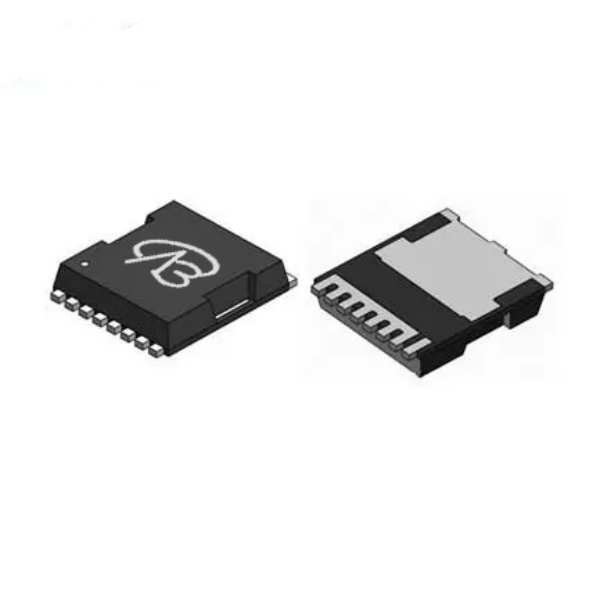
Full Compatibility: Utilizes a TOLL package, facilitating a form-factor compatible replacement.
Part 3: Core Value Beyond Specifications
Opting for this domestic alternative delivers deeper strategic advantages:
Ensuring Supply Chain Security: Mitigates reliance on single-source international suppliers, enhancing supply stability and production continuity.
Optimizing Total Cost: Offers compelling cost-performance ratio, potentially lowering system costs and allowing for optimization in thermal design due to higher efficiency.
Accessing Agile Local Support: Proximity to domestic suppliers enables faster technical response, customized support, and collaborative development tailored to specific application needs.
Strengthening the Industrial Ecosystem: Each successful adoption contributes to the domestic semiconductor industry's technical积累, fostering a virtuous cycle of innovation and improvement.
Part 4: A Robust Path for Substitution Implementation
For a seamless transition, the following steps are recommended:
Detailed Specification Comparison: Meticulously compare all electrical parameters, characteristic curves, and SOA data.
Rigorous Laboratory Validation: Perform static parameter tests, dynamic switching tests, thermal/efficiency assessments, and reliability stress tests under simulated application conditions.
Pilot Batch Verification: Test the component in real-world prototypes and operational environments, monitoring long-term stability and performance.
Develop a Phased Switchover Plan: Implement the substitution gradually upon successful verification, while maintaining the original design as a short-term backup option.
Conclusion: Moving from "Usable" to "Excellent"
The progression from the IPT017N10NM5LF2ATMA1 to the VBGQT1101 illustrates that domestic power semiconductors now possess the capability not only to match but to exceed international benchmarks in key performance metrics. Adopting such high-performance domestic components is both a practical solution to immediate supply chain challenges and a strategic investment in building a self-reliant, resilient, and innovative industrial ecosystem for the future. The time is ripe to actively evaluate and integrate these qualified domestic solutions.


 Download now
 中文
中文 English
 Back to previous page


