Breaking VBA1311 Through and Surpassing: How Domestic Power MOSFETs Achieve High-Performance Substitution for Diodes DMS3015SSS-13
Introduction
Power MOSFETs are the crucial "switches" controlling energy flow in modern electronic devices. For a long time, international brands like Diodes have dominated the market with their reliable products, such as the DMS3015SSS-13. However, global supply chain volatility and the need for technological autonomy have made seeking reliable, high-performance domestic alternatives a strategic necessity. Represented by VBsemi's VBA1311, domestic components are now achieving direct对标 and even surpassing international classics.
Part 1: Analysis of the Classic Component
Diodes' DMS3015SSS-13 is a low-voltage MOSFET (30V, 11A) utilizing high-density UMOS technology with an integrated Schottky barrier diode. This technology offers low on-resistance (8.5mΩ@10V, 9.5mΩ@4.5V), low input capacitance, fast switching speed, and high conversion efficiency, supported by monolithic SiMFET technology for enhanced performance. It is 100% tested for UIS and Rg, fully compliant with RoHS, halogen- and antimony-free, and meets AEC-Q101 standards for high reliability. It is widely used in applications requiring efficient power management, such as DC-DC converters, motor drives, and battery protection circuits, serving as a benchmark in its class.
Part 2: Performance Surpassing by the Domestic Challenger
VBsemi's VBA1311 directly对标s the DMS3015SSS-13 and offers improvements in key parameters:
Higher Current Handling: Continuous drain current reaches 13A (an increase of 2A), providing greater power handling capability and margin for demanding applications.
Lower Conduction Loss: Typical on-resistance at 10V is 8mΩ (compared to 8.5mΩ), contributing to reduced conduction losses and improved system efficiency, with competitive performance at lower gate drives.
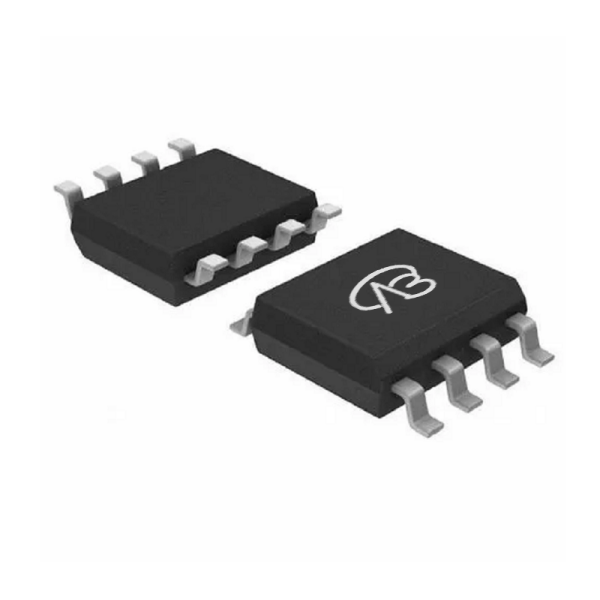
Full Compatibility: Uses a pin-compatible SOP8 package, enabling direct replacement without PCB modifications, simplifying design transitions.
The device is based on mature Trench technology, ensuring stable and reliable performance with a threshold voltage of 1.7V and VGS rating of ±20V for robust operation.
Part 3: Core Value Beyond Specifications
Choosing a domestic alternative brings deeper advantages:
Ensuring Supply Chain Security: Reduces dependence on single international supply chains, enhancing supply stability and production continuity.
Optimizing Overall Cost: Typically offers better cost competitiveness with equivalent or superior performance, potentially enabling optimization of peripheral designs.
Accessing Rapid Local Support: Domestic suppliers can provide more agile technical support and joint development tailored to specific application scenarios.
Boosting the Industrial Ecosystem: Every successful application helps the domestic semiconductor industry accumulate experience and iterate technology, forming a virtuous development cycle.
Part 4: A Robust Path for Substitution Implementation
For a smooth transition, the following steps are recommended:
Detailed Specification Comparison: Carefully compare all key electrical parameters, including VDS, ID, RDS(on), and characteristic curves across operating conditions.
Rigorous Laboratory Testing: Conduct static parameter tests, dynamic switching tests, temperature rise/efficiency tests, and reliability stress tests to validate performance.
Small-Batch Pilot Verification: Trial the component in real products and environments, tracking long-term performance and compatibility.
Develop a Switchover and Backup Plan: Implement the substitution gradually after verification is complete, while retaining the original design as a short-term backup to mitigate risks.
Conclusion: Moving from "Usable" to "Excellent"
The evolution from the DMS3015SSS-13 to the VBA1311 demonstrates that domestic power semiconductors now possess the capability to compete with and even surpass international classics in certain aspects. Adopting such high-performance domestic components is not only a pragmatic choice to address current supply chain challenges but also a strategic move to build an autonomous, resilient, and innovative industrial ecosystem for the future. Now is the opportune time to actively evaluate and introduce high-quality domestic solutions.


 Download now
 中文
中文 English
 Back to previous page


