VBL7402: The High-Performance Chinese-Designed Alternative to IPB160N04S4-H1 for Demanding Power Applications
In an era where supply chain diversification is critical, engineers and procurement specialists are actively seeking reliable, high-performance alternatives to established components. If you are evaluating Infineon's IPB160N04S4-H1 N-channel MOSFET, consider the superior Chinese-designed alternative: VBsemi's VBL7402.
This is not just a simple replacement. The VBL7402 represents a strategic upgrade, delivering enhanced electrical performance while providing the stability and cost benefits of a modern, diversified supply chain.
Beyond Replacement: A Technical Performance Leap
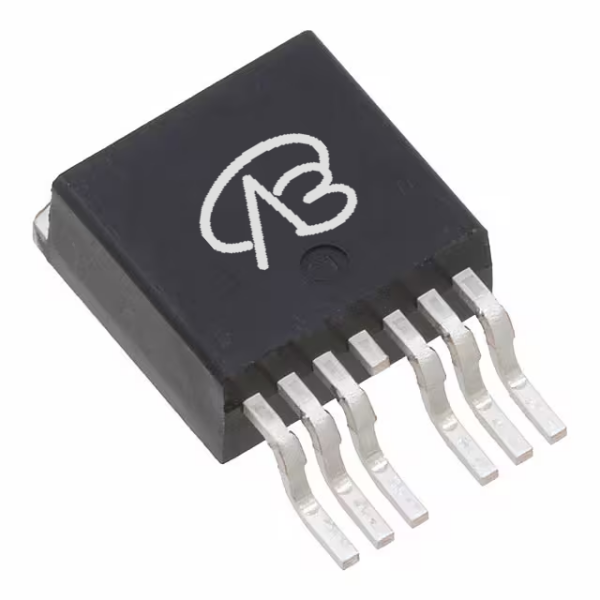
While the IPB160N04S4-H1 is a robust, AEC-qualified solution rated for 40V and 160A, the VBL7402 builds upon this foundation for卓越的效率. Featuring the same 40V drain-source voltage and industry-standard TO-263-7 package, it delivers critical advancements:
Lower Conduction Losses: The key improvement is a significantly reduced on-resistance (RDS(on)). At a 10V gate drive, the VBL7402 achieves an ultra-low 1mΩ, a substantial reduction compared to the IPB160N04S4-H1’s 1.6mΩ. This translates directly into higher system efficiency, reduced heat generation, and cooler operation.
Higher Current Capability: The continuous drain current is increased to 200A, providing greater design margin and robustness over the original 160A rating. This offers engineers enhanced flexibility and confidence for handling high inrush currents or operating in demanding thermal conditions.
Quantifiable Efficiency Gain: Based on the conduction loss formula P = I² x RDS(on), at a 100A load, the VBL7402 dramatically reduces power dissipation. This efficiency gain can simplify thermal management, reduce heatsink requirements, and boost overall system power density and reliability.
Where It Excels: Application Benefits
The technical advantages of the VBL7402 deliver tangible benefits in its core applications:
High-Current DC-DC Converters & VRMs: For server, telecom, and computing power supplies, the ultra-low RDS(on) minimizes conduction losses in synchronous buck converters, enabling higher efficiency and compliance with stringent energy standards.
Motor Drive & Control Systems: In automotive, industrial, and e-mobility applications, lower resistance means reduced heat during start-up, stall, and high-torque conditions. This leads to higher efficiency, extended system life, and improved reliability.
Power Distribution & Switching: The high 200A current rating and low losses support more compact, high-power-density designs for OR-ing, load switches, and battery management systems.
The Strategic Value: Performance & Supply Chain Resilience
Choosing the VBL7402 benefits both your technical design and your supply chain strategy.
Guaranteed Performance Parity (or Better): The datasheet confirms it meets or exceeds key specifications of the IPB160N04S4-H1, including AEC qualification, MSL1 rating, and RoHS compliance, ensuring a seamless and low-risk design transition.
Mitigate Supply Chain Risk: Sourcing from a leading Chinese manufacturer like VBsemi diversifies your supply base. This provides a buffer against geopolitical uncertainties, allocation shortages, or price volatility from single-source suppliers.
Cost Efficiency: The competitive pricing of domestic Chinese components can significantly reduce your overall system cost, enhancing your product's market competitiveness without compromising on quality or performance.
Conclusion: The Intelligent Choice for Next-Generation Designs
VBsemi’s VBL7402 is more than an alternative; it's a forward-looking component choice for the global market. It delivers the proven, AEC-qualified performance required to confidently replace the IPB160N04S4-H1, adds significant efficiency improvements through its ultra-low RDS(on), and comes with the strategic advantages of a diversified, resilient supply chain.
For your next-generation high-current power conversion, motor drive, or demanding switching design, evaluating the VBL7402 isn't just about finding a substitute—it's about upgrading to a smarter, more efficient, and more sustainable solution.


 Download now
 中文
中文 English
 Back to previous page


