VBE1310: The High-Performance Chinese-Designed Alternative to STD17NF03LT4 for Demanding Power Applications
In an era where supply chain diversification is critical, engineers and procurement teams are actively seeking reliable, high-performance alternatives to established components. If you are evaluating the popular N-channel MOSFET, STMicroelectronics' STD17NF03LT4, consider the advanced Chinese-designed alternative: VBsemi's VBE1310.
This is not just a drop-in replacement. The VBE1310 represents a significant technical upgrade, offering superior electrical performance while providing the stability and cost benefits of a modern, diversified supply chain.
Beyond Replacement: A Substantial Technical Leap
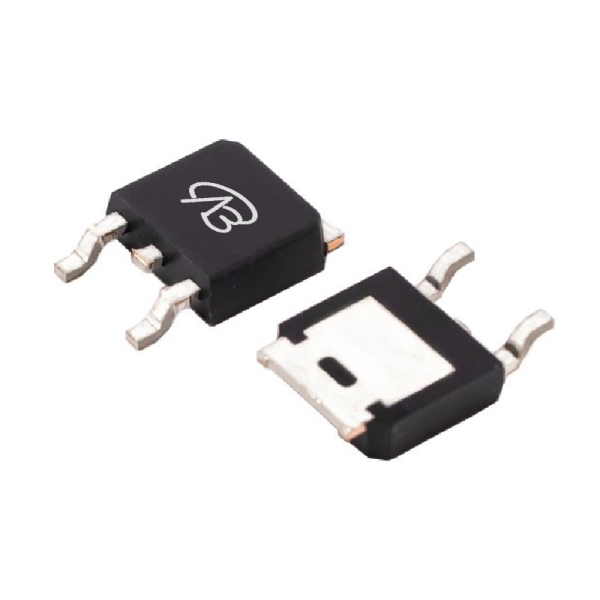
While the STD17NF03LT4 is a proven component with its 30V, 17A rating, the VBE1310 builds upon this foundation for dramatically enhanced efficiency and power handling. Featuring the same 30V drain-source voltage and a compact DPAK/TO-252 package, it delivers breakthroughs in key performance metrics:
Drastically Lower Conduction Losses: The most notable improvement is the radically reduced on-resistance (RDS(on)). With a 10V gate drive, the VBE1310 achieves an ultra-low 7mΩ, representing an over 88% reduction compared to the STD17NF03LT4's 60mΩ (at 5V). This translates directly into significantly higher system efficiency and much cooler operation.
Massively Increased Current Capability: The continuous drain current is raised to a robust 70A, providing a substantial margin over the original 17A rating. This offers engineers immense design flexibility and confidence for handling high inrush currents or operating in demanding thermal conditions.
Quantifiable Performance Gain: According to the conduction loss formula P = I² x RDS(on), at a 10A load, the VBE1310 reduces power dissipation by approximately 88%. This means minimal heat sinking is required, simplifying thermal design, reducing system size, and boosting overall reliability.
Where It Excels: Application Benefits
The technical superiority of the VBE1310 translates into tangible benefits across its target applications:
High-Current DC-DC Converters: In synchronous buck or boost converters, the ultra-low RDS(on) minimizes conduction losses, enabling higher efficiency and power density for point-of-load (PoL) conversion.
Motor Drive and Control: For drones, compact robotics, and high-performance cooling fans, the combination of low resistance and high current rating ensures efficient operation, reduced heat, and extended battery life.
Power Management & Switching Circuits: Its excellent switching characteristics and low gate charge make it ideal for high-frequency switching applications, improving overall power supply performance.
The Strategic Value: Performance & Supply Chain Resilience
Choosing the VBE1310 is a decision that optimizes both your bill of materials (BOM) and your supply chain strategy.
Guaranteed Performance Superiority: The datasheet confirms it significantly exceeds the key specifications of the STD17NF03LT4, ensuring not just a replacement but a performance-enhanced design transition.
Mitigate Supply Chain Risk: Sourcing from a leading Chinese manufacturer like VBsemi diversifies your supply base. This provides a reliable buffer against geopolitical uncertainties, allocation shortages, or price volatility from single-source suppliers.
Cost Efficiency: The competitive pricing of domestic Chinese components can reduce overall system costs, enhancing your product's market competitiveness without compromising on quality or performance.
Conclusion: The Intelligent Choice for Next-Generation Designs
VBsemi’s VBE1310 is more than an alternative; it's a forward-looking component choice for the global market. It delivers the proven robustness required to confidently replace the STD17NF03LT4, adds substantial efficiency and current-handling improvements, and comes with the strategic advantages of a diversified, resilient supply chain.
For your next-generation power conversion, motor drive, or high-current switching design, evaluating the VBE1310 isn't just about finding a substitute—it's about upgrading to a superior, more efficient, and more sustainable solution.


 Download now
 中文
中文 English
 Back to previous page


