 中文
中文 English
MOSFET Selection for High-Power & High-Frequency Applications: SUM70101EL-GE3, SISS26LDN-T1-GE3 vs. China Alternatives VBL2101N, VBQF1606
Number of views:9999
 Back to previous page
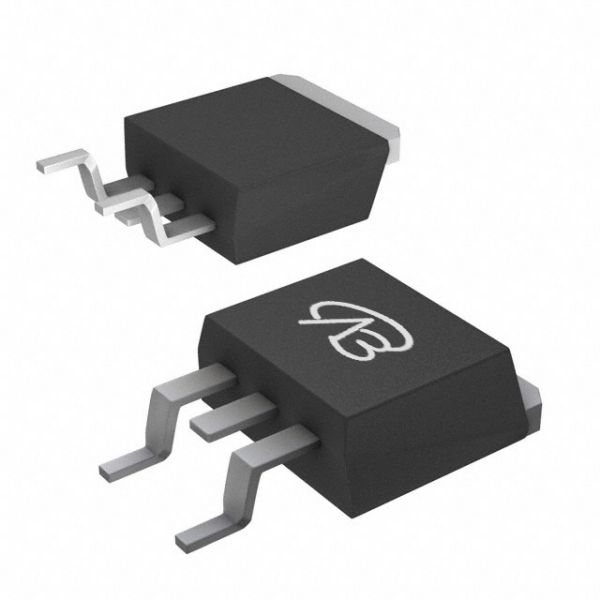
Comparative Analysis: SUM70101EL-GE3 (P-channel) vs. VBL2101N
Analysis of the Original Model (SUM70101EL-GE3) Core:
This is a 100V P-channel TrenchFET power MOSFET from Vishay in a TO-263 package. Its design core focuses on high-current handling with minimal conduction loss in high-power applications. Key advantages include a very high continuous drain current rating of 120A and a low on-resistance of 10.1mΩ at 10V gate drive. The TO-263 package offers low thermal resistance for effective heat dissipation, and it is compatible with logic-level gate drives. It is characterized by a maximum junction temperature of 175°C and is 100% tested for Rg and UIS.
Key Application Areas:
Battery Protection Circuits: In high-capacity battery packs (e.g., for power tools, EVs) where low-loss reverse polarity protection or discharge control is needed.
High-Current Motor Drive Control: Ideal for driving large brushed DC or brushless DC motors in industrial equipment, robotics, or automotive systems.
High-Power DC Switching: Serving as a high-side switch in high-current 48V or higher voltage bus systems.
Compatibility and Differences of the Domestic Alternative (VBL2101N):
VBsemi's VBL2101N is a direct form-fit alternative in a TO-263 package. It is also a -100V P-channel Trench MOSFET. The main differences are in the electrical parameters: VBL2101N has a slightly higher on-resistance (11mΩ @10V vs. 10.1mΩ) and a lower continuous current rating (-100A vs. 120A). However, it maintains a very competitive performance profile for the voltage class.
Alternative Model VBL2101N Application Fit: It is a suitable alternative for most applications requiring a -100V P-channel MOSFET where the full 120A capability of the original is not strictly necessary. It offers a cost-effective solution for high-power battery protection, motor drives, and power switches with slightly derated current requirements.
Comparative Analysis: SISS26LDN-T1-GE3 (N-channel) vs. VBQF1606
Analysis of the Original Model (SISS26LDN-T1-GE3) Core:
This is a 60V N-channel Gen IV TrenchFET MOSFET from Vishay in a compact PowerPAK® 1212-8 package. Its design pursuit is ultra-high efficiency in high-frequency switching applications. The core advantages are an extremely low on-resistance of 4.3mΩ at a low 4.5V gate drive and a high continuous current of 81.2A. It is specifically optimized for the lowest RDS(on) × Qg and RDS(on) × Qoss figures of merit (FOM), which are critical for reducing switching and conduction losses in high-frequency converters.
Key Application Areas:
Synchronous Rectification in High-Current DC-DC Converters: Perfect for the low-side switch in high-frequency buck, boost, or isolated converters for servers, telecom, and computing.
Primary-Side Switching in SMPS: Suitable for the main switch in medium-power switch-mode power supplies.
High-Efficiency Motor Drives: For driving high-current brushless DC motors or as part of high-performance motor controllers.
Compatibility and Differences of the Domestic Alternative (VBQF1606):
VBsemi's VBQF1606 is an N-channel MOSFET in a DFN8(3x3) package, which is a common small-footprint alternative. While not a perfect pin-to-pin match for the PowerPAK 1212-8, it serves a similar application space. Its parameters show a key difference: it has a higher on-resistance (5mΩ @10V vs. 4.3mΩ @4.5V) and a significantly lower continuous current rating (30A vs. 81.2A). The gate threshold voltage is also higher (3V vs. logic-level).
Alternative Model VBQF1606 Application Fit: This model is more suitable for downgraded or different scenarios where the ultra-high current (81A) capability of the original is not required. It fits well in lower-power synchronous rectification, DC-DC conversion, or motor drive applications within its 30A/60V rating, offering a compact and potentially more cost-sensitive solution.
Conclusion
This analysis reveals two distinct selection and substitution paths:
For high-power P-channel applications like battery protection and motor drives, the original SUM70101EL-GE3 sets a high benchmark with its 120A current and 10.1mΩ RDS(on). Its domestic alternative VBL2101N provides a functionally compatible and cost-effective option with slightly derated specs (-100A, 11mΩ), making it a viable choice for many high-current, high-voltage designs where absolute maximum performance can be traded for supply chain flexibility.
For ultra-high-efficiency N-channel applications in high-frequency power conversion, the original SISS26LDN-T1-GE3 is a top-tier component with its exceptional 4.3mΩ RDS(on) at low Vgs and 81.2A current in a small package. The domestic alternative VBQF1606 serves a different segment; it is not a direct performance replacement but rather a solution for lower-current (30A) applications where a compact 60V N-channel MOSFET is needed. Careful schematic and layout adjustments would be required for substitution.
The core takeaway remains: Selection hinges on precise requirement matching. Domestic alternatives like VBL2101N and VBQF1606 provide valuable options for design flexibility, cost optimization, and supply chain resilience, as long as their parameter differences are fully understood and accounted for in the system design.

Download PDF document
 Download now


