 中文
中文 English
MOSFET Selection for Power and Compact Applications: SQD50P08-28_GE3, SI3407DV-T1-GE3 vs. China Alternatives VBE2625, VB8338
Number of views:9999
 Back to previous page
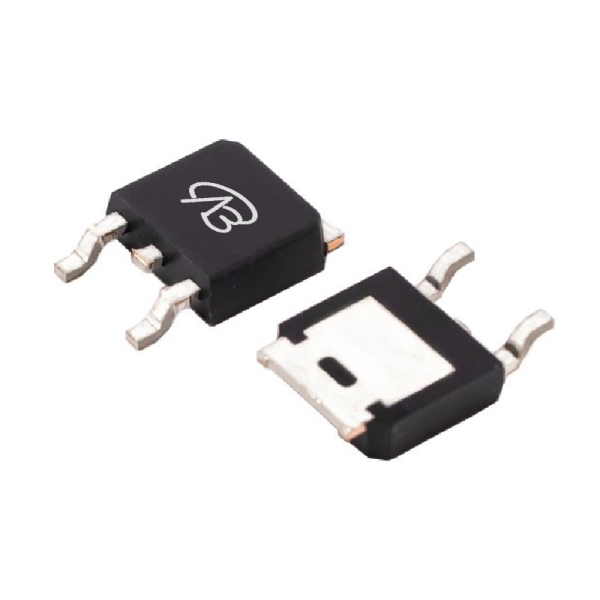
Comparative Analysis: SQD50P08-28_GE3 (P-channel) vs. VBE2625
Analysis of the Original Model (SQD50P08-28_GE3) Core:
This is an 80V P-channel MOSFET from VISHAY in a TO-252 (DPAK) package. It is designed for robust, high-current switching in automotive and industrial environments, being AEC-Q101 qualified. Its key strengths are a high continuous drain current of 48A and an on-resistance (RDS(on)) of 28mΩ at 10V gate drive. Features like 100% Rg and UIS testing, along with halogen-free construction, make it a reliable choice for demanding applications.
Compatibility and Differences of the Domestic Alternative (VBE2625):
VBsemi's VBE2625 is also a P-channel MOSFET in a TO-252 package, offering a direct pin-to-pin compatible alternative. The main parametric differences are: VBE2625 has a slightly lower voltage rating (-60V vs. -80V) but offers a superior on-resistance of 20mΩ at 10V (compared to 28mΩ). Its continuous current rating is also high at -50A.
Key Application Areas:
Original Model SQD50P08-28_GE3: Ideal for high-reliability, high-current applications requiring an 80V rating, such as automotive systems (e.g., motor drives, solenoid control), industrial power supplies, and high-power DC-DC converters where ruggedness is paramount.
Alternative Model VBE2625: Suits applications where lower conduction loss (via 20mΩ RDS(on)) and high current capability (-50A) are prioritized, potentially offering efficiency gains in systems where a 60V voltage rating is sufficient, such as in certain power tools, e-bike controllers, or robust load switches.
Comparative Analysis: SI3407DV-T1-GE3 (P-channel) vs. VB8338
This comparison shifts focus to compact, space-constrained applications where low on-resistance in a tiny footprint is critical.
Analysis of the Original Model (SI3407DV-T1-GE3) Core:
This is a 20V P-channel MOSFET from VISHAY in a TSOP-6 package. It is optimized for load switching in portable electronics like laptops. Its design core balances performance and size, featuring an RDS(on) of 24mΩ at 4.5V/8A, a continuous current of 8A, and PWM-optimized characteristics for efficient power management in tight spaces.
Compatibility and Differences of the Domestic Alternative (VB8338):
VBsemi's VB8338 is a P-channel MOSFET in a SOT23-6 package, providing a small-form-factor alternative. Key differences: VB8338 has a higher voltage rating (-30V vs. -20V) but a higher on-resistance (54mΩ at 4.5V vs. 24mΩ) and a lower continuous current rating (-4.8A vs. -8A).
Key Application Areas:
Original Model SI3407DV-T1-GE3: Excellent for space-limited, efficiency-sensitive load switches where low RDS(on) is needed at standard logic-level voltages (e.g., 3.3V, 5V). Typical applications include power rail management in laptops, tablets, IoT devices, and peripheral power control.
Alternative Model VB8338: Better suited for applications requiring a higher voltage margin (up to 30V) where the current demand is moderate (under 5A). It serves as a viable alternative in compact designs like battery protection circuits, low-power module switches, or portable device power management where its voltage rating is an advantage.
Conclusion:
This analysis reveals two distinct selection paradigms:
1. For high-power, high-reliability P-channel applications, the original SQD50P08-28_GE3, with its 80V rating, 48A current, and automotive-grade qualifications, is a robust choice for demanding environments. Its domestic alternative VBE2625 counters with significantly lower on-resistance (20mΩ) and high current (-50A), presenting a compelling performance-enhanced option for systems where 60V suffices and lower conduction loss is desired.
2. For compact P-channel load-switch applications, the original SI3407DV-T1-GE3 excels with its very low 24mΩ on-resistance and 8A capability in a TSOP-6 package, making it ideal for tight-board laptops and portable devices. The domestic alternative VB8338, in a SOT23-6 package, trades some on-resistance and current for a higher 30V rating, catering to designs where voltage headroom is more critical than ultra-low RDS(on).
The core takeaway is that selection is driven by precise requirement matching. Domestic alternatives like VBE2625 and VB8338 not only provide supply chain resilience but also offer specific parametric advantages or trade-offs, giving engineers greater flexibility in design optimization and cost management. Understanding each device's design intent and parameter implications is key to unlocking its full potential in your circuit.

Download PDF document
 Download now


