 中文
中文 English
MOSFET Selection for Power Applications: SQD40P10-40L_GE3, IRFI9520GPBF vs. China Alternatives VBE2104N, VBMB2102M
Number of views:9999
 Back to previous page
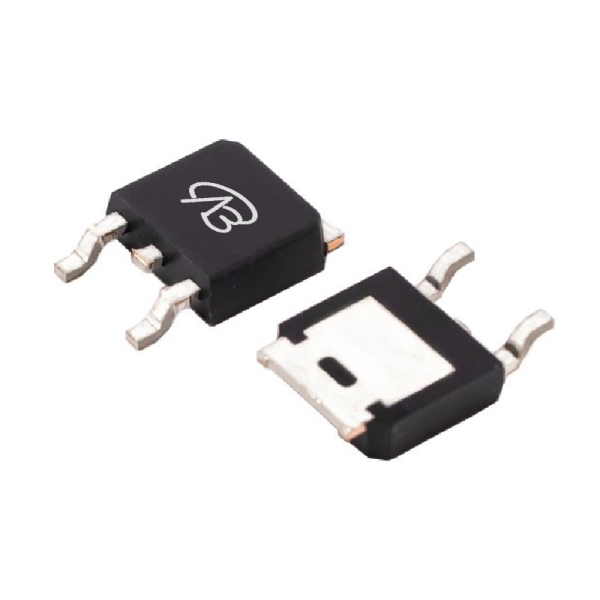
Analysis of the Original Model (SQD40P10-40L_GE3) Core:
This is a 100V P-channel TrenchFET power MOSFET from VISHAY in a TO-252 package. Its design core focuses on robust performance and reliability for power applications. Key advantages include: a high continuous drain current rating of 38A, a drain-source voltage (Vdss) of 100V, and an on-resistance (RDS(on)) of 48mΩ at 4.5V gate drive. It features low thermal resistance packaging, is AEC-Q101 qualified, and is compliant with RoHS and halogen-free standards (IEC 61249-2-21), making it suitable for automotive and industrial environments.
Compatibility and Differences of the Domestic Alternative (VBE2104N):
VBsemi's VBE2104N is a pin-to-pin compatible alternative in a TO-252 package. The key differences are in electrical parameters: VBE2104N offers a significantly lower on-resistance of 37mΩ at 4.5V (vs. 48mΩ) and a slightly higher continuous current rating of -40A (vs. 38A), while maintaining the same -100V voltage rating. This indicates potentially lower conduction losses and a higher current handling capability.
Key Application Areas:
Original Model SQD40P10-40L_GE3: Ideal for applications requiring high reliability, AEC-Q101 compliance, and robust performance in a 100V system. Typical applications include:
- Automotive power switching and control modules.
- Industrial power supplies and motor drives.
- High-reliability DC-DC converters and load switches.
Alternative Model VBE2104N: Suitable as a performance-enhanced drop-in replacement for the SQD40P10-40L_GE3 in applications where lower conduction loss and higher current capacity are beneficial, without sacrificing the 100V voltage rating. It is a strong candidate for power path management, motor drives, and switching circuits in industrial and automotive contexts.
Comparative Analysis: IRFI9520GPBF (P-channel) vs. VBMB2102M
Analysis of the Original Model (IRFI9520GPBF) Core:
This is a 100V P-channel MOSFET from VISHAY in a TO-220F-3 package. It is designed for applications requiring a through-hole package with moderate current capability. Its key parameters include a drain-source voltage (Vdss) of 100V, a continuous drain current (Id) of 3.6A, and a relatively high on-resistance (RDS(on)) of 600mΩ at 10V gate drive.
Compatibility and Differences of the Domestic Alternative (VBMB2102M):
VBsemi's VBMB2102M is a direct pin-to-pin compatible alternative in a TO-220F package. It offers substantially improved performance: a much lower on-resistance of 200mΩ at 10V (vs. 600mΩ) and a significantly higher continuous drain current rating of -12A (vs. 3.6A), while maintaining the same -100V voltage rating.
Key Application Areas:
Original Model IRFI9520GPBF: Suited for lower-current 100V switching applications where the TO-220F package is preferred for its mounting style and heat dissipation. Applications may include:
- Low-power auxiliary power switches.
- Protection circuits and relay replacements.
- Simple motor control or solenoid drives in cost-sensitive designs.
Alternative Model VBMB2102M: Represents a major performance upgrade, making it suitable for replacing the IRFI9520GPBF in applications demanding much lower conduction losses and higher current handling. It is an excellent choice for upgraded power supplies, more demanding motor drives, and any circuit where efficiency and current capacity in a TO-220F package are critical.
In summary, this comparative analysis reveals clear upgrade paths with domestic alternatives:
For the SQD40P10-40L_GE3, the domestic alternative VBE2104N offers a direct package-compatible replacement with superior on-resistance and current ratings, providing an efficiency and performance boost for 100V power applications.
For the IRFI9520GPBF, the domestic alternative VBMB2102M offers a dramatic performance improvement in the same package, with significantly lower on-resistance and higher current capability, enabling substantial performance gains in existing designs.
The core conclusion is that these domestic alternatives not only provide reliable compatibility but also offer opportunities for performance enhancement and cost optimization, giving engineers valuable flexibility in power design.

Download PDF document
 Download now


