 中文
中文 English
MOSFET Selection for Medium-Power Applications: SQ2337ES-T1_GE3, SQM70060EL_GE3 vs. China Alternatives VB2101K, VBL1105
Number of views:9999
 Back to previous page
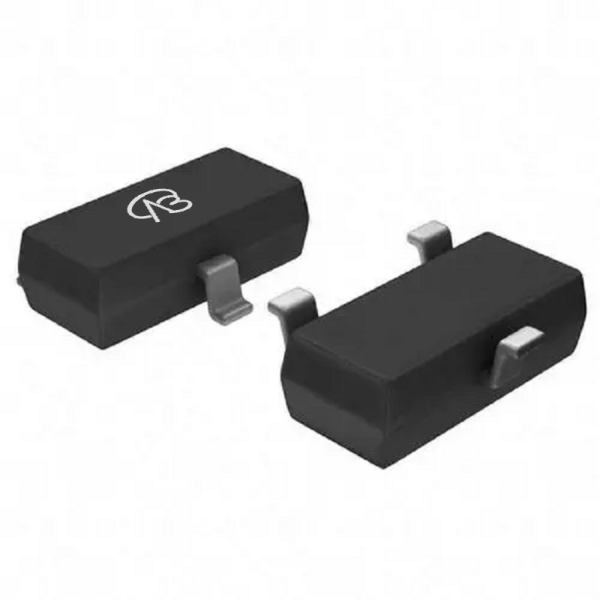
Comparative Analysis: SQ2337ES-T1_GE3 (P-channel) vs. VB2101K
Analysis of the Original Model (SQ2337ES-T1_GE3) Core:
This is an 80V P-channel MOSFET from VISHAY in a compact SOT-23 package. Its design core is to provide robust power switching in a small footprint for medium-voltage applications. Key advantages include: a drain-source voltage (Vdss) of -80V, a continuous drain current (Id) of -2.2A, and a power dissipation (Pd) of 3W. As a TrenchFET Power MOSFET, it is AEC-Q101 qualified and 100% tested for Rg and UIS, ensuring high reliability for automotive and industrial uses.
Compatibility and Differences of the Domestic Alternative (VB2101K):
VBsemi's VB2101K is also offered in an SOT-23 package and serves as a pin-to-pin compatible alternative. The main differences are in electrical parameters: VB2101K has a higher voltage rating (-100V) but a lower continuous current rating (-1.5A). Its on-resistance is 560mΩ @ 4.5V and 500mΩ @ 10V, which is higher than typical low-Rds(on) P-channel devices in this class.
Key Application Areas:
Original Model SQ2337ES-T1_GE3: Its -80V rating and 2.2A current capability make it well-suited for medium-power, medium-voltage switching where space is limited. Typical applications include:
Power management and load switching in 48V systems (e.g., telecom, industrial control).
Polarity protection and reverse battery protection circuits.
Switching and control circuits in automotive subsystems (AEC-Q101 qualified).
Alternative Model VB2101K: More suitable for applications requiring a higher voltage margin (up to -100V) but with lower continuous current demands (around 1.5A). It fits scenarios where voltage withstand is critical but current stress is moderate.
Comparative Analysis: SQM70060EL_GE3 (N-channel) vs. VBL1105
This N-channel MOSFET is designed for high-current, low-loss power switching in a thermally efficient package.
Analysis of the Original Model (SQM70060EL_GE3) Core:
This 100V N-channel MOSFET from VISHAY uses a TO-263 (D2PAK) package. Its design pursues a balance of high current, low conduction loss, and good thermal performance. Core advantages include:
High Current Capability: A continuous drain current (Id) of 75A.
Low Conduction Loss: Low on-resistance of 5.9mΩ @ 10V, 30A.
Rugged & Reliable: AEC-Q101 qualified, 100% Rg and UIS tested, with a low thermal resistance package.
Compatibility and Differences of the Domestic Alternative (VBL1105):
VBsemi's VBL1105, also in a TO-263 package, represents a "performance-enhanced" alternative. It matches the 100V voltage rating but offers significantly higher continuous current (140A) and lower on-resistance (4mΩ @ 10V). This translates to potentially lower conduction losses and higher efficiency in high-current applications.
Key Application Areas:
Original Model SQM70060EL_GE3: Its 75A current and 5.9mΩ Rds(on) make it an excellent choice for high-efficiency, high-current applications. For example:
Synchronous rectification in high-power DC-DC converters (e.g., server, telecom power supplies).
Motor drives and solenoid drivers in industrial equipment and automotive systems.
Power distribution and switching in UPS and inverter systems.
Alternative Model VBL1105: Better suited for upgrade scenarios demanding even higher current capability (up to 140A) and lower conduction loss (4mΩ). Ideal for next-generation designs pushing power density and efficiency limits in similar applications.
Conclusion
In summary, this comparison reveals two distinct selection paths:
For P-channel applications requiring a compact package and medium voltage/current (like 80V/2.2A), the original SQ2337ES-T1_GE3 offers a reliable, AEC-Q101 qualified solution for industrial and automotive switching. Its domestic alternative VB2101K provides higher voltage tolerance (-100V) but lower current (-1.5A), suiting applications where voltage margin is prioritized.
For N-channel applications demanding high current and low loss, the original SQM70060EL_GE3 delivers robust 75A performance with 5.9mΩ Rds(on) in a thermally efficient package. The domestic alternative VBL1105 offers a performance boost with 140A current and 4mΩ Rds(on), enabling higher power density and efficiency for demanding upgrades.
The core takeaway: Selection is about precise requirement matching. In a diversified supply chain, domestic alternatives like VB2101K and VBL1105 not only provide viable backups but also offer parameter enhancements in specific areas, giving engineers greater flexibility in design trade-offs and cost control. Understanding each device's design philosophy and parameter implications is essential to maximize its value in your circuit.

Download PDF document
 Download now


