 中文
中文 English
MOSFET Selection for Compact Power Management: SQ1440EH-T1_GE3, SI2371EDS-T1-GE3 vs. China Alternatives VBK7695, VB2355
Number of views:9999
 Back to previous page
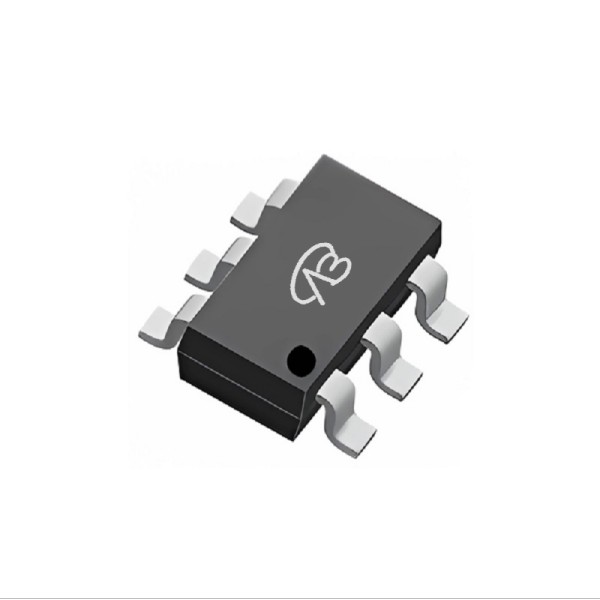
Comparative Analysis: SQ1440EH-T1_GE3 (N-channel) vs. VBK7695
Analysis of the Original Model (SQ1440EH-T1_GE3) Core:
This is a 60V N-channel MOSFET from VISHAY in a compact SOT-363 package. It is AEC-Q101 qualified and features 100% gate resistance and unclamped inductive switching testing. Its key strengths are a robust voltage rating (60V) and a continuous drain current of 1.7A. The on-resistance is 120mΩ at 10V gate drive. It is designed for reliable switching in automotive and industrial environments where quality and ruggedness are paramount.
Compatibility and Differences of the Domestic Alternative (VBK7695):
VBsemi's VBK7695 is also a single N-channel MOSFET in an SC70-6 package, offering a pin-to-pin compatible footprint. The key differences are in electrical performance: VBK7695 offers significantly lower on-resistance—75mΩ at 10V and 90mΩ at 4.5V—compared to the original. Both share the same 60V voltage rating and 1.7A continuous current, but the alternative provides better conduction efficiency.
Key Application Areas:
Original Model SQ1440EH-T1_GE3: Ideal for space-constrained, reliability-focused applications requiring 60V capability, such as automotive load switching, sensor interfaces, or low-current DC-DC conversion where AEC-Q101 compliance is needed.
Alternative Model VBK7695: Better suited for applications demanding lower conduction loss within the same current and voltage range. Its superior RDS(on) makes it an efficient upgrade for power management circuits, load switches, or battery protection in portable devices.
Comparative Analysis: SI2371EDS-T1-GE3 (P-channel) vs. VB2355
This comparison focuses on P-channel MOSFETs optimized for power management in portable electronics.
Analysis of the Original Model (SI2371EDS-T1-GE3) Core:
This is a -30V P-channel TrenchFET from VISHAY in a SOT-23 package. It features built-in ESD protection (typical 3000V), 100% Rg testing, and is designed for high efficiency. Its core advantages are a low on-resistance of 45mΩ at 10V and a high continuous current of -4.8A, making it excellent for power switching with minimal loss.
Compatibility and Differences of the Domestic Alternative (VB2355):
VBsemi's VB2355 is a direct SOT23-3 package-compatible P-channel alternative. It matches the original's -30V voltage rating but offers enhanced performance: a lower on-resistance of 46mΩ at 10V (54mΩ at 4.5V) and a higher continuous drain current of -5.6A. This translates to potentially lower power loss and higher current-handling capability.
Key Application Areas:
Original Model SI2371EDS-T1-GE3: Perfect for power management in portable and consumer electronics, such as load switches, battery isolation, and power distribution where its proven reliability, ESD protection, and good RDS(on) are valued.
Alternative Model VB2355: An excellent performance-enhanced choice for applications requiring higher current capacity and even lower conduction loss. It is well-suited for upgraded load switches, power path management, and DC-DC conversion in compact devices.
Summary
This analysis reveals two distinct selection paths:
For N-channel applications needing 60V robustness, the original SQ1440EH-T1_GE3 offers AEC-Q101 reliability for automotive/industrial use. Its domestic alternative VBK7695 provides a compelling upgrade with significantly lower on-resistance for improved efficiency in similar applications.
For P-channel power management tasks, the original SI2371EDS-T1-GE3 delivers strong performance with good ESD protection. The domestic alternative VB2355 pushes the envelope further with lower RDS(on) and higher current capability, making it a powerful choice for next-generation designs.
The core conclusion is that selection depends on precise requirement matching. In a diversified supply chain, domestic alternatives like VBK7695 and VB2355 not only provide reliable backup options but also offer performance advantages in key parameters, giving engineers greater flexibility in design trade-offs and cost control. Understanding each device's design philosophy and parameter implications is key to maximizing its value in your circuit.

Download PDF document
 Download now


