 中文
中文 English
MOSFET Selection for High-Performance Power Applications: SIR826BDP-T1-RE3, IRFL9110TRPBF vs. China Alternatives VBGA1806, VBJ2102M
Number of views:9999
 Back to previous page
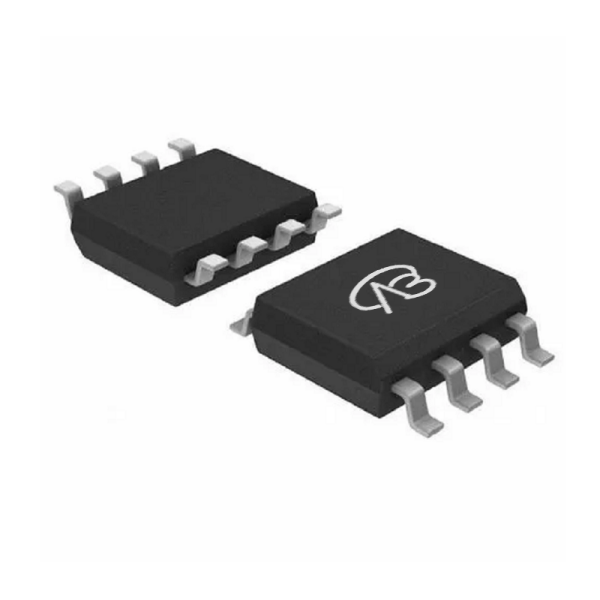
Comparative Analysis: SIR826BDP-T1-RE3 (N-channel) vs. VBGA1806
Analysis of the Original Model (SIR826BDP-T1-RE3) Core:
This is an 80V N-channel MOSFET from Vishay in a PowerPAK SO-8 package. Its design core is to deliver high-current capability with very low conduction loss in a compact footprint. Key advantages include: a very low on-resistance of 5.1mΩ (typical at 10V, 15A), and an impressive continuous drain current rating of 80.8A. This combination makes it ideal for high-efficiency, high-density power stages.
Compatibility and Differences of the Domestic Alternative (VBGA1806):
VBsemi's VBGA1806 is offered in an SOP8 package and serves as a functional alternative. The main differences are in electrical parameters: while both are 80V N-channel devices, VBGA1806 has a lower continuous current rating (14A) and a higher on-resistance (9mΩ @10V) compared to the original part.
Key Application Areas:
Original Model SIR826BDP-T1-RE3: Its exceptional current capability and ultra-low RDS(on) make it perfectly suited for high-current switching applications.
Synchronous Rectification in High-Current DC-DC Converters: For servers, telecom, and computing point-of-load (POL) converters.
Motor Drives and Solenoid Control: In industrial automation, robotics, and automotive systems.
High-Performance Power Distribution Switches: For hot-swap and OR-ing circuits.
Alternative Model VBGA1806: More suitable for applications where the full 80V rating is needed but current demands are moderate (within 14A), offering a cost-effective solution in SOP8 packaging.
Comparative Analysis: IRFL9110TRPBF (P-channel) vs. VBJ2102M
This comparison shifts focus to P-channel MOSFETs, where the design pursuit for the original model is a balance of voltage rating, switching performance, and thermal efficiency in a small package.
Analysis of the Original Model (IRFL9110TRPBF) Core:
This is a 100V P-channel MOSFET from Vishay in a SOT-223 package. As a 3rd generation device, it emphasizes fast switching, ruggedness, low gate charge, and cost-effectiveness. Its key features include a 100V drain-source voltage, an on-resistance of 1.2Ω (@10V), and a continuous current of 690mA. The SOT-223 package offers good thermal performance via an exposed pad while maintaining compatibility with automated SMT assembly.
Compatibility and Differences of the Domestic Alternative (VBJ2102M):
VBsemi's VBJ2102M is also a P-channel MOSFET in a SOT-223 package, providing direct pin-to-pin compatibility. It offers a significant performance enhancement in key areas: it matches the -100V voltage rating but provides a much higher continuous current (-3A) and a substantially lower on-resistance (200mΩ @10V).
Key Application Areas:
Original Model IRFL9110TRPBF: Its combination of 100V rating and SOT-223 thermal performance makes it a reliable choice for various medium-voltage P-channel applications.
Load and High-Side Switching: In 48V telecom, industrial control, or automotive auxiliary systems.
Battery Protection and Power Path Management: In backup power systems and portable equipment.
Interface and Level Translation Circuits.
Alternative Model VBJ2102M: With its higher current rating and lower RDS(on), it is better suited for upgraded scenarios demanding lower conduction loss and higher load current capability in P-channel configurations, such as in more efficient power switches or replacements seeking performance headroom.
Conclusion
In summary, this analysis reveals two distinct selection pathways:
For high-current N-channel applications, the original model SIR826BDP-T1-RE3, with its ultra-low 5.1mΩ RDS(on) and high 80.8A current capability, demonstrates clear advantages in high-power DC-DC conversion and motor drives. Its domestic alternative VBGA1806 provides a viable option for applications requiring the 80V rating but with more moderate current demands (up to 14A).
For medium-voltage P-channel applications, the original model IRFL9110TRPBF offers a proven balance of 100V rating, switching speed, and SOT-223 package benefits. The domestic alternative VBJ2102M presents a compelling "performance-enhanced" choice, with significantly lower on-resistance (200mΩ vs. 1.2Ω) and higher current rating (-3A vs. 690mA), making it ideal for design upgrades seeking higher efficiency and power handling.
The core takeaway is that selection is not about absolute superiority but precise requirement matching. In the context of supply chain diversification, domestic alternatives like VBGA1806 and VBJ2102M not only provide feasible backup options but can also offer parameter advancements, giving engineers greater flexibility and resilience in design trade-offs and cost optimization. Understanding the design philosophy and parameter implications of each device is essential to unlocking its full potential in your circuit.

Download PDF document
 Download now


