 中文
中文 English
MOSFET Selection for High-Power & High-Density Applications: SIHF9630STRL-GE3, SIR800ADP-T1-GE3 vs. China Alternatives VBL2205M, VBQA1202
Number of views:9999
 Back to previous page
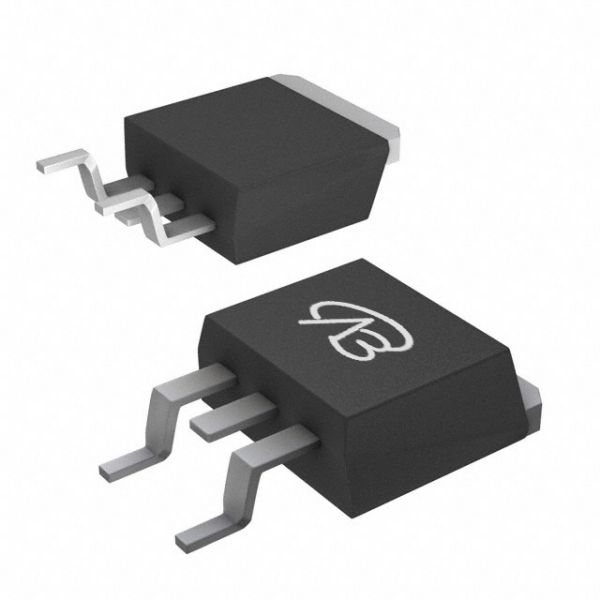
Comparative Analysis: SIHF9630STRL-GE3 (P-channel) vs. VBL2205M
Analysis of the Original Model (SIHF9630STRL-GE3) Core:
This is a 200V P-channel MOSFET from VISHAY, utilizing the robust D2PAK (TO-263) surface-mount package. Its design core is to offer the best combination of fast switching, ruggedness, low on-resistance, and cost-effectiveness for high-voltage applications. Key advantages include a high drain-source voltage (Vdss) of 200V, an on-resistance (RDS(on)) of 800mΩ at 10V gate drive, and a continuous drain current (Id) of 3.9A. The D2PAK package provides excellent power handling and low internal connection resistance, making it suitable for high-current applications where it can dissipate up to 2.0W in typical surface-mount use.
Compatibility and Differences of the Domestic Alternative (VBL2205M):
VBsemi's VBL2205M is also offered in a TO-263 package and serves as a pin-to-pin compatible alternative. The main differences lie in the electrical parameters: VBL2205M matches the 200V voltage rating but offers significantly improved conduction performance. It features a lower on-resistance of 500mΩ at 10V (compared to 800mΩ) and a higher continuous drain current of -11A (compared to 3.9A). This represents a substantial upgrade in current handling and conduction loss for similar high-voltage P-channel applications.
Key Application Areas:
Original Model SIHF9630STRL-GE3: Ideal for high-voltage (up to 200V) P-channel switching applications where cost-effectiveness and proven ruggedness are key, such as in industrial controls, auxiliary power supplies, or high-side switches in medium-power systems.
Alternative Model VBL2205M: Better suited for upgraded scenarios requiring higher current capability and lower conduction loss in 200V systems. It is an excellent choice for enhancing efficiency and power density in applications like high-voltage power management, P-channel switches in motor drives, or replacement designs seeking performance gains.
Comparative Analysis: SIR800ADP-T1-GE3 (N-channel) vs. VBQA1202
The design pursuit of this N-channel MOSFET shifts focus to extreme current density and ultra-low loss in compact spaces.
Analysis of the Original Model (SIR800ADP-T1-GE3) Core:
This is a TrenchFET Gen IV power MOSFET from VISHAY in a PowerPAK SO-8 package. Its core advantages are focused on high power density and optimized switching:
Exceptional Current Density: It boasts a very high continuous drain current of 50.2A at a 20V rating.
Ultra-Low On-Resistance: Features an extremely low RDS(on) of 1.35mΩ at 10V gate drive, minimizing conduction losses.
Optimized Switching: The Gen IV technology optimizes gate charge (Qg, Qgd) and their ratio to reduce switching-related power losses, making it ideal for high-frequency operation.
Compatibility and Differences of the Domestic Alternative (VBQA1202):
VBsemi's VBQA1202, in a DFN8(5x6) package, represents a "performance-enhanced" alternative. While the voltage rating is similar at 20V, VBQA1202 achieves remarkable superiority in current handling: a massive continuous drain current of 150A. Its on-resistance is also very low at 1.7mΩ (at 4.5V gate drive). This translates to significantly higher current capability and potentially lower conduction losses, pushing the limits of power density.
Key Application Areas:
Original Model SIR800ADP-T1-GE3: Its ultra-low RDS(on) and high current capability make it a premier choice for high-power-density DC/DC conversion, particularly in synchronous rectification for server, telecom, or computing power supplies. It's also ideal for high-current load switches and motor drives in compact form factors.
Alternative Model VBQA1202: Targets the most demanding upgrade scenarios where maximum current delivery and minimal loss are paramount. It is exceptionally suited for ultra-high-current point-of-load (POL) converters, high-performance synchronous rectifiers, and motor drives where its 150A rating offers substantial headroom and efficiency gains.
Conclusion
In summary, this analysis reveals two distinct upgrade paths with domestic alternatives offering compelling advantages:
For high-voltage (200V) P-channel applications, the original SIHF9630STRL-GE3 provides a robust and cost-effective solution. Its domestic alternative VBL2205M offers a direct package-compatible replacement with superior performance—lower on-resistance (500mΩ vs. 800mΩ) and higher current (-11A vs. 3.9A)—making it an attractive option for efficiency-focused upgrades.
For high-current-density N-channel applications, the original SIR800ADP-T1-GE3 sets a high standard with 50.2A current and 1.35mΩ RDS(on). The domestic alternative VBQA1202 pushes the boundaries further with an extraordinary 150A current rating and very low on-resistance, enabling next-level power density and performance in the most demanding circuits.
The core conclusion is that selection hinges on precise requirement matching. In the context of supply chain diversification, these domestic alternatives not only provide viable backup options but also deliver significant parameter advancements in key areas. They offer engineers greater flexibility, enhanced performance headroom, and improved resilience in design trade-offs and cost optimization. Understanding the design philosophy and parameter implications of each device is essential to unlocking its full potential in your circuit.

Download PDF document
 Download now


