 中文
中文 English
MOSFET Selection for Power Switching Solutions: SIHF530STRL-GE3, IRF9610PBF vs. China Alternatives VBL1101M, VBM2202K
Number of views:9999
 Back to previous page
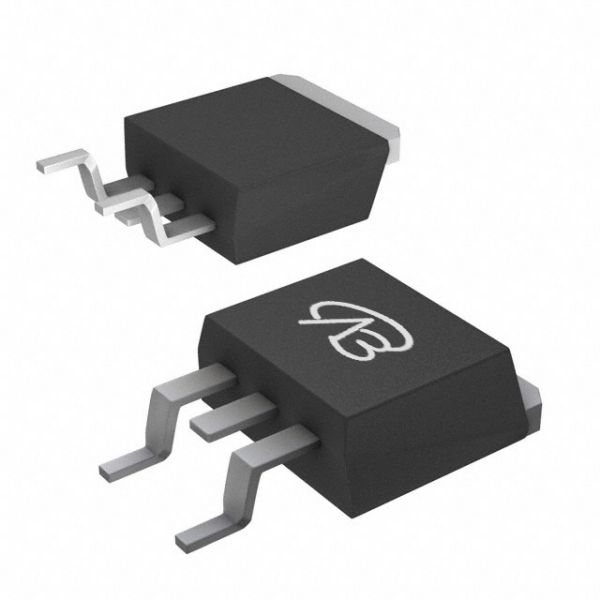
Comparative Analysis: SIHF530STRL-GE3 (N-channel) vs. VBL1101M
Analysis of the Original Model (SIHF530STRL-GE3) Core:
This is a 100V N-channel MOSFET from VISHAY, housed in a D2PAK (TO-263) surface-mount package. It is designed as a third-generation power MOSFET, offering a combination of fast switching, ruggedness, low on-resistance, and cost-effectiveness. The D2PAK package provides high power-handling capability and very low thermal resistance. Key specifications include a continuous drain current of 10A and an on-resistance of 160mΩ at 10V gate drive. With a power dissipation rating of 88W, it is built for applications requiring solid performance in a compact surface-mount footprint.
Compatibility and Differences of the Domestic Alternative (VBL1101M):
VBsemi’s VBL1101M is also offered in a TO-263 package and serves as a functional alternative. It matches the 100V voltage rating but offers enhanced current handling—rated for 20A continuous current. Its on-resistance is significantly lower at 100mΩ (at 10V), which can lead to reduced conduction losses. This makes the VBL1101M a performance-upgraded option for designs seeking higher efficiency and current capacity within the same voltage class.
Key Application Areas:
Original Model SIHF530STRL-GE3: Well-suited for medium-power switching applications such as DC-DC converters, motor drives, and power management modules in industrial, automotive, or telecom systems where a balance of cost, switching speed, and thermal performance is required.
Alternative Model VBL1101M: Ideal for upgrade scenarios demanding higher current capability (up to 20A) and lower conduction loss, such as high-current DC-DC converters, motor controllers, or power supplies where efficiency and thermal performance are critical.
Comparative Analysis: IRF9610PBF (P-channel) vs. VBM2202K
Analysis of the Original Model (IRF9610PBF) Core:
This is a 200V P-channel MOSFET from VISHAY in a through-hole TO-220 package. It is designed for higher voltage applications where a P-channel device simplifies gate driving in high-side configurations. It features a continuous drain current of -1.8A and an on-resistance of 3Ω at 10V gate drive. The TO-220 package offers good thermal dissipation for its power level, making it a reliable choice for linear or switching circuits in industrial and power supply designs.
Compatibility and Differences of the Domestic Alternative (VBM2202K):
VBsemi’s VBM2202K is a P-channel MOSFET in a TO-220 package, providing a pin-to-pin compatible alternative. It matches the -200V voltage rating but offers a higher continuous current rating of -4.5A. Its on-resistance is notably lower: 2000mΩ at 10V (compared to 3Ω for the IRF9610PBF). This reduction in RDS(on) translates to significantly lower conduction losses and improved efficiency in high-side switching applications.
Key Application Areas:
Original Model IRF9610PBF: Suitable for P-channel applications in high-voltage (up to 200V) circuits such as high-side load switches, power management in offline supplies, or auxiliary power stages where moderate current (1.8A) is sufficient.
Alternative Model VBM2202K: A strong candidate for designs requiring higher current handling (-4.5A) and lower on-resistance in 200V P-channel applications. It is ideal for upgraded power supplies, high-voltage motor control, or any circuit where reduced conduction loss and improved thermal performance are desired.
Conclusion:
This comparison highlights two distinct selection paths based on application needs:
For N-channel applications around 100V, the original SIHF530STRL-GE3 offers a proven balance of switching performance and thermal capability in a D2PAK package. Its domestic alternative VBL1101M provides a performance-enhanced option with higher current rating (20A) and lower on-resistance (100mΩ), making it suitable for designs prioritizing efficiency and higher power density.
For P-channel applications at 200V, the original IRF9610PBF serves as a reliable solution for moderate-current high-side switching. The domestic alternative VBM2202K delivers substantial performance gains with higher current capacity (-4.5A) and much lower on-resistance (2000mΩ), offering an efficient upgrade for demanding high-voltage P-channel circuits.
The core insight is that selection depends on precise requirement matching. Domestic alternatives like VBL1101M and VBM2202K not only provide viable replacements but also offer parameter advantages in key areas, giving engineers greater flexibility in design trade-offs, cost control, and supply chain resilience. Understanding each device’s design intent and parameter implications is essential to fully leverage its value in the circuit.

Download PDF document
 Download now


