 中文
中文 English
MOSFET Selection for High-Voltage and Power Management: SIHD6N80AE-GE3, SI4825DDY-T1-GE3 vs. China Alternatives VBE18R06S, VBA2311
Number of views:9999
 Back to previous page
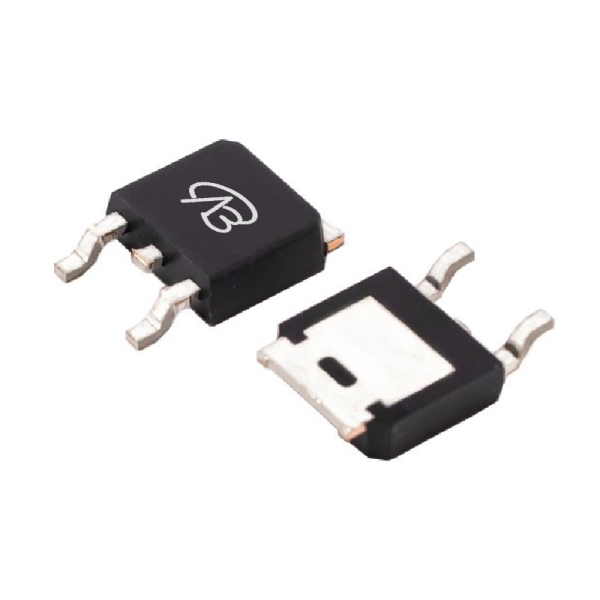
Comparative Analysis: SIHD6N80AE-GE3 (N-channel) vs. VBE18R06S
Analysis of the Original Model (SIHD6N80AE-GE3) Core:
This is an 800V N-channel MOSFET from VISHAY in a TO-252AA package. Its design focuses on robust high-voltage switching capability. Key advantages include a high drain-source voltage (Vdss) of 800V, a continuous drain current (Id) of 5A, and an on-resistance (RDS(on)) of 950mΩ at 10V gate drive. It is suitable for applications requiring high voltage withstand and moderate current.
Compatibility and Differences of the Domestic Alternative (VBE18R06S):
VBsemi's VBE18R06S is also an N-channel MOSFET in a TO-252 package, offering pin-to-pin compatibility. The key differences lie in electrical parameters: VBE18R06S features a lower on-resistance of 850mΩ at 10V and a higher continuous current rating of 6A, while maintaining the same 800V voltage rating. This indicates improved conduction performance and current handling compared to the original.
Key Application Areas:
Original Model SIHD6N80AE-GE3: Ideal for high-voltage, moderate-current switching applications such as offline switch-mode power supplies (SMPS), power factor correction (PFC) stages, and lighting ballasts.
Alternative Model VBE18R06S: Suitable for similar high-voltage applications where lower conduction loss and higher current capacity (up to 6A) are beneficial, potentially offering efficiency improvements in SMPS and PFC circuits.
Comparative Analysis: SI4825DDY-T1-GE3 (P-channel) vs. VBA2311
Analysis of the Original Model (SI4825DDY-T1-GE3) Core:
This is a 30V P-channel TrenchFET power MOSFET from VISHAY in an SO-8 package. Its design emphasizes low on-resistance and high current capability for power management. Key features include a continuous drain current of -14.9A, a low RDS(on) of 20.5mΩ at 4.5V gate drive, and qualifications such as 100% Rg and UIS testing. It is halogen-free and targets high-efficiency load switching.
Compatibility and Differences of the Domestic Alternative (VBA2311):
VBsemi's VBA2311 is a P-channel MOSFET in an SOP8 package, serving as a direct alternative. It shows significant parameter enhancements: a much lower on-resistance of 12mΩ at 4.5V (and 11mΩ at 10V) and a comparable continuous current rating of -11.6A, while maintaining a -30V drain-source voltage. This represents a substantial reduction in conduction loss.
Key Application Areas:
Original Model SI4825DDY-T1-GE3: Excellent for load switches, notebook adapter switches, and general power management in 12V-24V systems where low RDS(on) and high efficiency are critical.
Alternative Model VBA2311: Highly suitable for upgraded applications demanding even lower conduction losses, such as high-current load switches, battery protection circuits, and advanced power path management, offering potential thermal and efficiency benefits.
Conclusion
This analysis reveals two distinct selection paths:
1. For high-voltage N-channel switching, the original SIHD6N80AE-GE3 provides reliable 800V/5A capability. Its domestic alternative VBE18R06S offers a performance-enhanced option with lower RDS(on) (850mΩ) and higher current (6A), making it a compelling choice for efficiency-focused high-voltage designs.
2. For low-voltage P-channel power management, the original SI4825DDY-T1-GE3 is a strong performer with 20.5mΩ RDS(on) and -14.9A current. The domestic alternative VBA2311 achieves a notable performance leap with ultra-low RDS(on) (12mΩ) and -11.6A current, ideal for applications where minimizing conduction loss is paramount.
The core insight is that selection depends on precise requirement matching. In the context of supply chain diversification, domestic alternatives like VBE18R06S and VBA2311 not only provide reliable compatibility but also deliver parameter advancements in key areas such as on-resistance and current handling. This offers engineers greater flexibility, resilience, and potential for performance optimization in their design trade-offs and cost-control strategies. Understanding each device's design philosophy and parameter implications is essential to unlocking its full value in the circuit.

Download PDF document
 Download now


