 中文
中文 English
MOSFET Selection for High-Voltage and High-Current Applications: SIHB186N60EF-GE3, SIR870ADP-T1-RE3 vs. China Alternatives VBL16R10S, VBQA1105
Number of views:9999
 Back to previous page
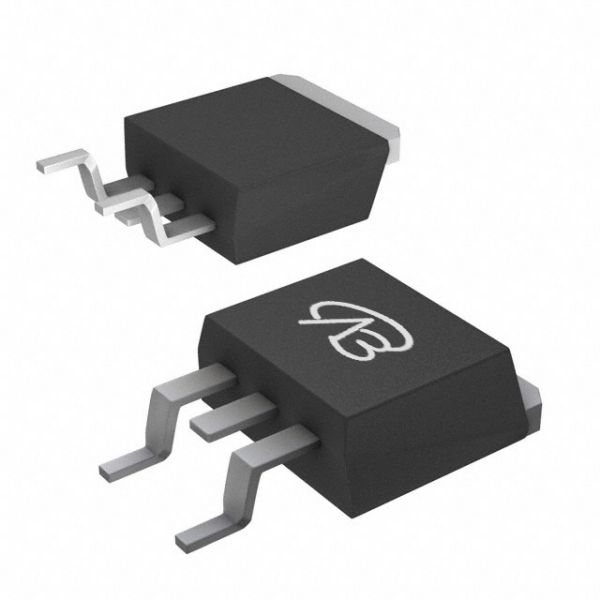
Comparative Analysis: SIHB186N60EF-GE3 (600V N-channel) vs. VBL16R10S
Analysis of the Original Model (SIHB186N60EF-GE3) Core:
This is a 600V N-channel MOSFET from VISHAY, housed in a D2PAK (TO-263) package. Its design core is based on fourth-generation E-series technology, focusing on minimizing total losses in high-voltage applications. Key advantages include: a low on-resistance of 193mΩ at a 10V gate drive, a continuous drain current of 8.4A, and a high power dissipation capability of 156W. It features a low figure-of-merit (FOM - RDS(on) × Qg) and low effective output capacitance (C(O(er))), which collectively reduce both switching and conduction losses. It is also avalanche energy rated (UIS), enhancing robustness.
Compatibility and Differences of the Domestic Alternative (VBL16R10S):
VBsemi's VBL16R10S is also packaged in TO-263 and serves as a functional alternative. The main differences lie in the electrical parameters: VBL16R10S shares the same 600V voltage rating but uses SJ_Multi-EPI technology. Its on-resistance is higher at 450mΩ (@10V), and its continuous current rating is 10A. While its conduction performance is different, it provides a viable alternative in the same voltage class.
Key Application Areas:
Original Model SIHB186N60EF-GE3: Its combination of 600V rating, moderate RDS(on), and excellent switching characteristics makes it ideal for high-voltage, medium-power applications where efficiency is paramount. Typical applications include:
Server and Telecom Power Supplies: As the main switch in PFC (Power Factor Correction) stages or DC-DC converters.
Switch Mode Power Supplies (SMPS): In offline flyback or forward converters.
Alternative Model VBL16R10S: Suitable as a cost-effective alternative in 600V applications where the specific switching performance and ultra-low RDS(on) of the original are not critically required, but basic voltage blocking and current capability are needed.
Comparative Analysis: SIR870ADP-T1-RE3 (100V N-channel) vs. VBQA1105
This comparison shifts focus to high-current, low-voltage applications where minimizing conduction loss is the primary design goal.
Analysis of the Original Model (SIR870ADP-T1-RE3) Core:
This is a 100V N-channel TrenchFET Power MOSFET from VISHAY in a compact PowerPAK SO-8 package. Its core advantage lies in delivering exceptionally high current density with very low on-resistance. Key specifications include: a continuous drain current of 60A and an ultra-low on-resistance of 10.5mΩ at a 4.5V gate drive. It undergoes 100% Rg and UIS testing, ensuring consistent performance and reliability.
Compatibility and Differences of the Domestic Alternative (VBQA1105):
VBsemi's VBQA1105, in a DFN8(5x6) package, represents a "performance-enhanced" alternative. It achieves significant improvement in key parameters: while maintaining the same 100V voltage rating, it offers a dramatically higher continuous current of 100A and an even lower on-resistance of 6mΩ (@4.5V) and 5mΩ (@10V). This translates to potentially lower conduction losses and higher current-handling capability in a similar footprint.
Key Application Areas:
Original Model SIR870ADP-T1-RE3: Its ultra-low RDS(on) and high current capability in a small package make it perfect for high-efficiency, high-current switching in intermediate bus voltages. Typical applications include:
Fixed Telecom DC/DC Converters: Serving as the primary or secondary side switch.
High-Current Point-of-Load (POL) Converters: In computing and networking equipment.
Motor Drives and Battery Management Systems (BMS).
Alternative Model VBQA1105: Is an excellent upgrade choice for applications demanding the utmost in current capability and minimal conduction loss. It is well-suited for next-generation, high-power-density designs in server VRMs, high-performance POL converters, or advanced motor drives where thermal performance is critical.
Conclusion:
In summary, this analysis reveals two distinct selection strategies:
For 600V high-voltage applications like server/telecom SMPS, the original model SIHB186N60EF-GE3, with its proven fourth-generation E-series technology, low FOM, and balanced RDS(on), offers reliable performance for efficient power conversion. The domestic alternative VBL16R10S provides a functional replacement in the same voltage class, suitable for designs where cost is a significant factor and the specific loss characteristics of the original are not strictly required.
For 100V high-current applications such as telecom DC-DC converters, the original model SIR870ADP-T1-RE3 sets a high standard with its 60A current and 10.5mΩ RDS(on) in a PowerPAK SO-8 package. The domestic alternative VBQA1105 emerges as a compelling "performance-plus" option, pushing the boundaries with 100A current and sub-6mΩ RDS(on), enabling higher efficiency and power density in new designs.
The core takeaway is that selection is driven by precise application requirements. In the landscape of supply chain diversification, domestic alternatives like VBL16R10S and VBQA1105 not only provide reliable backup options but also, in cases like the VBQA1105, offer significant performance gains. This gives engineers greater flexibility and resilience in making design trade-offs and optimizing for cost and performance. A deep understanding of each device's parameters and design philosophy is key to unlocking its full potential in your circuit.

Download PDF document
 Download now


