 中文
中文 English
MOSFET Selection for Compact Power Applications: SI4931DY-T1-GE3, SI7465DP-T1-GE3 vs. China Alternatives VBA4216, VBQA2625
Number of views:9999
 Back to previous page
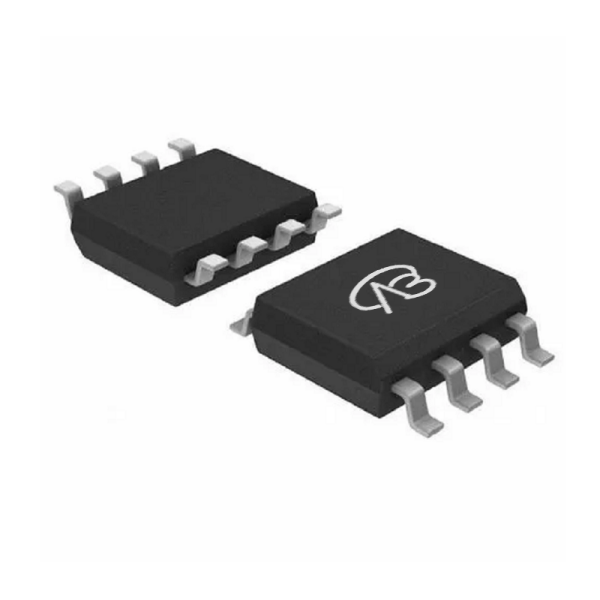
Comparative Analysis: SI4931DY-T1-GE3 (Dual P-channel) vs. VBA4216
Analysis of the Original Model (SI4931DY-T1-GE3) Core:
This is a 12V Dual P-channel MOSFET from VISHAY, using a standard SO-8 package. Its design core is to provide dual switching in a compact footprint for space-efficient designs. Key advantages are: a low on-resistance of 28mΩ at a 1.8V drive voltage, and it can provide a continuous drain current of 8.9A. It features TrenchFET technology with high cell density and is compliant with RoHS and halogen-free standards (IEC 61249-2-21).
Compatibility and Differences of the Domestic Alternative (VBA4216):
VBsemi's VBA4216 also uses an SOP8 package and is a direct pin-to-pin compatible alternative for dual P-channel applications. The main differences lie in the electrical parameters: VBA4216 has a higher voltage rating (-20V) and significantly lower on-resistance (18mΩ@4.5V, 16mΩ@10V) while maintaining the same continuous current rating (-8.9A).
Key Application Areas:
Original Model SI4931DY-T1-GE3: Its characteristics are very suitable for 12V systems requiring dual high-side switching or load management with moderate current. Typical applications include:
Load switches for portable devices/IoT modules.
Power management in consumer electronics.
Space-constrained circuits requiring dual P-channel switches.
Alternative Model VBA4216: More suitable for application scenarios requiring a higher voltage margin (up to -20V) and improved conduction loss due to its lower on-resistance, making it a performance-enhanced drop-in replacement for dual P-channel needs.
Comparative Analysis: SI7465DP-T1-GE3 (P-channel) vs. VBQA2625
This P-channel MOSFET focuses on a balance of 'higher voltage capability and compact, low-profile packaging'.
Analysis of the Original Model (SI7465DP-T1-GE3) Core:
The core advantages of the original model are reflected in three aspects:
Higher Voltage Rating: With a drain-source voltage (Vdss) of -60V, it is suitable for applications beyond standard 12V/24V systems.
Compact Power Package: Utilizing the low-profile PowerPAK SO-8 package (height only 1.07mm), it offers good thermal performance in a minimal footprint.
Balanced Performance: It provides a continuous drain current of -5A with an on-resistance of 64mΩ at 10V gate drive.
Compatibility and Differences of the Domestic Alternative (VBQA2625):
The domestic alternative VBQA2625 belongs to a 'performance-enhanced' choice: It achieves significant surpassing in key parameters: the same voltage rating of -60V, but a much higher continuous drain current of -36A, and the on-resistance is substantially lower (28.8mΩ@4.5V, 21mΩ@10V). It uses a DFN8(5x6) package, offering another compact solution.
Key Application Areas:
Original Model SI7465DP-T1-GE3: Its -60V rating and low-profile package make it suitable for compact designs requiring higher voltage switching. For example:
Power management in 48V systems or industrial controls.
Load switching in automotive or telecom applications.
Any space-constrained board needing a -60V P-MOSFET.
Alternative Model VBQA2625: Is more suitable for upgraded scenarios with demanding requirements for current capability and conduction loss at -60V, such as higher-power load switches or power path management where lower RDS(on) is critical for efficiency.
Conclusion
In summary, this comparative analysis reveals two clear selection paths:
For dual P-channel applications in standard packages, the original model SI4931DY-T1-GE3 provides reliable dual switching for 12V systems. Its domestic alternative VBA4216 offers a compelling upgrade with a higher voltage rating (-20V) and significantly lower on-resistance, making it an excellent performance-enhanced, drop-in replacement.
For single P-channel applications requiring higher voltage (-60V) in a compact form factor, the original model SI7465DP-T1-GE3, with its proven PowerPAK package, serves well. The domestic alternative VBQA2625 provides dramatic 'performance enhancement', with its vastly higher current rating (-36A) and much lower on-resistance, enabling higher power density and efficiency for demanding -60V circuits.
The core conclusion is: There is no absolute superiority or inferiority in selection; the key lies in precise matching of requirements. In the context of supply chain diversification, domestic alternative models not only provide feasible backup options but also achieve significant surpassing in specific parameters, offering engineers more flexible and resilient choice space in design trade-offs and cost control. Understanding the design philosophy and parameter implications of each device is essential to maximize its value in the circuit.

Download PDF document
 Download now


