 中文
中文 English
MOSFET Selection for Compact Power Applications: SI4532CDY-T1-GE3, SIRA50ADP-T1-RE3 vs. China Alternatives VBA5325, VBQA1401
Number of views:9999
 Back to previous page
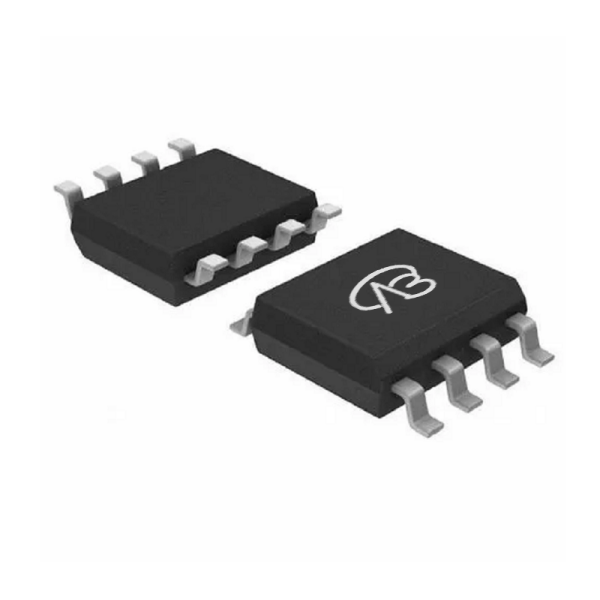
Comparative Analysis: SI4532CDY-T1-GE3 (Dual N+P Channel) vs. VBA5325
Analysis of the Original Model (SI4532CDY-T1-GE3) Core:
This is a ±30V Dual N+P Channel MOSFET from VISHAY, in an SO-8 package. Its design core is to provide a compact, integrated solution for applications requiring complementary switching. Key advantages include: a dual N+P configuration, a continuous drain current of 6A, and an on-resistance of 140mΩ@4.5V. It features 100% Rg and UIS testing, is halogen-free, and complies with RoHS.
Compatibility and Differences of the Domestic Alternative (VBA5325):
VBsemi's VBA5325 is also in an SOP8 package and is a direct pin-to-pin compatible alternative for dual N+P channel applications. The main differences lie in the significantly enhanced electrical parameters: VBA5325 offers a higher continuous current rating (±8A) and a drastically lower on-resistance (24/50 mΩ@4.5V and 18/40 mΩ@10V for N and P channels respectively).
Key Application Areas:
Original Model SI4532CDY-T1-GE3: Suitable for space-constrained designs requiring complementary MOSFET pairs, such as compact DC/DC converters and load switches in 12V-24V systems.
Alternative Model VBA5325: An excellent performance-enhanced replacement, ideal for upgraded designs in DC/DC conversion and load switching where lower conduction loss and higher current capability (up to ±8A) are critical.
Comparative Analysis: SIRA50ADP-T1-RE3 (N-channel) vs. VBQA1401
Analysis of the Original Model (SIRA50ADP-T1-RE3) Core:
This is a 40V N-channel TrenchFET Gen IV MOSFET from VISHAY, in a PowerPAK SO-8 package. Its design pursues ultra-low conduction loss and optimized switching for high-current applications. Core advantages are: an extremely low on-resistance of 1.04mΩ@10V, an exceptionally high continuous drain current of 219A, and features like Qgd/Qgs ratio < 1 for optimized switching.
Compatibility and Differences of the Domestic Alternative (VBQA1401):
VBsemi's VBQA1401 comes in a DFN8(5x6) package and serves as a high-performance alternative. While the package differs, it targets similar high-current applications. VBQA1401 offers a very competitive continuous current of 100A and an even lower on-resistance (1.2mΩ@4.5V and 0.8mΩ@10V).
Key Application Areas:
Original Model SIRA50ADP-T1-RE3: Its ultra-low RDS(on) and very high current rating make it ideal for demanding applications like synchronous rectification in high-current DC/DC converters and OR-ing functions in server/telecom power systems.
Alternative Model VBQA1401: A powerful domestic alternative suitable for high-efficiency synchronous rectification and high-current switch applications where its low 0.8mΩ RDS(on) and 100A current capability can provide excellent performance, potentially in a more compact DFN footprint.
Conclusion
In summary, this comparative analysis reveals two clear selection paths:
For integrated dual N+P channel needs in SO-8 footprint, the domestic alternative VBA5325 offers a significant performance upgrade over SI4532CDY-T1-GE3 in terms of current capability and on-resistance, making it a compelling choice for enhanced efficiency in DC/DC converters and load switches.
For ultra-high-current N-channel applications, the original SIRA50ADP-T1-RE3 sets a very high benchmark with its 219A rating and low RDS(on). The domestic alternative VBQA1401, with its 100A rating and even lower RDS(on), presents a strong, high-performance option for designers seeking capable domestic alternatives, especially where the DFN package is acceptable.
The core conclusion is: There is no absolute superiority or inferiority in selection; the key lies in precise matching of requirements. In the context of supply chain diversification, domestic alternative models not only provide feasible backup options but also achieve strong competitiveness in specific parameters, offering engineers more flexible and resilient choice space in design trade-offs and cost control.

Download PDF document
 Download now


