 中文
中文 English
MOSFET Selection for Medium-Voltage Switching: SI4490DY-T1-GE3, IRL520LPBF vs. China Alternatives VBA1208N and VBN1101N
Number of views:9999
 Back to previous page
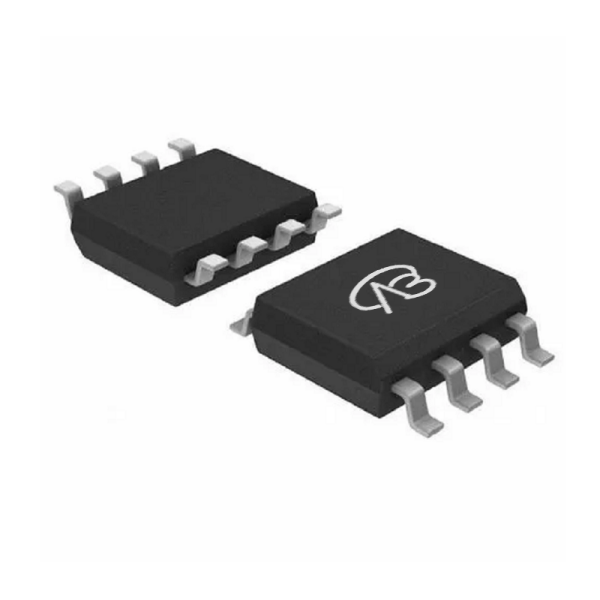
Comparative Analysis: SI4490DY-T1-GE3 (200V N-channel) vs. VBA1208N
Analysis of the Original Model (SI4490DY-T1-GE3) Core:
This is a 200V N-channel MOSFET from VISHAY in a standard SOIC-8 package. Its design core is to provide reliable medium-voltage switching in a compact footprint. Key advantages include a robust 200V drain-source voltage (Vdss) rating and a continuous drain current (Id) of 2.85A. Its on-resistance (RDS(on)) is 80mΩ at 10V gate drive, suitable for various switching applications.
Compatibility and Differences of the Domestic Alternative (VBA1208N):
VBsemi's VBA1208N is offered in a SOP8 package and serves as a functional alternative. The main differences are in electrical parameters: VBA1208N shares the same 200V voltage rating but offers a higher continuous current of 5.2A and a significantly lower on-resistance of 65mΩ at 10V gate drive, indicating better conduction performance.
Key Application Areas:
Original Model SI4490DY-T1-GE3: Suitable for applications requiring a 200V rating with moderate current, such as offline flyback converter primary-side switches, LED driver circuits, or low-power motor drives in industrial controls.
Alternative Model VBA1208N: Better suited for 200V applications demanding higher current handling (up to 5.2A) and lower conduction losses, such as upgraded power supplies, more demanding LED drivers, or auxiliary switches in PFC stages.
Comparative Analysis: IRL520LPBF (100V N-channel) vs. VBN1101N
This comparison highlights a shift towards much higher current and lower on-resistance in the same voltage class.
Analysis of the Original Model (IRL520LPBF) Core:
This 100V N-channel MOSFET from VISHAY in a TO-262-3 package is designed for applications requiring a balance of voltage and current. Its key features include a 100V Vdss, a continuous drain current of 6.5A, and an on-resistance of 270mΩ at a 5V gate drive. It is a standard choice for many 100V switching circuits.
Compatibility and Differences of the Domestic Alternative (VBN1101N):
VBsemi's VBN1101N, also in a TO-262 package, represents a substantial performance enhancement. While maintaining the 100V voltage rating, it offers a dramatically higher continuous current of 100A and an ultra-low on-resistance of 9mΩ at 10V gate drive (10mΩ at 4.5V). This signifies vastly superior current-handling and efficiency potential.
Key Application Areas:
Original Model IRL520LPBF: Fits well in standard 100V applications like DC-DC converters, motor drives for small appliances, or load switches where 6.5A current is sufficient.
Alternative Model VBN1101N: Ideal for high-performance upgrades requiring very high current (up to 100A) and minimal conduction loss. Perfect for high-current motor drives (e.g., e-bikes, tools), high-efficiency synchronous rectification in server power supplies, or any application demanding high power density in the 100V range.
Conclusion:
In summary, this analysis reveals distinct upgrade paths:
For 200V applications, the domestic alternative VBA1208N offers a direct package-compatible option with superior current (5.2A vs. 2.85A) and lower on-resistance (65mΩ vs. 80mΩ) compared to the original SI4490DY-T1-GE3.
For 100V applications, the domestic alternative VBN1101N provides a massive performance leap over IRL520LPBF, with exponentially higher current capability (100A vs. 6.5A) and drastically lower on-resistance (9mΩ vs. 270mΩ), enabling next-generation high-efficiency, high-power designs.
The core takeaway is that selection depends on precise requirement matching. In the context of supply chain diversification, these domestic alternatives not only offer reliable backup options but also provide significant performance advantages in key parameters, giving engineers greater flexibility and resilience in design trade-offs and cost optimization. Understanding each device's parameter implications is essential to unlock its full potential in your circuit.

Download PDF document
 Download now


