 中文
中文 English
MOSFET Selection for Medium-Power Switching Applications: SI4431CDY-T1-GE3, SIR120DP-T1-RE3 vs. China Alternatives VBA2317, VBGQA1803
Number of views:9999
 Back to previous page
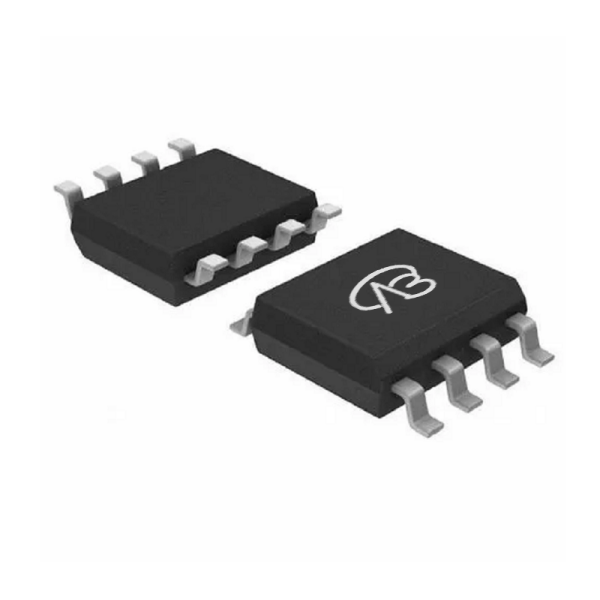
Comparative Analysis: SI4431CDY-T1-GE3 (P-channel) vs. VBA2317
Analysis of the Original Model (SI4431CDY-T1-GE3) Core:
This is a -30V P-channel MOSFET from Vishay in a standard SO-8 package. Its design core is to provide reliable switching capability for medium-current applications. Key advantages include: a continuous drain current (Id) of -9A and an on-resistance (RDS(on)) of 32mΩ at -10V gate drive. It offers a robust solution for negative voltage switching or high-side control in common voltage domains.
Compatibility and Differences of the Domestic Alternative (VBA2317):
VBsemi's VBA2317 is also offered in an SOP8 package and serves as a pin-to-pin compatible alternative. The main differences are in the electrical parameters: VBA2317 features a significantly lower on-resistance, measuring 24mΩ @ 4.5V and 18mΩ @ 10V, compared to the original's 49mΩ @ 4.5V. Both share a -30V drain-source voltage and a -9A continuous current rating. This indicates that VBA2317 can offer lower conduction losses in similar applications.
Key Application Areas:
Original Model SI4431CDY-T1-GE3: Suitable for general-purpose P-channel switching needs in industrial controls, power management units, or battery protection circuits where standard SO-8 packaging and proven reliability are prioritized.
Alternative Model VBA2317: Better suited for applications demanding lower conduction loss and higher efficiency within the same voltage and current range, such as upgraded power switches, load switches, or in DC-DC converters where reduced RDS(on) is critical.
Comparative Analysis: SIR120DP-T1-RE3 (N-channel) vs. VBGQA1803
This N-channel MOSFET is designed for high-current, low-loss switching applications, emphasizing minimal conduction resistance and effective thermal performance.
Analysis of the Original Model (SIR120DP-T1-RE3) Core:
This Vishay MOSFET utilizes an advanced PowerPAK SO-8 package. Its core advantages are:
High Current Handling: Capable of a continuous drain current up to 106A.
Very Low On-Resistance: Features an RDS(on) as low as 3.55mΩ at 7.5V gate drive.
Advanced Packaging: The PowerPAK SO-8 package maintains the standard SO-8 footprint but offers superior thermal performance and lower height due to an exposed thermal pad, allowing for a larger die and better heat dissipation.
Compatibility and Differences of the Domestic Alternative (VBGQA1803):
VBsemi's VBGQA1803 presents a "performance-competitive" alternative in a DFN8(5x6) package. While the footprint differs from the SO-8, it represents a modern, space-efficient solution. Its key parameters show a strong performance: an 80V drain-source voltage matching the original, an even higher continuous current rating of 140A, and an exceptionally low RDS(on) of 2.65mΩ at 10V gate drive.
Key Application Areas:
Original Model SIR120DP-T1-RE3: Ideal for high-current switching applications where the proven PowerPAK SO-8 package is preferred for its thermal performance and compatibility, such as in motor drives, high-power DC-DC converters (e.g., for servers/telecom), and power distribution systems.
Alternative Model VBGQA1803: Excellent for new designs or upgrades where maximum current capability, ultra-low conduction loss, and a compact DFN package are desired. It is well-suited for high-efficiency synchronous rectification, high-power motor control, and advanced power systems demanding high power density.
Conclusion
In summary, this comparison reveals two distinct selection strategies:
For P-channel applications, the domestic alternative VBA2317 offers a direct package-compatible replacement with the advantage of significantly lower on-resistance, potentially leading to higher efficiency compared to the original SI4431CDY-T1-GE3.
For N-channel high-current applications, the original SIR120DP-T1-RE3 remains a robust choice with its high-current SO-8 derived package. The domestic alternative VBGQA1803, in a more modern DFN package, offers superior current rating and lower RDS(on), representing a high-performance option for designs that can accommodate its footprint.
The core takeaway is that selection is driven by precise application requirements. In the context of supply chain diversification, domestic alternatives like VBA2317 and VBGQA1803 not only provide reliable backup options but also offer compelling performance benefits, giving engineers greater flexibility in design optimization and cost management. Understanding the specific design priorities—be it package compatibility, thermal performance, or ultimate electrical efficiency—is key to selecting the most valuable component for the circuit.

Download PDF document
 Download now


