 中文
中文 English
MOSFET Selection for Medium-Voltage Switching: SI2387DS-T1-GE3, IRF830PbF vs. China Alternatives VB2658, VBM16R08
Number of views:9999
 Back to previous page
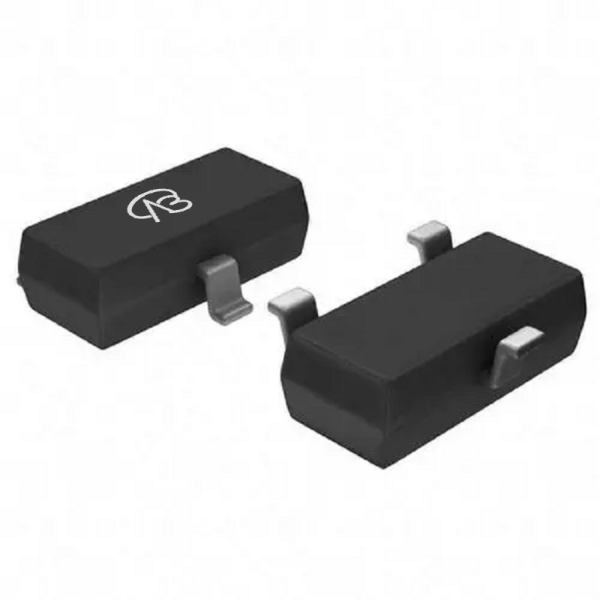
Comparative Analysis: SI2387DS-T1-GE3 (P-channel) vs. VB2658
Analysis of the Original Model (SI2387DS-T1-GE3) Core:
This is an 80V P-channel MOSFET from Vishay in a compact SOT-23-3 package. Its design core leverages TrenchFET Gen IV technology to deliver robust performance in a minimal footprint. Key advantages include a drain-source voltage (Vdss) of 80V, a continuous drain current (Id) of 3A, and an on-resistance (RDS(on)) of 242mΩ at 4.5V gate drive. It is 100% tested for gate resistance (Rg) and unclamped inductive switching (UIS), ensuring reliability for circuit protection and load switching roles.
Compatibility and Differences of the Domestic Alternative (VB2658):
VBsemi's VB2658 is a pin-to-pin compatible alternative in the same SOT23-3 package. The key differences are in electrical parameters: VB2658 has a slightly lower voltage rating (-60V vs. -80V) but offers a significantly lower on-resistance of 52mΩ at 4.5V gate drive and a higher continuous current rating of -5.2A. This represents a major improvement in conduction efficiency and current-handling capability within a similar form factor.
Key Application Areas:
Original Model SI2387DS-T1-GE3: Well-suited for compact 80V system applications requiring reliable load switching and circuit protection, such as in industrial controls, automotive modules, or power management units where its proven UIS ruggedness is valued.
Alternative Model VB2658: An excellent upgrade for applications where lower conduction loss and higher current capacity (up to -5.2A) are prioritized over the highest voltage rating. Ideal for space-constrained, efficiency-sensitive designs like advanced load switches, power distribution in portable equipment, or compact DC-DC converters.
Comparative Analysis: IRF830PbF (N-channel) vs. VBM16R08
Analysis of the Original Model (IRF830PbF) Core:
This is a 500V N-channel MOSFET from Infineon in the industry-standard TO-220AB package. As a 3rd generation HEXFET, it is designed to offer the best combination of fast switching, ruggedness, low on-resistance (1.5Ω at 10V, 2.7A), and cost-effectiveness for commercial-industrial applications. Its key strengths are a 4.5A continuous current rating, a high 74W power dissipation capability, and the excellent thermal performance of the TO-220 package, making it a universal choice for applications up to approximately 50 watts.
Compatibility and Differences of the Domestic Alternative (VBM16R08):
VBsemi's VBM16R08 is a direct package-compatible alternative in TO-220. It offers a performance-enhanced profile: a higher voltage rating of 600V, a significantly higher continuous current rating of 8A, and a much lower on-resistance (780mΩ at 10V gate drive compared to 1.5Ω for the IRF830PbF). This translates to substantially reduced conduction losses and higher power handling capability in a similar form factor.
Key Application Areas:
Original Model IRF830PbF: A classic, cost-effective workhorse for a wide range of medium-power, 500V applications such as offline SMPS (switch-mode power supplies), motor controls, lighting ballasts, and general-purpose inverter circuits where the TO-220 package's thermal performance is essential.
Alternative Model VBM16R08: A superior choice for next-generation designs or upgrades requiring higher voltage margin (600V), higher current capacity (8A), and significantly lower conduction losses. It is ideal for higher-efficiency or higher-power versions of SMPS, industrial motor drives, UPS systems, and power conversion stages where performance and thermal management are critical.
Conclusion
In summary, this comparison reveals two distinct upgrade paths:
For P-channel applications in compact, medium-voltage circuits, the domestic alternative VB2658 offers a compelling upgrade over the SI2387DS-T1-GE3, delivering dramatically lower on-resistance and higher current capability in the same SOT-23-3 package, ideal for efficiency-focused designs.
For N-channel applications in higher-voltage, medium-to-high power domains, the domestic alternative VBM16R08 substantially outperforms the classic IRF830PbF in key metrics—voltage rating, current capability, and on-resistance—while maintaining package compatibility, making it a powerful choice for modern, high-efficiency power systems.
The core insight is that selection is about precise requirement matching. In the context of supply chain diversification, these domestic alternatives not only provide reliable backup options but also deliver significant performance enhancements, offering engineers greater flexibility and resilience in design trade-offs and cost optimization. Understanding the design philosophy and parameter implications of each device is key to unlocking its full potential in your circuit.

Download PDF document
 Download now


